The Warehouse That Couldn’t Get Warm: Industrial Unit Heater Maintenance
Table of Contents
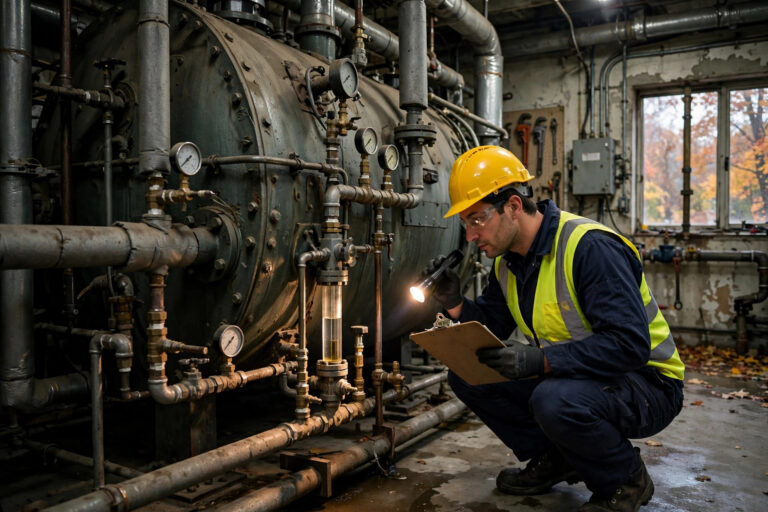
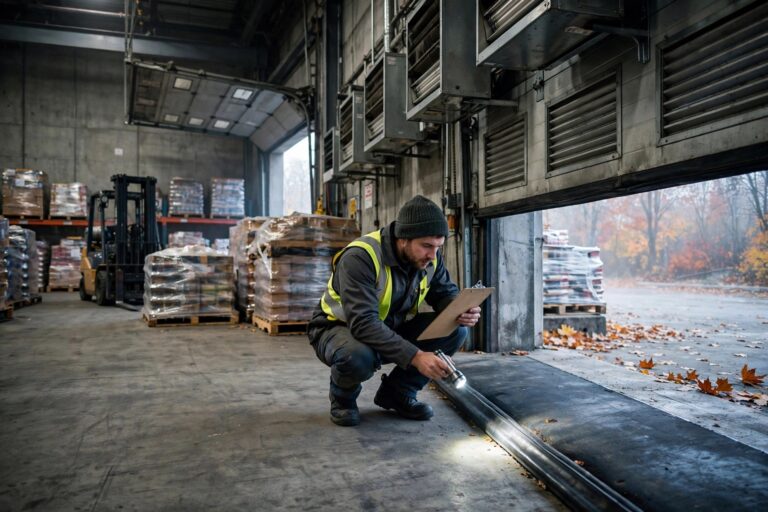
Industrial unit heater maintenance is easy to postpone until a cold snap finds every neglected unit. The call came in on a Tuesday morning in early October from a logistics warehouse near Pearson airport. The facility manager had a familiar complaint: the dock office never got above 14°C even though the wall thermostats were set to 21°C, two of the six gas-fired unit heaters hanging from the ceiling had not fired once all week, and the gas bill had climbed for three straight months. The heaters were running almost constantly, and the building was still cold.
If you manage an industrial facility in the GTA, this story probably sounds familiar. Hot air rises, dock doors open and close all day, and dusty burners quietly lose efficiency year after year. This is exactly what poor industrial unit heater maintenance looks like: high fuel use, cold spots, and heaters that give up on the first real cold snap.
What an Industrial Unit Heater Actually Does
A unit heater is the box-shaped gas furnace you see hanging from the ceiling or mounted on the wall in warehouses, factories, and workshops. A gas burner fires inside a heat exchanger, a fan blows shop air across it, and warm air drops into the space below. They are simple, tough machines, usually one of several covering different zones of a large building. Many GTA facilities rely on them entirely for winter heat.
Because they hang up in dusty air and often only get attention when they break, unit heaters are among the most neglected gas appliances in commercial and industrial buildings. The burners collect dust from forklifts and packaging lines, the fan belts stretch, and thermostats mounted on cold exterior walls or beside dock doors read the wrong temperature all winter.
Why Industrial Unit Heater Maintenance Matters in the GTA
Skipped industrial unit heater maintenance shows up first in the gas bill. A burner fouled with dust burns poorly, runs longer cycles, and still cannot hold the thermostat setpoint. Heat stratification makes it worse: with no destratification fans or proper thermostat placement, warm air pools at the 10-metre ceiling while workers on the floor wear jackets. The heaters run harder, the zones never warm up, and the fuel meter spins.
The safety angle matters just as much. Gas-fired unit heaters vent combustion products outdoors, but cracked heat exchangers, blocked flues, and failing vent caps can push carbon monoxide back into the workspace. Ontario requires gas work to be done by properly certified technicians, which is why any internal burner, gas valve, or flue work on a unit heater belongs to a licensed professional, not the maintenance staff’s to-do list.
Warning Signs You Need Industrial Unit Heater Maintenance Now
Walk the floor in the first weeks of October and look for these red flags:
- Some zones warm up fine while others stay cold, even with the thermostat calling for heat.
- Heaters short-cycle or run non-stop without ever satisfying the thermostat.
- Yellow, lazy burner flames (visible on some models through a sight glass) instead of crisp blue ones.
- Soot marks around the cabinet, the burner area, or the vent outlet.
- New rattling, banging, or squealing sounds from the fan section.
- Gas bills climbing year over year for the same building and the same weather.
- CO detectors alarming in the building, or workers reporting headaches and nausea.
If you spot any of the last two, treat it as urgent: book industrial unit heater maintenance before the heating season peaks, and if a CO alarm sounds, get everyone out and call emergency services before anything else.
What a Proper Industrial Unit Heater Maintenance Visit Covers
A full industrial unit heater maintenance visit takes a trained technician roughly an hour per unit and covers:
- Burner and pilot cleaning. Dust and lint are brushed and vacuumed from burners, flame sensors, and pilot assemblies so the flame burns clean and blue.
- Heat exchanger inspection. The technician looks for cracks, rust-through, and separations that could leak combustion gases into the airstream. A failed heat exchanger usually means the unit gets replaced, not repaired.
- Gas valve and pressure checks. Manifold pressure is tested against the manufacturer’s spec, and gas connections are checked for leaks. Gas work in Ontario is licensed-professional-only, always.
- Flue and venting inspection. Vent pipes, caps, and terminations are checked for blockages, corrosion, and proper slope so exhaust leaves the building and stays out.
- Fan, motor, and belt service. Bearings are lubricated, belts are tensioned or replaced, and the fan wheel is cleaned so the unit actually moves its rated airflow.
- Thermostat calibration and placement. Thermostats are verified against a reference thermometer and, when possible, moved off cold exterior walls and away from dock doors to a location that reads real zone temperature.
- Controls and safety testing. Limit switches, rollout switches, and ignition controls are tested so the unit shuts down safely if something goes wrong.
What Facility Managers Can Check Safely Themselves
You do not need a licence to keep the basics in shape between service visits. Clear stored materials away from every unit heater so air can circulate, confirm the ceiling and wall thermostats have fresh batteries and realistic setpoints, and check that outside vent terminations are clear of snow, ice, and bird nests as winter sets in. Working CO detectors on every level of the occupied space are non-negotiable around any gas appliance.
Leave anything inside the cabinet, near the gas line, or on the electrical circuit to a licensed technician. If your building already struggles with stale or unbalanced air, read our guide to warehouse makeup air ventilation too, and remember that digging anywhere on site without a locate can end badly, as our gas line strike story showed.
When to Call a Licensed Pro for Industrial Unit Heater Work
Call a licensed HVAC contractor when a heater stops firing, cycles erratically, or trips its safety controls; when you see soot, smell gas, or a CO detector alarms; or when more than one unit is underperforming and you suspect the gas supply, controls, or venting layout rather than a single dirty burner. Before booking anyone, verify the company’s registration on TSSA’s contractor lookup and always hire a TSSA-registered contractor for anything involving gas or electrical work.
Keep Your Facility Warm This Winter
Routine industrial unit heater maintenance is the cheapest way to keep a warehouse warm and a gas bill sane. Post your job on The Quality HVAC and we will connect you with a verified local pro in the GTA. For more guides, browse our blog, or learn about our residential and commercial-industrial services.