Furnace Locked Out? A Frozen Furnace Condensate Line Could Be Why
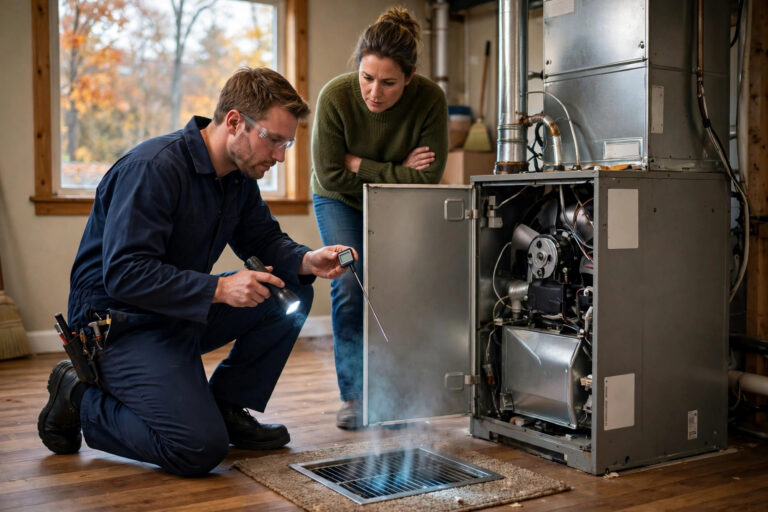
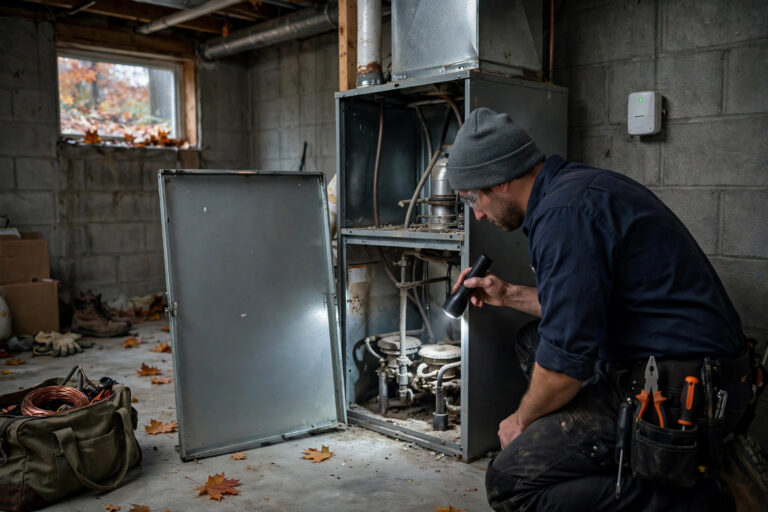
The call came in at 10:15 p.m. on a night when the wind chill in North York hit −19°C. A homeowner’s furnace had quit heating. It would power on, run its inducer fan for a minute, then shut down with an error code flashing on the thermostat. No heat, and the indoor temperature was sliding. When the technician arrived, the culprit was not inside the furnace at all. It was a frozen furnace condensate line, iced solid where it exited the house.
Table of Contents
If your high-efficiency furnace tries to start, runs briefly, then locks out on the coldest night of the year, this is one of the first things a technician checks. It is also one of the few furnace problems with a genuinely simple explanation, and a fix a homeowner can sometimes handle safely.
What a Furnace Condensate Line Actually Does
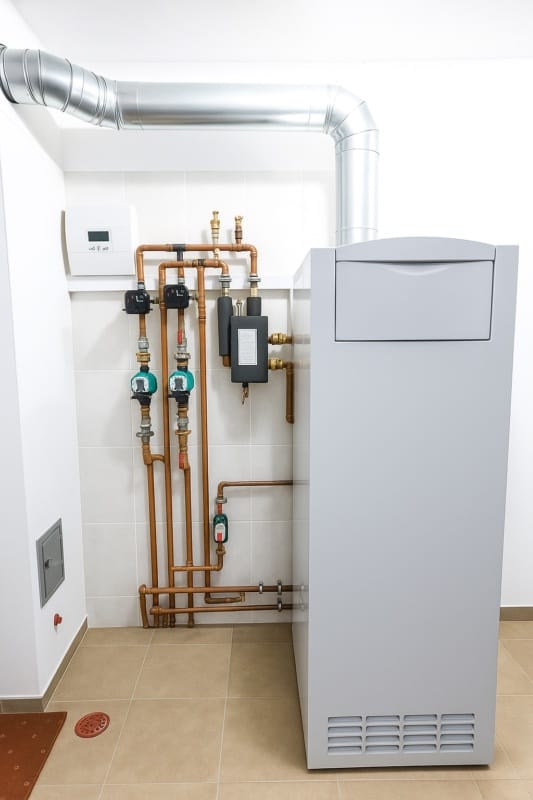
Modern high-efficiency furnaces (90% AFUE and up, which covers most furnaces installed in the GTA in the last twenty years) squeeze so much heat from the exhaust that water vapour in the flue gas condenses into liquid. That mildly acidic water drains away through a small PVC pipe, the condensate line, usually to a floor drain, a laundry tub, or a condensate pump that lifts it to a drain. In plenty of Toronto homes, though, the line runs straight through the foundation wall and terminates outside, a few inches above the yard.
Why Condensate Lines Freeze in Toronto Homes
An exterior termination works fine until the first deep freeze. Water sitting in the line ices up, each furnace cycle adds a little more, and the pipe gradually chokes shut. Once that happens, the pump cannot push past the ice plug and the backed-up water trips the furnace’s safety switches. The furnace protects itself by shutting down, which is exactly what a frozen furnace condensate line looks like from inside a cold house: a furnace that will not stay on.
The setups most likely to freeze are the ones a technician sees again and again each winter: lines that exit above grade and run along the outside of the foundation, long outdoor runs with shallow slope where water lingers instead of draining, terminations buried under a snowdrift after a storm, and condensate pump discharge hoses left draped outside for the winter.
Warning Signs of a Frozen Furnace Condensate Line
The furnace protects itself, so the symptoms look like a control failure:
- The furnace starts, runs the inducer fan, then shuts down before the burners light, often with a pressure-switch error code on the thermostat or control board.
- The same lockout repeats every time you reset it.
- Water pooling around the base of the furnace or dripping from the condensate trap.
- Gurgling sounds from the drain line, or a condensate pump that runs constantly.
- Icicles or a visible ice plug on the pipe where it exits the house.
What You Can Safely Do About a Frozen Furnace Condensate Line
If you can see ice at the exterior termination, this is a homeowner-level fix. No tools beyond a kettle:
- Clear snow and ice from around the drain exit so meltwater has somewhere to go.
- Pour warm (not boiling) water over the frozen section of pipe to thaw the plug. Work in stages and give each pour a minute to melt through.
- Check the line has a clear downhill path with nothing kinked, crushed, or sagging.
- Reset the furnace once after water flows freely: power it off and on at the service switch, or follow the thermostat’s reset procedure. If it fires and completes a full heating cycle, you are back in business.
One reset is enough. If the furnace locks out again, stop resetting it. Repeated restarts can mask a different problem and put extra strain on the system.
When a Frozen Furnace Condensate Line Needs a Licensed Pro
Call a licensed HVAC technician when:
- The lockout returns after a successful thaw. The ice may be deeper in the line, or a different fault (pressure switch, inducer motor, condensate pump) is at play.
- Water is backing up inside the furnace cabinet or the condensate pump is overflowing.
- You want a permanent fix: rerouting the drain to an indoor floor drain, correcting the slope, or fitting a thermostatically controlled heat-trace cable on the exterior run. Heat trace is electrical work near gas equipment, strictly a job for a licensed professional.
- You smell gas at any point. Leave the house and call for emergency service. Never troubleshoot a gas smell yourself.
Ontario requires proper certification for gas work. Before booking anyone, verify the company’s registration on TSSA’s contractor lookup and always hire a TSSA-registered contractor for anything involving gas or electrical work.
How to Prevent a Frozen Furnace Condensate Line Next Winter
The cheapest insurance against a frozen furnace condensate line is a few minutes of fall maintenance:
- Pour a cup of water into the condensate trap or pump and confirm it drains freely. Do this before the first freeze.
- Walk the line and confirm it slopes downhill its whole length, with nothing sagging, kinked, or crushed.
- Keep the exterior termination clear of snow all winter, the same way you clear the furnace’s intake and exhaust vents after a storm.
- Book a fall furnace tune-up. A technician clears the trap, tests the pump, checks the pressure switch, and spots drainage problems months before they strand you on a −20°C night. If your furnace keeps starting and stopping for other reasons, read our guide to furnace short-cycling too.
Get Your Heat Back Tonight
A furnace that locks out on a freezing night is an emergency, and every cold hour counts. Post your job on The Quality HVAC and we will connect you with a verified local pro in the GTA. For more homeowner guides, browse our blog, or learn about our residential and commercial-industrial services.