Rooftop Unit Not Heating? How We Traced It to a Failed Pressure Switch
A restaurant called us because one of its rooftop units (RTUs) was blowing no heat, while the unit next to it worked fine. The unit was a Lennox KGA series 8.5-ton gas/electric RTU with an A3 ignition control. Here’s how we narrowed it down step by step.
1. Start with the basics
The filter was dirty, so we noted it for replacement. When the heat section was opened, the inducer motor was running. That told us the control was getting a call and starting the sequence.
2. Read the control board
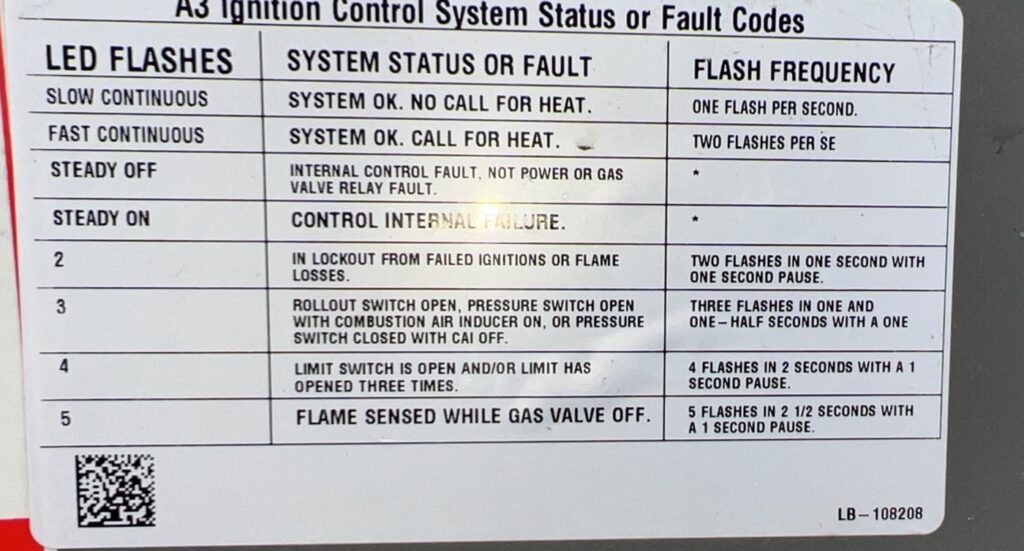
With the inducer running, the A3 board’s LED flashed three times, paused, then repeated. On this control, a 3-flash code means the pressure switch is open (or the rollout switch has tripped). The burners never lit, so the sequence was stopping at the step that proves draft.
3. Check the call for heat
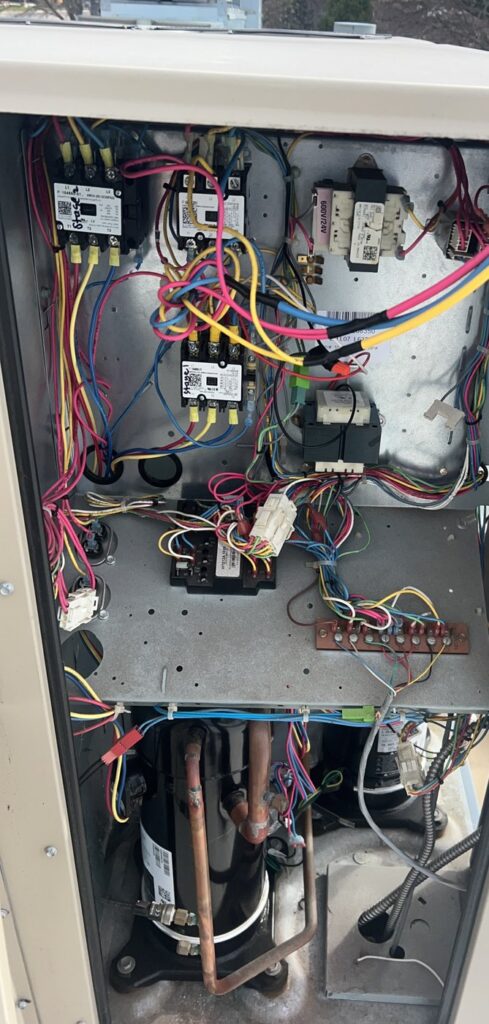
At first, the W1 terminal at the unit read 0 volts. It looked like a thermostat problem. But the room was already above the setpoint, so the thermostat had no reason to call. After the setpoint was raised, W1 read 24 volts. Lesson: before blaming a thermostat, compare the setpoint to the room temperature.
4. Follow the sequence of operation
On a gas RTU, heat goes in order: call for heat, inducer starts, pressure switch proves draft, igniter, gas valve, flame proven. If any step fails, everything after it stops. Here the inducer ran but nothing after it happened, which pointed straight at the pressure switch.
5. Test the pressure switch the right way
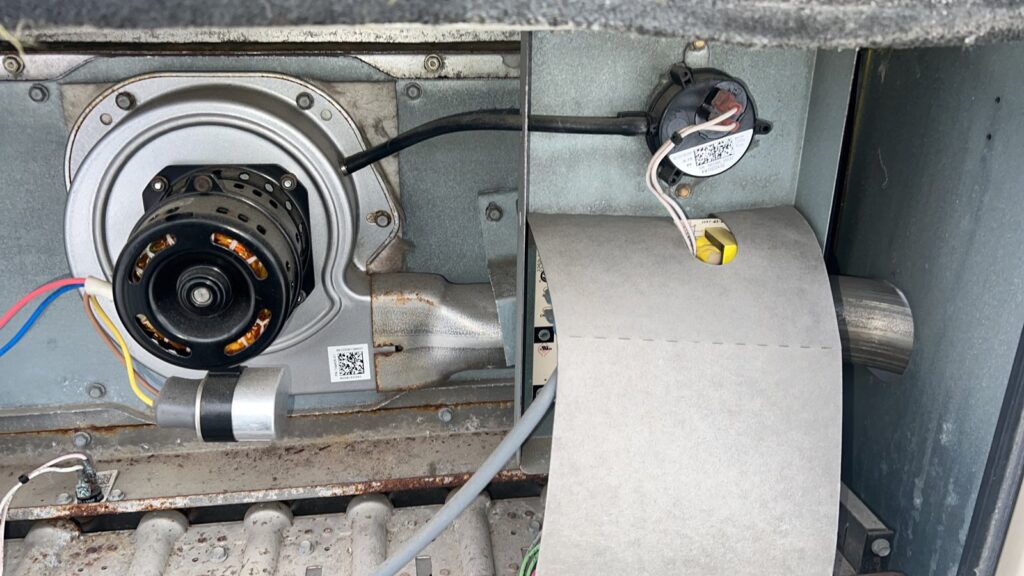
The pressure switch is a normally open safety switch. It only closes when the inducer pulls enough suction through the small hose to prove the flue gases are being vented. With power off and the wires removed, we checked continuity across the switch while applying light suction to the port. Don’t blow into it. Blowing pushes the diaphragm the wrong way and can damage it. A good switch clicks closed. This one didn’t, so the switch had failed.
Why you never bypass a pressure switch
It can be tempting to jumper a pressure switch to “get heat back.” Don’t. If the vent is blocked or the inducer is weak, the burners can run without flue gases being drawn out. That can push carbon monoxide into the building. The switch is there to stop that.
The fix
- Replace the pressure switch with the exact OEM part (same setpoint and type).
- Clear the inducer pressure port and inspect the hose for cracks, kinks or water.
- Check the flue outlet screen and the inducer wheel for rust or debris.
- Confirm the switch closes on its own and the burners light on low and high fire.
- Verify manifold pressure and temperature rise against the rating plate.
- Replace the filter.
Gas appliances must be serviced to the manufacturer’s instructions, and safety controls must never be bypassed. Always have gas work done by a licensed gas technician.
Is your rooftop unit not heating? Contact The Quality HVAC for a licensed service visit.
