Before cold weather settles in, running a few basic checks on your heating system ensures your home stays warm, efficient, and safe. A little pre-winter preparation helps prevent sudden breakdowns on the coldest days of the year.
Here are three safe maintenance checks every homeowner should do before turning on the heat for the season, along with critical warning signs that require a licensed technician.
1. Replace Your Air Filter & Clear Vents
Cold-weather heating relies on continuous airflow. A clogged filter restricts air movement across the furnace heat exchanger, causing internal temperatures to spike and tripping high-limit safety switches.
- What to do: Install a fresh filter before turning the heat on for the season. Inspect pleats monthly during heavy winter heating.
- Clear return grilles: Ensure return grilles and supply registers throughout your home are completely free of furniture, heavy curtains, or rugs.
2. Test Run the Ignition Sequence Early
Do not wait for the first freezing night to turn on your thermostat. Test the heating system on a mild autumn day to catch potential issues early.
- What to do: Switch your thermostat mode from Cool to Heat, and set the temperature 3 to 5 degrees above current room temperature.
- What to listen for: Listen for the draft inducer fan to start up, followed by ignition and warm air flow from supply vents within 2 to 3 minutes. Replace thermostat batteries if the display is weak.
3. Clear Around the Furnace & Exterior Exhaust Vents
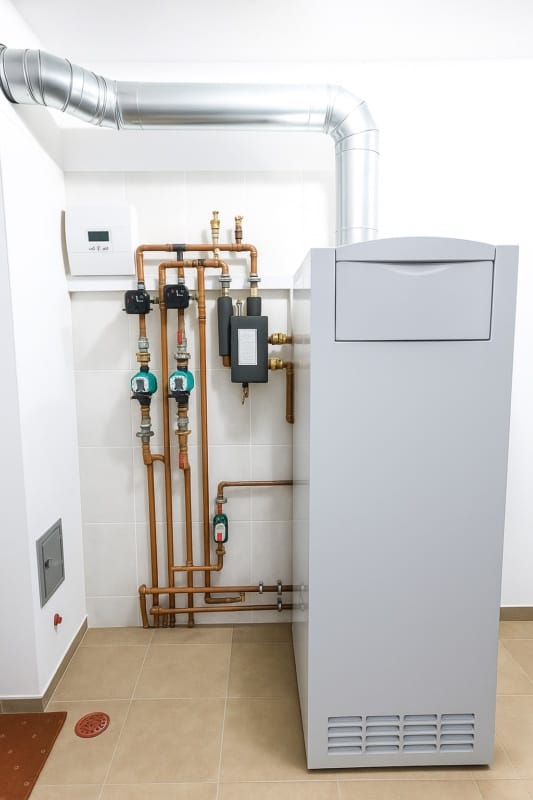
Furnaces require clean air clearance to operate safely and exhaust toxic combustion gases outside.
- Clear utility space: Keep boxes, paint cans, cleaning chemicals, and flammable materials at least 3 feet away from your furnace or boiler.
- Inspect outdoor PVC termination pipes: Check the exterior side wall of your home where high-efficiency furnace intake and exhaust pipes exit. Ensure leaves, bird nests, or debris are not blocking the pipe openings.
🛑 Winter Safety Red Flags: When to Call a Pro Immediately
Gas-fired heating equipment involves fuel lines, high voltages, and combustion byproducts. If you observe any of the following warning signs, shut down the unit and call a certified trade professional:
| Symptom / Visual Warning | Why You Need a Technician |
| Smell of gas (rotten egg odor) | Indicates a gas leak. Evacuate | | | immediately and contact emergency | | | services or your gas utility. |
| Yellow, flickering, or lazy burner flames (should be crisp blue) | Indicates incomplete combustion and| | | potential carbon monoxide (CO) | | | risk. |
| Burning electrical or acrid metallic smells | Points to overheating wiring, a | failing transformer, or a stalled | blower motor. |
| Furnace short-cycling (turning on and off every few minutes) | Triggered by high-limit switches, | flame sensor carbon buildup, or | venting pressure faults. |