The Red Tag on the Furnace: No Heat on the Coldest Week of Fall
Table of Contents
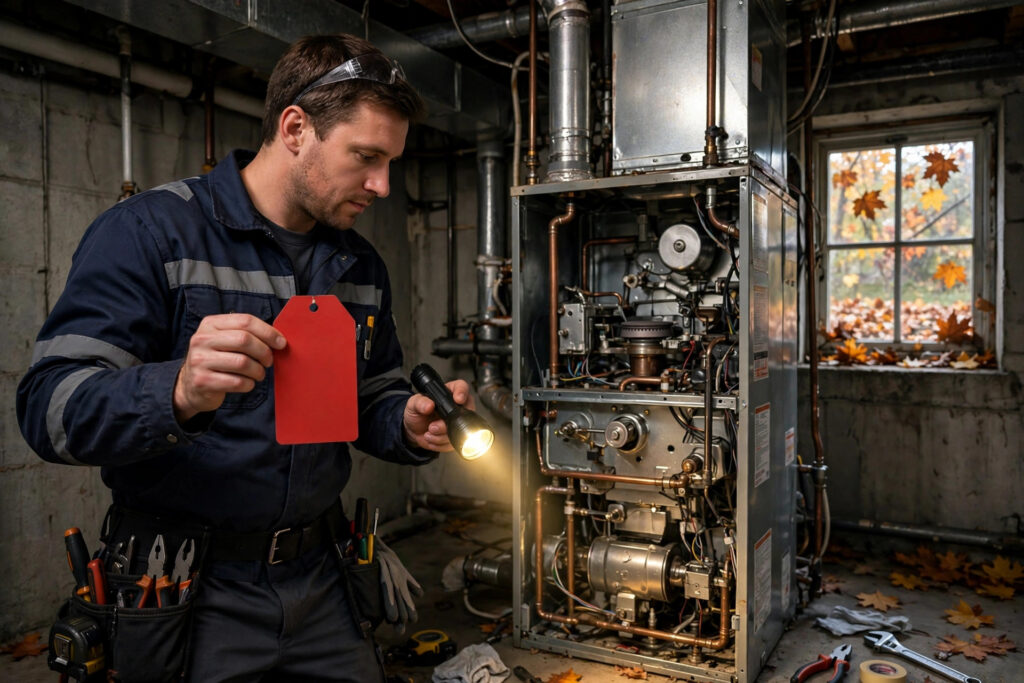
The tune-up was supposed to be routine. A homeowner in Etobicoke booked a fall furnace check in mid-October, expecting a filter change and a clean bill of health. Instead, the technician found a rusted-through vent pipe, combustion readings he did not like, and a furnace he could not legally leave running. He shut the gas off, filled out a warning tag, and left the family with a furnace red tag and no heat.
A furnace red tag feels like a disaster, especially with cold nights coming. It is not a sales trick and it is not optional for the technician. In Ontario, when a certified gas technician finds a gas appliance in an unsafe condition, the law expects that appliance to be tagged and, where the hazard is immediate, shut down. Understanding what the tag means is the fastest way to get your heat back safely.
What a Furnace Red Tag Actually Means
A furnace red tag, formally a warning tag or safety violation notice, is a written record that a gas appliance or its piping is in an unacceptable condition. The tag names the appliance, describes the condition that must be corrected, and is shared with your gas distributor. It stays in force until a certified gas technician corrects the problem, confirms the appliance complies with the safety rules, and files the correction paperwork.
Red tags are not limited to furnaces. Boilers, gas water heaters, fireplaces, and gas piping can all be tagged. The furnace version is the one Toronto homeowners meet most often, usually during a fall tune-up, a no-heat call, or a utility visit, which is why October and November are peak season for the furnace red tag conversation.
Type A and Type B: The Two Kinds of Furnace Red Tag
Every furnace red tag falls into one of two categories, and the letter on your tag decides how urgent your situation is:
- Type A, immediate hazard. The appliance is unsafe right now. The technician must shut off the gas supply to it immediately, and it must not be operated again until the unsafe condition is corrected and a certified gas technician re-activates it.
- Type B, correction required. The appliance is in an unacceptable condition but is not an immediate hazard. It may keep running for now, but the corrections listed on the tag must be completed by the deadline printed on it. On the standard Enbridge form that window is 42 days. Miss the deadline and the gas supply can be discontinued.
Read your tag before you do anything else. The letter, the deadline, and the written description of the condition are the three facts that drive every decision that follows.
Why Furnaces Get Red-Tagged in Toronto Homes
The most common reasons a Toronto furnace earns a red tag are age and corrosion catching up with it:
- A cracked or rusted heat exchanger that can let combustion gases into the house air.
- Corroded, disconnected, or badly sloped vent piping that can spill exhaust indoors.
- Carbon monoxide readings, flame rollout, or other signs of unsafe combustion.
- Gas leaks at the appliance, the shut-off valve, or the piping feeding it.
- Missing or blocked combustion air openings, often after a basement renovation.
- Unapproved or badly installed replacement parts and venting materials.
Some of these overlap with problems we have covered before, like a cracked heat exchanger. The difference is the tag: once it is issued, the repair stops being a whenever-you-get-to-it job and becomes a documented safety correction with a paper trail.
What to Do in the First Hour After a Furnace Red Tag
Stay calm and work the list:
- Do not turn the appliance back on. If your tag is Type A, the gas is off for a reason. Never remove a tag, reopen a gas valve, or restart a tagged furnace yourself. Gas work in Ontario is licensed-professional-only.
- Photograph the tag. Capture the letter, the deadline, the technician’s certificate number, and the written description of the condition. You will need all of it for quotes.
- Ask what correction is actually required. A part replacement, a new vent run, and a full furnace replacement are very different jobs. Ask the tagging technician to explain which one your tag calls for, in plain language.
- Get a second licensed opinion if the fix is a full replacement. You are allowed to have another TSSA-registered contractor assess the appliance. A second opinion can confirm the diagnosis. It cannot simply delete the tag.
- Plan for heat. If a Type A tag leaves you with no furnace in cold weather, ask the contractor about safe temporary options and timelines before they leave, not after the house is already cold.
How a Licensed Technician Clears a Furnace Red Tag
Clearing a furnace red tag is a process, not a signature. A certified gas technician employed by a TSSA-registered contractor corrects the listed condition, which may mean replacing the heat exchanger or venting, repairing the piping, restoring combustion air, or replacing the furnace if repair is not safe or practical. The technician then tests the appliance, confirms it operates within the safety rules, completes the correction section of the notice, and forwards it to the gas distributor so the tag can be cleared from your account.
Before you hire anyone for this work, verify the company on TSSA’s fuels contractor lookup. If the original problem involved short, frequent heating cycles as well, our guide to furnace short cycling explains what a technician checks next.
What Not to Do With a Red-Tagged Furnace
Do not hire an unlicensed handyman to clear the tag, do not ask a technician to sign off on work they did not inspect, and do not ignore a Type B deadline because the furnace still seems to run fine. The tag is on file with your gas distributor, the deadline is real, and a furnace that was acceptable to run for a few weeks can still be shut off when that date passes. Treat the tag as what it is: a safety system working the way Ontario designed it to.
Get Your Heat Back, Safely
A furnace red tag is bad news delivered the right way: in writing, before an unsafe appliance hurts someone. Read the letter and deadline, get the correction quoted by a verified licensed pro, and keep the paperwork until the tag is cleared. Post your job on The Quality HVAC and we will connect you with a verified local pro in the GTA. For more guides, browse our blog, or learn about our residential and commercial and industrial services.



One Comment