Cleaner Air, Less Outdoor Air: Performance Based Ventilation Gets Practical
Table of Contents
On October 15, 2026, Fellowes and HVAKR announced an integrated tool that makes performance based ventilation far easier for engineers to use in real projects. The launch embeds Indoor Air Quality Procedure (IAQP) calculations from ASHRAE Standard 62.1 directly inside HVAKR’s cloud-based mechanical engineering workspace, paired with Fellowes IAQP-Ready Array air purification devices and a tested IAQP-Ready filter. For Toronto and GTA building owners, the news matters because heating and cooling outdoor air is one of the most expensive parts of running a commercial building in a cold winter and humid summer climate.
What Performance Based Ventilation Actually Is
ASHRAE Standard 62.1 offers two main ways to design ventilation. The traditional Ventilation Rate Procedure (VRP) sets outdoor air rates by formula, based on the space type and occupancy. Performance based ventilation, through the IAQP, takes a different route: the design team identifies the contaminants that matter in a space, sets target limits for them, and then shows, with calculations and verified air-cleaning performance, that the design will keep indoor air acceptable. Outdoor air can then be set by what the space actually needs, rather than by a one-size rate alone.
The IAQP is not new. According to the October 15, 2026 release, it has been part of ASHRAE Standard 62.1 for decades, but adoption stayed limited because the calculations, documentation and approval process were difficult to navigate in normal design workflows. That friction is exactly what this launch targets.
Performance Based Ventilation: What Changed on October 15, 2026
- IAQP inside the design tool. HVAKR now embeds IAQP calculations in its existing engineering workspace, so project teams can evaluate compliance options, energy impacts, HVAC sizing and documentation requirements earlier in design, when changes cost the least.
- Verified product data. The Fellowes IAQP-Ready filter is efficiency-rated according to ASHRAE 52.2 and ASHRAE 145.2, and the release says that verified performance data can be used to evaluate contaminant-removal effectiveness as part of an IAQP design.
- Side-by-side comparisons. The platform compares IAQP and VRP strategies with instant performance comparisons, so engineers can identify opportunities to reduce unnecessary outdoor air, optimize HVAC sizing, measure energy savings, and estimate payback and return on investment as a design evolves.
- Available now. The release states the IAQP capability is available beginning October 15, 2026 through the HVAKR platform, for evaluating and specifying Fellowes IAQP-Ready Array solutions.
The energy context is significant. The release notes that HVAC systems account for approximately 39 percent of a building’s total energy use, with a significant portion dedicated to conditioning outdoor air required under traditional ventilation strategies. Fellowes Director of Air Quality Management Jason Jones put the barrier plainly: “The challenge was never whether IAQP could deliver value. The challenge was making it practical for engineers to evaluate within the realities of project schedules and design deadlines.”
Why This Matters for Toronto and GTA Buildings
Every cubic foot of outdoor air a Toronto building brings in during January has to be heated from winter temperatures to room temperature, and every cubic foot brought in during a humid July has to be cooled and dehumidified. When a design can safely reduce unnecessary outdoor air while still controlling contaminants, the savings show up in smaller loads, and sometimes in smaller equipment. That is the practical promise of performance based ventilation for offices, condo common areas, schools, clinics and other commercial spaces across the GTA.
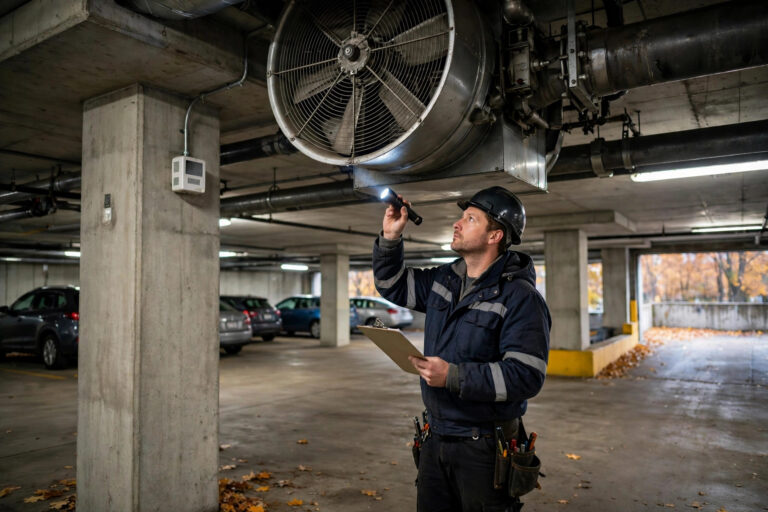
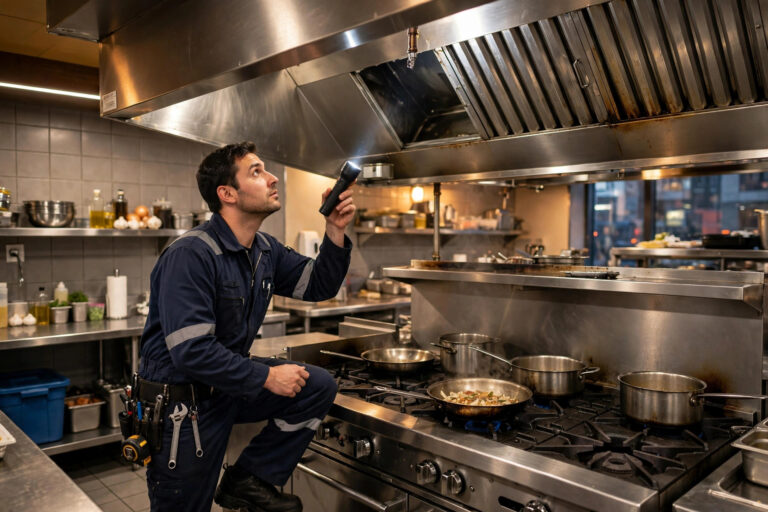
It also connects to problems GTA managers already know. A building struggling with stale air is not always short on outdoor air; sometimes the air cleaning, distribution or controls are the weak link, as we covered in our look at parking garage ventilation and in commercial kitchen ventilation. An IAQP evaluation forces those questions into the open, with documented contaminant targets instead of guesswork.
What Building Owners and Managers Should Do
- Ask the question early. On your next retrofit, fit-out or system replacement, ask your engineer or design team whether an IAQP evaluation was considered alongside the usual VRP calculation, and ask to see the comparison.
- Never just close dampers. Reducing outdoor air without a documented design is not performance based ventilation; it is a shortcut that can harm occupants and create liability. Ventilation changes belong in a stamped, documented design by qualified professionals.
- Demand rated data. If air cleaning is part of the strategy, ask for the filter and device performance ratings, including the ASHRAE 52.2 and 145.2 ratings cited in the release, not marketing claims alone.
- Keep maintaining what you have. Until a new design is approved and installed, keep existing ventilation, filtration and controls maintained. A future design tool does not fix a neglected system today.
- Bring in a licensed pro. Work that touches gas, electrical or life-safety systems must be handled by licensed professionals only. Use a verified pro for assessments and any installation work.
Planning a retrofit or a ventilation upgrade for a GTA building? Post your job on The Quality HVAC and we will connect you with a verified local pro. Explore our commercial and industrial services, see our residential services for home projects, or contact us with questions.
Sources: Fellowes and HVAKR, “Fellowes and HVAKR Launch IAQP-Ready Solution to Help Engineers Reduce Ventilation Energy Use and HVAC Costs,” via PRWeb (published October 15, 2026); corroborating coverage in HPAC Engineering (October 15, 2026). The 39 percent HVAC energy figure and the Jason Jones quote are from the companies’ release, as cited above.