The Condo That Blew Cold Air in October: A Fan Coil Wake-Up Call
The call came from a condo near Liberty Village on the first cold morning after the building switched over to heating. The thermostat was set to 23, the fan was running, and the vents blew steady cold air. The owner had already raised the temperature twice. Fan coil unit heating problems often look exactly like this in Toronto high-rises: the fan works, the thermostat responds, but no warm air ever arrives.
That pattern repeats across the GTA every October. Thousands of condos heat through in-suite fan coil units fed by a central boiler plant, and the changeover from cooling to heating exposes every weak valve, clogged filter, and tired actuator that sat idle all summer. This guide explains why units blow cold, what a technician checks first, and what actually fixed this one.
On this page
Why Fan Coil Unit Heating Fails First in Fall
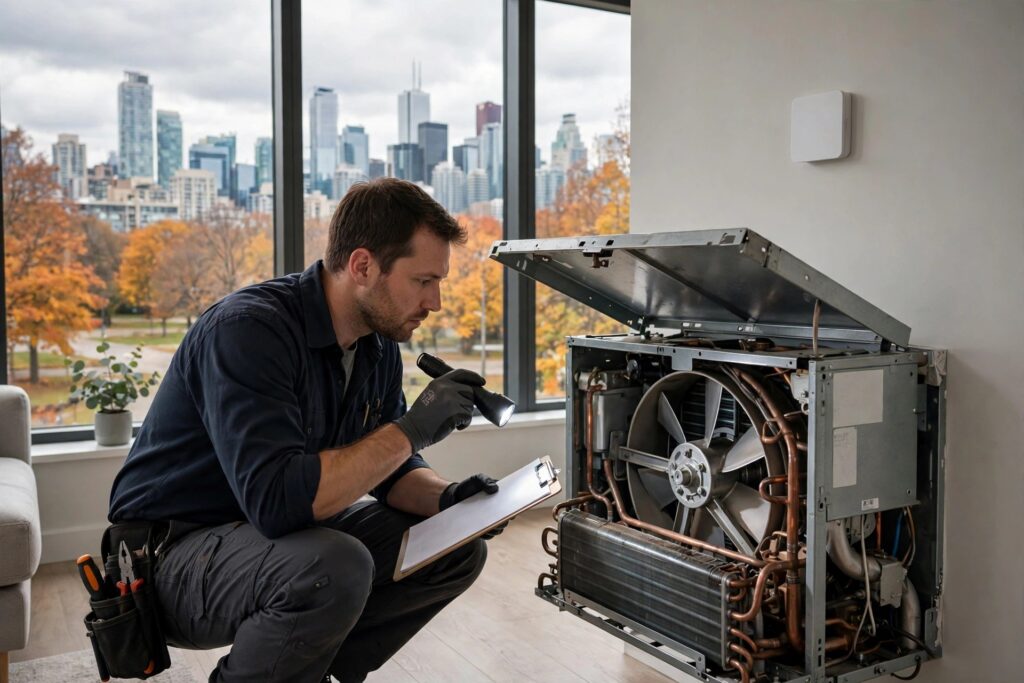
A fan coil unit does not make heat. It borrows it. Hot water from the building boiler plant flows through a coil inside the unit, and a fan blows room air across that coil. If the hot water never arrives, or the air cannot pass, the unit can run all day and still blow cold.
In this suite, three problems stacked up:
- A stuck changeover valve. The valve that should open to hot water was seized after months in the cooling position, so only chilled water reached the coil.
- A clogged filter and dirty coil. A summer of dust had matted the filter, cutting airflow so even warm water would have struggled to heat the room.
- Air trapped in the coil. An air pocket at the top of the coil blocked water flow through half of it, leaving the coil warm at the bottom and cold at the top.
None of those faults stops the fan. The unit sounds healthy, the thermostat lights up, and the suite slowly gets colder. That is why fan coil unit heating faults are so often misread as thermostat failures, and why replacing a thermostat rarely fixes them.
What a Technician Checks for Fan Coil Unit Heating Problems
A good diagnosis follows the heat from the building plant to the room. The technician on this job worked through a simple sequence:
- Building changeover status. First, confirm the building has actually switched to heating and the boiler plant is running. Our boiler changeover Toronto guide explains how that building-wide switch works and why timing matters in fall.
- Thermostat and fan operation. Each fan speed was tested, and the thermostat call for heat was verified before anything was opened up.
- Valve and actuator response. The changeover valve and its actuator were checked to see whether they moved and fully opened when heat was called for.
- Coil temperature and air locks. Pipe temperatures at the coil inlet and outlet showed whether hot water was arriving, and the bleed point was checked for trapped air.
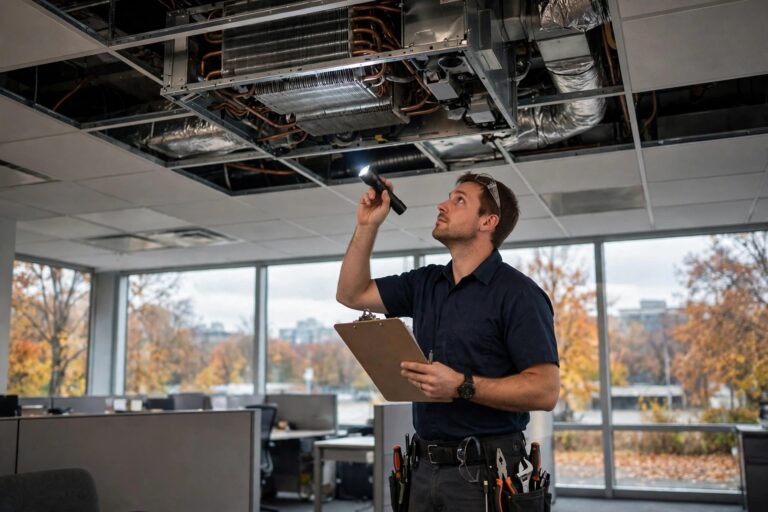
- Filter and coil condition. The filter, coil fins, and fan were inspected for the dust buildup that strangles airflow.
- Leaks and drain condition. The unit was checked for valve and piping leaks, and for a clear condensate drain, because a fan coil leak can damage the suite below.
That sequence matters. The building plant in this case was healthy, and boilers in Ontario fall under TSSA oversight, which building teams can review through TSSA’s boilers and pressure vessels dashboard. The fault was inside the suite unit, not in the plant room, and the checks proved it before any parts were ordered.
Fan Coil Unit Heating Fixes That Actually Worked
With the causes confirmed, the fixes were practical and staged:
- Freed and tested the changeover valve, then confirmed the actuator drove it fully open and closed on command.
- Bled the air from the coil until water flowed evenly and the whole coil heated up, not just the bottom rows.
- Replaced the clogged filter and cleaned the coil and fan, restoring full airflow across the coil.
- Checked every pipe joint and valve stem for leaks once the system was hot and under pressure, when small drips show themselves.
- Ran the unit through a full heating cycle at each fan speed and confirmed warm air at the grille and a satisfied thermostat.
By that evening the suite held its set temperature, the fan cycled off between calls for heat, and the vents blew warm for the first time since spring. Good fan coil unit heating is rarely about one dramatic repair. It is about water flow, airflow, and a valve that actually moves, all checked together.
What Condo Owners and Tenants Can Check Safely
You cannot open a fan coil unit safely without training, but you can spot early signs and give a technician or your property manager useful information:
- Confirm the building changeover date. Property management posts the heating switch date each fall. If your whole building is cold, the issue is likely building-wide, not your unit.
- Check the obvious settings. Make sure the thermostat is set to heat, the fan is on, and supply vents are not blocked by furniture or curtains.
- Note what the air feels like. Cold air with a strong fan, warm air that fades, and no air at all point to different faults. Write down which one you feel, and when it started.
- Listen and look. Gurgling can mean trapped air, grinding can mean a failing fan motor, and any water stain below the unit or musty smell needs a prompt report.
- Report leaks right away. A dripping fan coil can damage your flooring and the suite below. Shut nothing off yourself unless your building has given you a written procedure; call property management first.
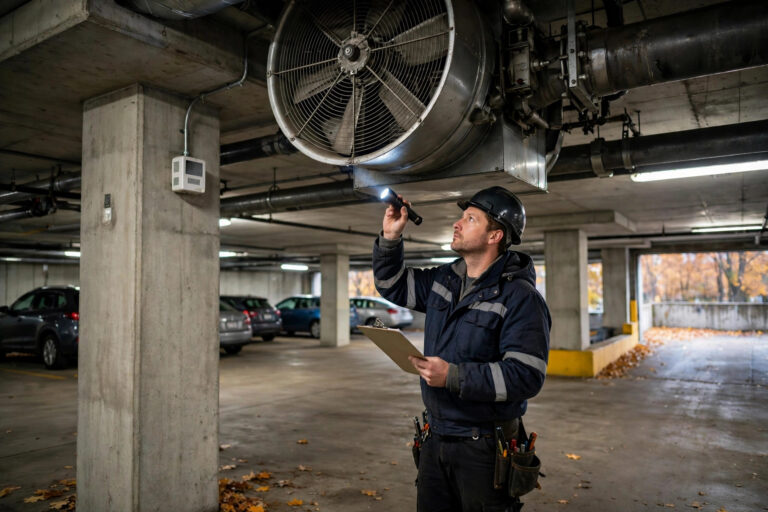
Anything involving opening the unit, valves, piping, or electrical work is licensed-professional-only work in Ontario. Building systems faults also affect shared spaces, the same way parking garage ventilation faults affect a whole condo, so loop in property management early.
How to Prevent Fan Coil Unit Heating Problems All Winter
Fan coils reward a little fall attention and punish neglect by January, when technicians and building staff are busiest:
- Book a fall service visit for in-suite units before the first deep cold, including filter replacement, coil cleaning, and valve testing.
- Replace filters on schedule. A clogged filter is the cheapest fault to prevent and the most common cause of weak airflow.
- Exercise the heating early. Run the heat for an hour on the first cool day in October. A stuck valve found in October is a quick fix; the same valve found at minus 15 is an emergency.
- Keep the unit access panel reachable. Closets stacked against the fan coil closet slow every repair and can hide early leak signs.
- Know your building rules. In many Toronto condos the fan coil is a common element or a unit-owner responsibility with approved-contractor rules. Check before you book anyone.
Prevention matters beyond comfort. A leaking or neglected fan coil can cause water damage claims that dwarf the cost of a fall tune-up, so a working unit protects the suite, not just the temperature in it.
Book a Pro Before the First Deep Cold
If your fan coil unit heating blows cold, gurgles, or leaves one room freezing while the fan runs all day, do not just keep raising the thermostat. Water flow, airflow, valves, and the building changeover need to be checked together, by a licensed pro, while the weather still gives you time.
Post your job on The Quality HVAC and we will connect you with a verified local pro in the GTA. Browse more guides on our blog, or see our residential and commercial and industrial services.