The Restaurant Kitchen That Kept Failing Inspection: Commercial Kitchen Ventilation Explained
Table of Contents
How Commercial Kitchen Ventilation Works
The call came in from a restaurant owner on the Danforth at 9 a.m. on a Tuesday, two days before her public health re-inspection. The lunch rush the week before had left a haze of cooking smoke hanging over the pass, the dining room smelled like the fryer, and the inspector had flagged the kitchen ventilation system as deficient. “The hood fan is running,” she said. “So why is the smoke still here?”
If you run a restaurant, cafeteria, or food truck commissary in Toronto, your commercial kitchen ventilation system is doing far more than clearing cooking smells. It is a fire-safety and worker-safety system, and when it underperforms, inspections fail, insurance gets shaky, and staff breathe air they should not have to.
6 Commercial Kitchen Ventilation Problems That Fail Inspections
A commercial kitchen ventilation setup has two halves that must stay in balance. The exhaust half pulls grease-laden air, heat, and smoke up through the hood, past grease filter baffles, and out through the ductwork to a rooftop exhaust fan. The makeup air half pushes fresh air back into the kitchen to replace what was exhausted, usually through a dedicated rooftop makeup air unit.
When those two halves are matched, the kitchen sits at a slight negative pressure: cooking fumes flow toward the hood instead of drifting into the dining room. When they are not matched, or one half has failed, everything goes wrong at once.
Here are the six problems a technician finds most often behind a failed inspection:
- Grease-clogged hood filters. Baffle filters are the first line of defence against grease fires. When they are caked solid, grease passes into the ductwork, airflow drops, and capture fails. Filters should be cleaned on a strict schedule, not “when they look dirty.”
- A dead or underperforming makeup air unit. This is the single most common culprit. If the makeup air unit is not running, the kitchen goes strongly negative: doors slam, pilots flutter, and the exhaust hood cannot pull properly because there is no replacement air to move. In the Danforth kitchen, the makeup air unit had a seized belt and had been dead for weeks.
- Worn exhaust fan components. Belt-driven rooftop exhaust fans lose tension, bearings wear, and fan blades foul with grease. A fan spinning at reduced speed moves far less air than the kitchen needs at full load.
- Negative pressure backdrafting gas appliances. When the exhaust outpaces the makeup air, the kitchen sucks air down the flues of gas-fired water heaters and furnaces nearby, pulling combustion gases into the building. This is a serious carbon monoxide risk and one reason gas work belongs strictly to licensed professionals.
- Grease buildup in the ductwork. Filters catch most grease, but not all. Duct cleaning on a regular schedule is required by fire safety standards (NFPA 96 covers commercial kitchen exhaust systems), and inspectors do look at duct condition.
- Hood coverage that no longer matches the cooking line. Restaurants add equipment over time: a new charbroiler slides in beside the range, but the hood does not extend over it. Anything cooking outside the hood’s capture zone smokes up the room.
The Danforth kitchen had two of the six: a dead makeup air unit and grease-clogged filters. Both are fixable in a single service visit, and the re-inspection passed.
What a Technician Checks on a Service Call
On a commercial kitchen ventilation service call, a licensed technician works through a standard checklist:
- Hood filter condition and cleaning schedule
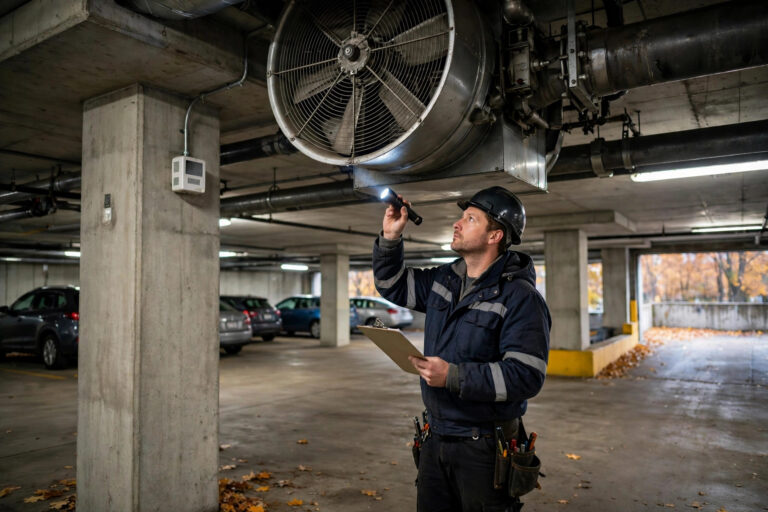
- Rooftop exhaust fan: belts, bearings, blade condition, and actual airflow
- Makeup air unit operation, heating performance, and interlock with the exhaust
- Ductwork condition and grease accumulation level
- Hood capture: does the hood cover every piece of cooking equipment under it?
- Building pressure balance: is the kitchen slightly negative without starving the rest of the building?
- Fire suppression system links in the hood (the tech flags issues; servicing is a specialist’s job)
Gas Equipment and Ventilation: Licensed Pros Only
Most Toronto commercial kitchens cook with natural gas, which puts ventilation work squarely in regulated territory. In Ontario, any work on gas-fired equipment must be done by TSSA-registered contractors employing certified gas technicians. A ventilation problem that affects gas appliance venting, like the backdrafting issue above, is never a do-it-yourself fix.
Before hiring anyone for gas-related work, verify the contractor’s TSSA registration using TSSA’s lookup tool. Registered contractors are the only businesses legally authorized to do fuels work in Ontario. A recent Toronto gas line strike case shows how seriously TSSA treats unsafe gas work.
Preventing the Next Failed Inspection
A commercial kitchen ventilation maintenance plan beats emergency calls every time:
- Clean hood filters weekly in a busy kitchen; more often for charbroilers and fryers.
- Schedule quarterly ventilation service covering the exhaust fan, makeup air unit, and belts.
- Keep up with duct cleaning on the interval your fire safety requirements demand.
- Re-check hood coverage every time you add or move cooking equipment.
- Watch for early warning signs: smoke drifting past the hood edge, dining room cooking smells, doors that are hard to open, or pilot lights that keep going out.
Related reading: our guide to warehouse makeup air ventilation covers the same balancing principle on an industrial scale.
Kitchen Ventilation Problems? Get a Licensed Pro
A failing kitchen ventilation system is a failed inspection, a fire risk, and a carbon monoxide risk rolled into one. Do not wait for the re-inspection notice to land.
Post your job on The Quality HVAC and we will connect you with a verified local pro for your commercial kitchen ventilation service call anywhere in the GTA. Browse commercial and industrial services or residential services to see how the marketplace works.