Combustion Air, Dilution Air and Flue Gas: What Every Homeowner Should Know
Every gas furnace, boiler and water heater needs two simple things: fresh air coming in and exhaust going out. Get either one wrong and you can end up with poor heating, high bills or, at worst, carbon monoxide (CO) in your home. This guide explains combustion air, dilution air and flue gas in plain words, so you know what your appliances need and what to watch for.
1. Combustion Air: The Air That Feeds the Flame
Gas can’t burn without oxygen. Combustion air is the air drawn into the burner so the gas burns cleanly and completely. When an appliance doesn’t get enough combustion air, the flame is starved. A starved flame burns dirty, leaves soot and makes CO.
Everyday example: put a glass jar over a candle and the flame flickers and dies once the air inside is used up. A furnace squeezed into a small, sealed closet faces the same problem.
2. Dilution Air: The Air That Helps Exhaust Leave
Older natural-draft furnaces and water heaters have a metal cone or hood above the burner, called a draft hood or draft diverter. Room air is drawn in at the gap around that hood and mixes with the hot exhaust. That’s dilution air. It never reaches the flame. Its job is to:
- cool and thin out the exhaust,
- keep the draft up the chimney steady, and
- stop wind gusts at the top of the chimney from blowing out the burner.
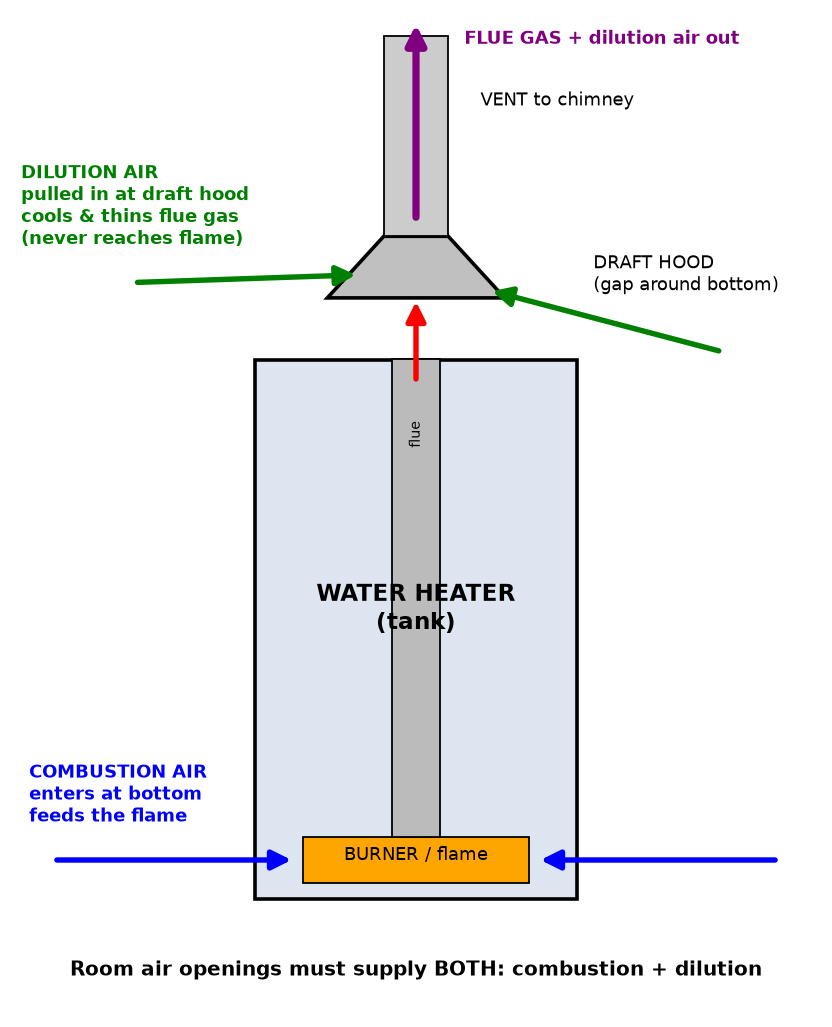
Because combustion and dilution both use room air, a room with a natural-draft appliance has to supply enough air for both jobs.
3. Flue Gas: What’s Left After Burning
Flue gas is the exhaust, a lot like the exhaust from a car’s tailpipe. It’s mostly carbon dioxide, water vapour and nitrogen. When combustion is poor, it can also carry carbon monoxide, which you can’t see or smell. The vent or chimney is there to carry flue gas safely outdoors.
How Combustion Air Differs by Appliance
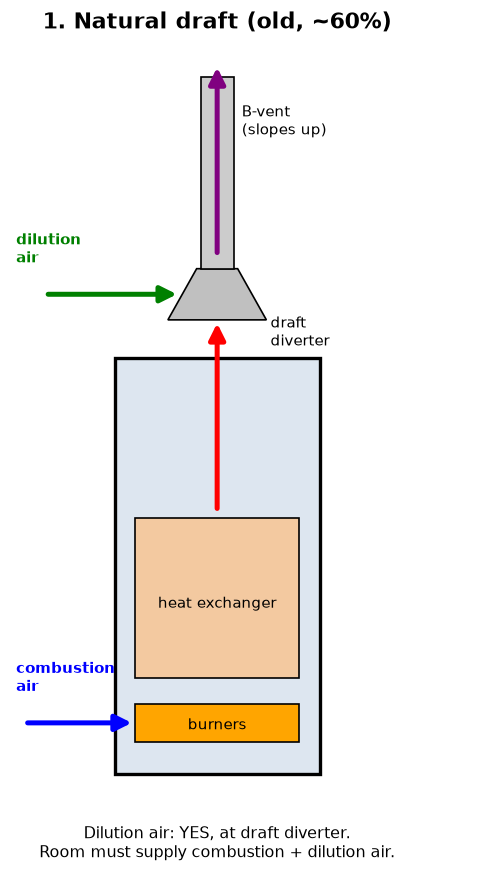
- Natural-draft (older) appliances use room air for both combustion and dilution. The hot exhaust rises up a B-vent or chimney on its own.
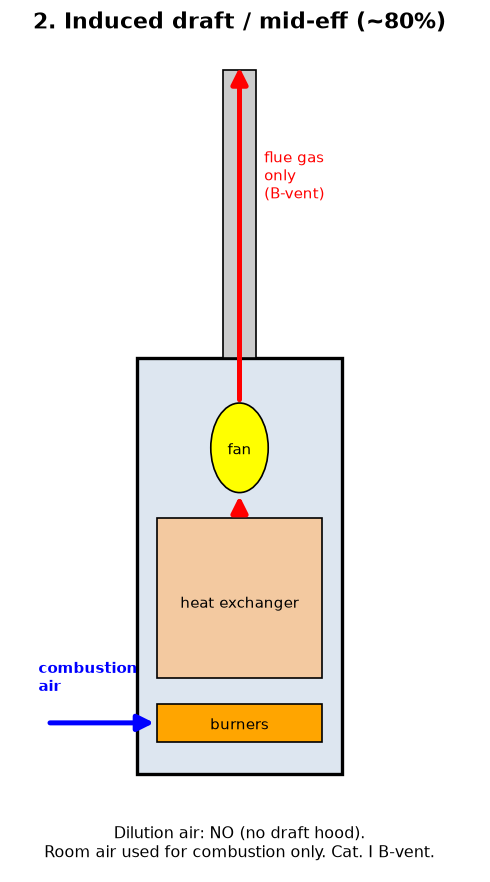
- Induced-draft (mid-efficiency) furnaces use a small fan to move exhaust into the vent. They have no draft hood, so there’s no dilution air, and room air is used for combustion only.
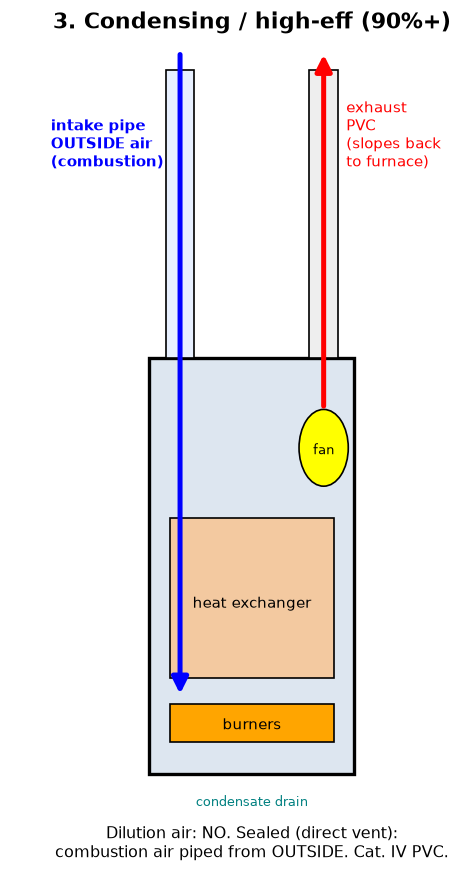
- High-efficiency (condensing) furnaces are usually sealed: combustion air comes in through a pipe from outdoors, and exhaust leaves through plastic venting. They depend far less on the air in your room.
Warning Signs to Watch For
- Soot or rust around the draft hood or vent pipe
- Heavy condensation on windows near the appliance
- A yellow, lazy flame instead of a crisp blue one
- Stuffy air, or headaches that ease when you leave home
- A furnace room that was closed in during a renovation
- Large exhaust fans or a new range hood that pull air out of the house and can draw exhaust back down the chimney
What the Code Says (in Plain Words)
In Ontario, gas appliance installations follow CSA B149.1:25, the Natural Gas and Propane Installation Code, as adopted with Ontario changes by TSSA’s Code Adoption Document amendment FS-279-26, in force since June 1, 2026. Both topics in this article sit in Section 8 of B149.1:25, which deals with venting systems and the air supply for appliances. In plain terms, that covers getting enough outside or room air to the appliance, sizing the vent or chimney to suit the appliance (Clause 8.13), and where a vent is allowed to end outdoors, with minimum distances from things like windows, doors and air intakes (Clause 8.14).
Ontario also adds a few rules of its own in this area. For example, FS-279-26 keeps air-supply openings away from dryer and other moisture exhausts, requires an existing chimney to be checked (and lined if needed) when an appliance on it is replaced or removed, and sets out what happens when older B-vent that isn’t rated for outdoor use is found running outside. Exactly which requirements apply to your home depends on the appliance and the building, so a licensed gas technician applies them on site. You can look up more plain-language summaries in our Code & Clause Lookup.
Stay Safe
- Keep the air openings to your furnace room clear. Don’t block grilles or seal up louvred doors.
- Install CSA- or ULC-listed CO alarms next to sleeping areas and on every storey, and test them monthly. See TSSA’s CO safety reminder and COSafety.ca for more tips.
- Have your gas appliances inspected every year by a TSSA-registered contractor. Our guide on how to find an HVAC contractor can help.
Sources
- TSSA, Gaseous Fuels Code Adoption Document Amendment FS-279-26 (effective June 1, 2026)
- TSSA, Carbon Monoxide Awareness Week: Doubling Down on CO Safety
- COSafety.ca (TSSA carbon monoxide safety)
This article is general information, not a substitute for an on-site inspection by a licensed gas contractor.