Furnace Vent Blocked by Snow: What It Means and What to Do First
Furnace Vent Blocked by Snow: What It Means and What to Do First
A furnace vent blocked by snow is one of the quietest winter failures in an Ontario home. There is no bang, no burning smell, and often no obvious warning at first. The furnace simply stops, locks out, or runs for a short time and then gives up, while the house slowly cools. After a heavy snowfall, a
drifting storm, or a night of freezing rain followed by snow, a furnace vent blocked by snow is worth checking before assuming the furnace itself has broken down. A furnace vent blocked by snow can shut a heating system down on purpose, because the furnace cannot safely vent its exhaust gases outdoors.
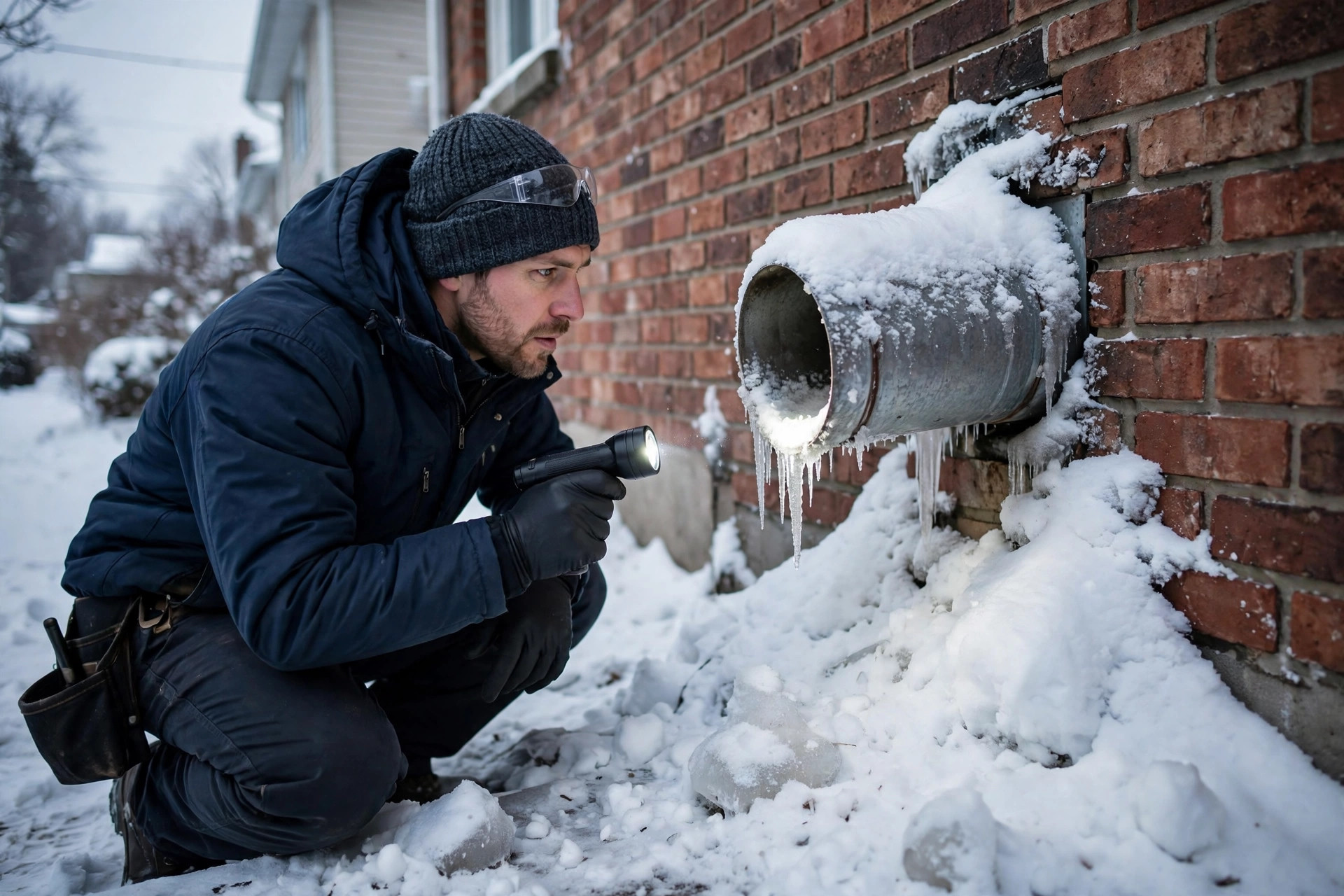
Most modern high-efficiency furnaces vent through white plastic pipes that exit through a basement or side wall, often only a foot or two above the ground. That low height is exactly what makes them vulnerable in winter. A snowbank piled against the wall, a drift that builds up overnight, or ice forming around the pipe opening can close off the exhaust path.
Older furnaces that vent through a chimney are less likely to be blocked by ground-level snow, but their intake or exhaust can still be affected by ice, a blocked chimney cap, or snow blown into a vent terminal. If your furnace stops during or just after a snowfall, a furnace vent blocked by snow is one of the first things to look for, from outside, without touching any gas part.
Table of Contents
What you are noticing
A furnace vent blocked by snow usually starts with heat that stops without a clear reason. The thermostat still calls for heat, the furnace may try to start, and then it shuts down. Some furnaces show a blinking error light, some lock out and need a reset, and some simply sit silent until the blockage is cleared. You may notice the house cooling room by room, a furnace that worked fine the day before a storm, or a system that starts and stops in short bursts. If you have a condensing furnace, you may also see water or ice around the vent pipe, because the exhaust from these furnaces contains moisture that can freeze at the terminal.
Timing is the biggest clue. Did the problem start during a snowfall, after snow was plowed or shoveled against the house, or after a roof snow load slid down beside a vent? Did a carbon monoxide alarm sound, or did you notice a faint exhaust smell near the furnace? Write down when the heat stopped and what the weather did just before it. That timing helps a licensed technician separate a furnace vent blocked by snow from a thermostat, ignition, or gas supply problem, and it helps you avoid resetting the furnace again and again without fixing the cause.
What it usually means
A furnace needs two clear paths to run safely: fresh air coming in for combustion, and exhaust gases going out. When a furnace vent blocked by snow closes either path, pressure switches and safety controls inside the furnace detect the change and shut the burner down. That furnace vent blocked by snow shutdown is a safety response, not a breakdown to override. Exhaust gases that cannot leave the house can spill back indoors, and that is where carbon monoxide becomes a real risk. A furnace that locks out after a snowfall is, in many cases, protecting the home, even though it leaves the house cold.
Furnace vent blocked by snow: most likely causes
- Snow drifted or plowed against the vent terminal. This is the most common cause. Wind drives snow into corners and against walls, and a plow, shovel, or snowblower can pile snow directly over a low vent pipe without anyone noticing. The vent does not need to be buried deep to cause a shutdown; even a partial blockage can change the pressure enough to trip a safety switch.
- Ice build-up at the vent opening. Condensing furnaces release moist exhaust, and in very cold weather that moisture can freeze into a ring of ice around the pipe opening. The ice narrows the opening over hours or days, so the furnace may run less and less reliably until it locks out. Freezing rain followed by cold temperatures can make this worse.
- Snow sliding off a roof onto the vent. Snow that slides off a roof or melts and refreezes near a wall vent can bury the terminal in a single fall. A vent that was clear in the morning can be blocked by the afternoon, which is why a furnace that stops after a thaw and refreeze deserves an outdoor look.
- A blocked intake pipe mistaken for an exhaust problem. Many high-efficiency furnaces have two pipes: one for exhaust and one for combustion air intake. Snow can block either one, and the furnace will shut down in both cases. Clearing only the exhaust pipe while the intake stays buried will not restore normal operation.
- Debris, leaves, or a nest inside the terminal. Snow is the seasonal cause, but a vent can also be partly blocked by leaves, ice, or debris that built up before winter. A furnace that struggled in late fall and then failed in the first snowstorm may have had a partial blockage all along.
- A vent installed too low for the local snow depth. If a vent terminal sits close to grade, normal winter snow can reach it in an ordinary storm. That is an installation question, not a homeowner fix, and it is worth raising with a licensed technician once heat is restored, so the terminal can be checked against current clearance rules.
Clear what you can safely clear from a furnace vent blocked by snow from outside, check the carbon monoxide alarms, and then let a technician check the venting if the furnace still will not run normally. A furnace vent blocked by snow should never be treated as a reason to keep resetting the furnace until it runs. Each reset without clearing the blockage leaves the exhaust problem in place, and repeated resets can mask a deeper venting or pressure problem.
Safe checks you can do yourself
These checks are outdoor and visual only. They do not involve opening the furnace cabinet, touching a gas valve, adjusting a burner, or working on a roof. If a furnace vent blocked by snow is on a roof, high on a wall, or buried under ice you cannot safely reach from the ground, leave it and call a licensed technician.
Furnace vent blocked by snow: safe checks before you call
- Find the vent pipes first, in daylight if possible. Walk around the outside of the house and look for the white plastic pipes that exit through a side wall, usually near the furnace room. Note whether there are one or two pipes, and whether either opening is covered by snow, ice, or debris.
- Clear loose snow by hand or with a soft brush. If the terminal is reachable from the ground, brush away loose snow from around and above the pipe opening, and clear a space around it so drifting snow does not immediately cover it again. Do not push snow into the pipe, and do not use a metal tool that could crack the pipe.
- Look for ice, but do not force it off. If ice has formed around the opening, note it and tell a technician. Do not pour hot water into the pipe, do not chip at ice with a hard tool, and do not cover the terminal with anything to keep snow out, because a cover blocks the vent just as surely as snow does.
- Check the carbon monoxide alarms. Make sure the alarms near bedrooms and near the furnace are working and have not sounded. If any alarm has sounded, leave the home and follow the steps in the carbon monoxide detector guide before doing anything else.
- Check the thermostat and power. Make sure the thermostat is set to heat and above room temperature, and that the furnace switch and breaker are on. A blank thermostat is a separate problem, covered in the thermostat blank guide, and it can look like a furnace failure.
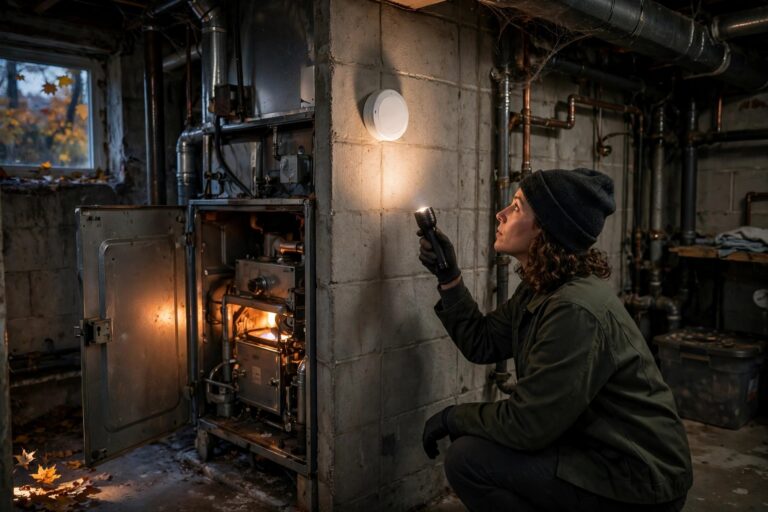
- Note any error light, without opening the cabinet. If your furnace has a sight glass or a visible error light, note the blinking pattern through the window. The furnace error codes guide explains how that blinking light is read, and the pattern is useful information for a technician.
- Check whether the furnace tries to start after clearing a furnace vent blocked by snow. After loose snow is cleared, the furnace may restart on its own or after a single thermostat cycle. If it runs normally, keep an eye on the vent during the next snowfall. If it locks out again, stops, or shows the same error, do not keep resetting it.
Shoveling and snow clearing around a furnace vent blocked by snow is normal winter home maintenance, but only from the ground and only around the outside of the pipe. The moment a check would require a ladder, a roof, opening a panel, or touching a gas or vent part inside the house, it stops being a homeowner check.
What not to touch
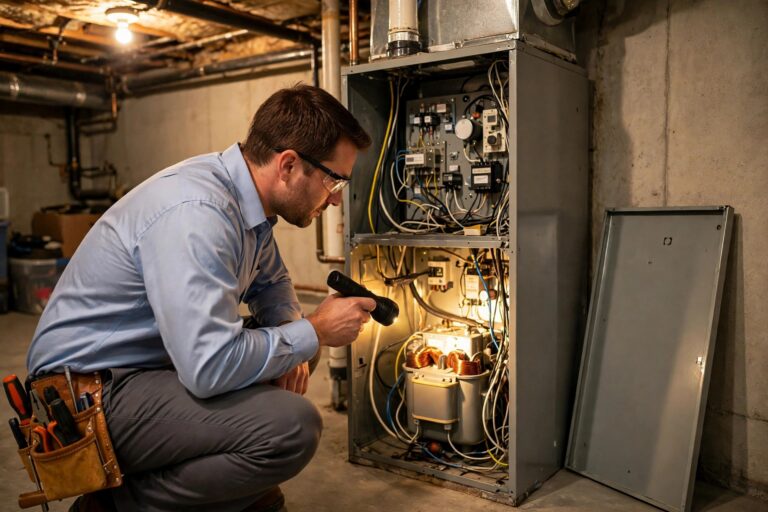
Do not touch the gas line or the gas valve, do not adjust gas pressure, do not open the burner compartment, and do not clean, disconnect, or reroute any vent pipe or flue inside the house. Do not remove a furnace panel to reach a pressure switch, do not disconnect a safety control to keep the furnace running, and do not extend, shorten, or move a vent terminal yourself.
Do not block, cover, or seal a vent opening, and do not use a space heater as a long-term substitute for a furnace that has shut down for a venting reason. In Ontario, gas appliance work must be performed by a TSSA-licensed technician, and venting, wiring, and refrigerant work inside the cabinet belong to a licensed technician as well. If you are checking a technician’s credentials, the TSSA fuels contractor lookup is a public resource for gas work.
Do not run the furnace with panels removed, and do not ignore a carbon monoxide alarm to keep the heat on. A furnace shut down because of a furnace vent blocked by snow that has been red-tagged must stay off until a licensed technician clears it, as explained in the furnace red tag guide. A pilot problem that appears at the same time as a vent blockage is also a technician problem, covered in the furnace pilot light guide, not a reason to relight or adjust gas parts yourself.
Stop and call a licensed technician if
- You smell gas, your carbon monoxide alarm sounds, or anyone in the home has headaches, dizziness, or nausea that ease outdoors: leave the home and call 911 or your gas utility emergency line.
- The furnace vent blocked by snow pattern keeps returning, even after loose snow around the terminal is cleared.
- The vent is iced over, damaged, cracked, disconnected, or buried under ice you cannot safely clear from the ground.
- The vent is on a roof or high on a wall, or it is blocked by a snow load that slid off the roof.
- The furnace locks out, shows an error light, or short-cycles after the vent is cleared.
- You see soot around the furnace, water staining on the vent, or a smell of exhaust near the furnace.
- The vent terminal looks too low for the snow depth, or you are unsure which pipe is the intake and which is the exhaust.
A furnace vent blocked by snow is usually a simple outdoor problem with a simple outdoor fix, but it sits on the safety side of the furnace, and that is why it deserves a careful check rather than repeated resets.
Clear the loose snow from the ground, confirm the carbon monoxide alarms are working, and then get a licensed technician to check the venting, the pressure switches, and the terminal clearance if the furnace still will not run normally. That check is quick when the furnace vent blocked by snow is the cause, and it restores heat without guessing at gas or venting parts. If the job needs a pro, hire a TSSA-licensed technician and ask to see their licence before any gas work starts.
The Quality HVAC is an information and marketplace platform. We do not install, service, or repair HVAC equipment. Content here is educational only and is not a substitute for a licensed technician. In Ontario, gas appliance work must be performed by a TSSA-licensed technician. If you smell gas or your carbon monoxide alarm sounds, leave the home and call 911 or your gas utility emergency line.
Looking for equipment rather than a service? Browse the equipment marketplace for furnace-related items listed by sellers, explore the heating tools collection for more plain-language guides, or return to the symptoms library for other furnace warning signs.