At 2 a.m. on a cold October night, the carbon monoxide alarm in a Scarborough family’s hallway started shrieking. Nobody smelled anything. Nobody felt sick. But within minutes, the fire crew’s meter confirmed it: carbon monoxide was building up inside the home. The source, found the next morning, was a cracked heat exchanger in their 19-year-old gas furnace. That alarm is the only reason this story ends well.
October is when Toronto’s furnaces wake up from a six-month nap, and for aging equipment, that first cold snap is the stress test that exposes hidden damage. Here is what a cracked heat exchanger is, the warning signs to watch for, and the safe way to respond if your alarm ever goes off.
Table of Contents
What a Cracked Heat Exchanger Does (and Why It Cracks)
The heat exchanger is the heart of a gas furnace: a set of steel chambers that carry hot combustion gases on their way to the vent, while your home’s air flows around the outside and picks up the heat. It keeps two air streams separate: exhaust going out, household air staying clean.
Steel expands every time the burner fires and contracts every time it shuts off. Over 15 to 20 years of Toronto heating seasons, that relentless thermal cycling fatigues the metal until cracks form. A few things speed the process up:
- An oversized furnace that short-cycles, firing and stopping in rapid bursts instead of running steady cycles. (If your furnace turns on and off every few minutes, read our guide to furnace short cycling on the coldest night.)
- Restricted airflow from dirty filters or blocked vents, which overheats the metal.
- Skipped annual maintenance that would have caught early stress signs.
Once a crack opens, combustion gases, including carbon monoxide, can slip into the duct system and circulate through the house.
6 Warning Signs of a Cracked Heat Exchanger
Most cracked heat exchangers give hints before the alarm ever sounds:
- The carbon monoxide alarm sounds. Treat every alarm as real, every time.
- Soot streaks on or around supply vents, or black marks on the furnace cabinet.
- A metallic or chemical smell when the heat is running.
- Burner flames that flicker, dance, or roll toward you when the blower starts. A steady blue flame is normal; a restless flame is not.
- Rust, corrosion, or water stains on the furnace or its vent piping.
- Flu-like symptoms that fade when you leave the house (headache, nausea, dizziness that ease outdoors and return indoors).
If Your CO Alarm Goes Off Tonight
Do exactly what the Scarborough family did:
- Get everyone out of the house immediately, including pets.
- Call 911 from outside.
- Do not go back in for coats, phones, or anything you left behind.
- Do not open windows first or reset the alarm hoping it was a false reading.
- Re-enter only when emergency responders say the home is safe.
Carbon monoxide is colourless and odourless, which is why TSSA’s carbon monoxide safety campaign calls it the silent killer. In Ontario, roughly 65% of all CO deaths and injuries happen inside homes. The alarm is your last line of defence, not a gadget to argue with.
How a Technician Confirms a Cracked Heat Exchanger
Opening up and testing a gas furnace is licensed-professional work. This is never a homeowner inspection. A licensed technician will:
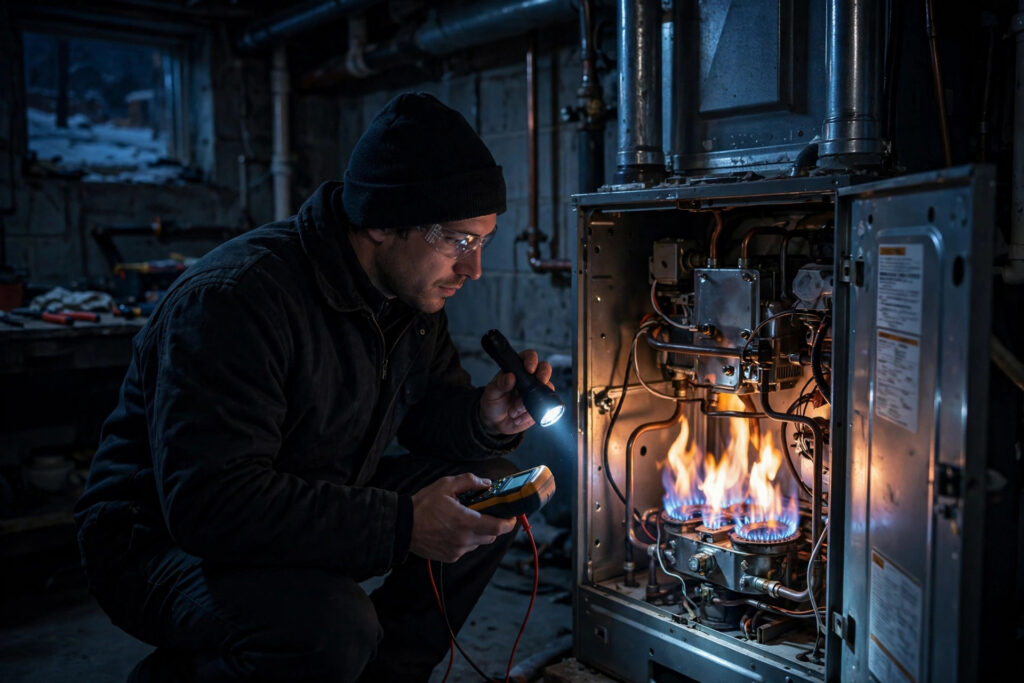
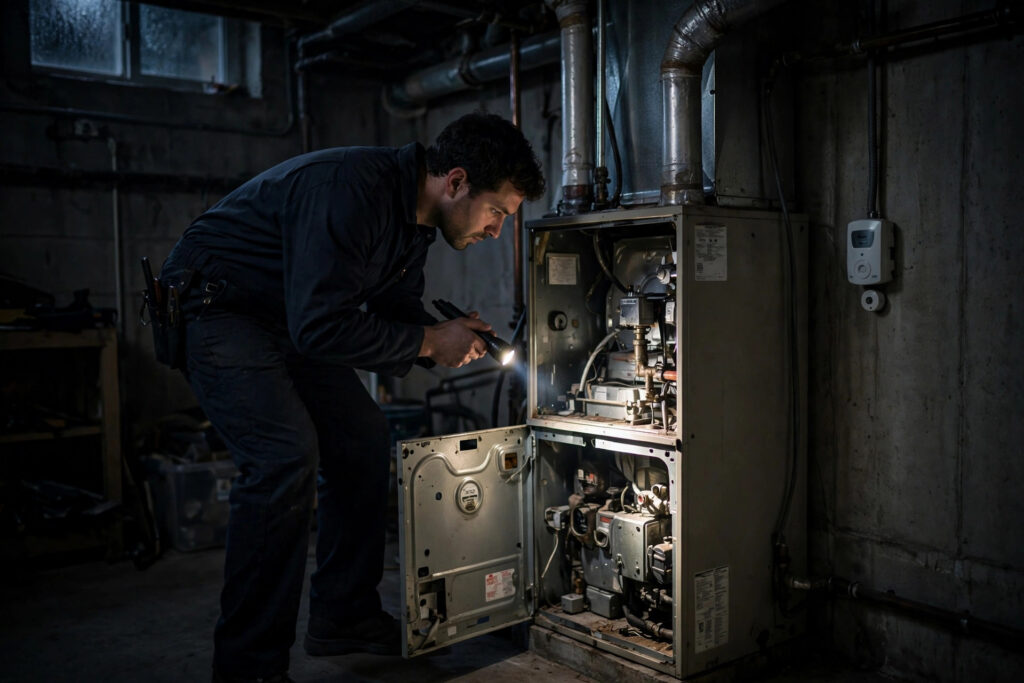
- Inspect inside the heat exchanger cells with a borescope camera, looking for visible cracks and separations.
- Watch the burner flames while the blower starts; a flame that wavers or lifts can indicate a breach.
- Run combustion analysis, measuring carbon monoxide levels in the flue gas against safe limits.
Ontario’s rules are clear: TSSA-registered fuels contractors are the only businesses that can legally do fuels-related work in the province. Gas and combustion work is never a DIY job.
Cracked Heat Exchanger: Repair or Replace?
A heat exchanger can technically be replaced, but in a 15- to 20-year-old furnace the economics usually point the other way: the part is expensive, the labour is heavy, and the rest of the furnace is the same age as the part that failed. Most homeowners in this situation choose a new high-efficiency furnace, which runs more safely and efficiently than a two-decade-old unit. A licensed technician can lay out both options honestly after the inspection. Get the assessment first, then decide.
Keep Your Furnace Safe This Heating Season
Heating season in the GTA runs October to March. Before the deep cold arrives:
- Book an annual furnace maintenance visit with a licensed technician.
- Change or clean the filter monthly during heating season.
- Test your CO alarms monthly. Ontario’s updated carbon monoxide alarm rules took effect January 1, 2026, so make sure every storey of your home has a working alarm.
- Never ignore a CO alarm, even if everyone feels fine.
Learn more from TSSA’s carbon monoxide safety site, which lists the common CO sources in Ontario homes and how to protect your family.
Don’t Let an Aging Furnace Decide Your Winter
A cracked heat exchanger is one of the few furnace problems that is genuinely dangerous, but also one of the easiest to catch with an annual checkup and working CO alarms.
Need a furnace safety inspection? Post your job on The Quality HVAC and we will connect you with a verified local pro for residential furnace service across the GTA. Explore our residential heating and cooling and commercial and industrial HVAC pros, or contact us with questions.