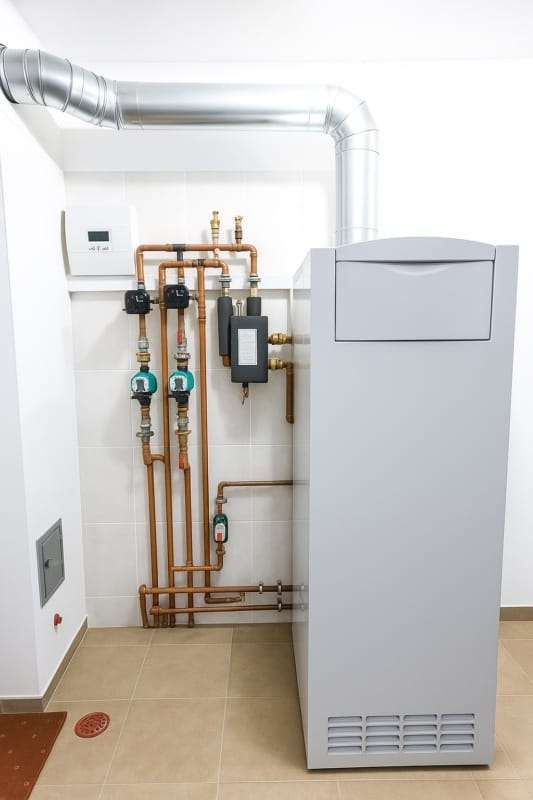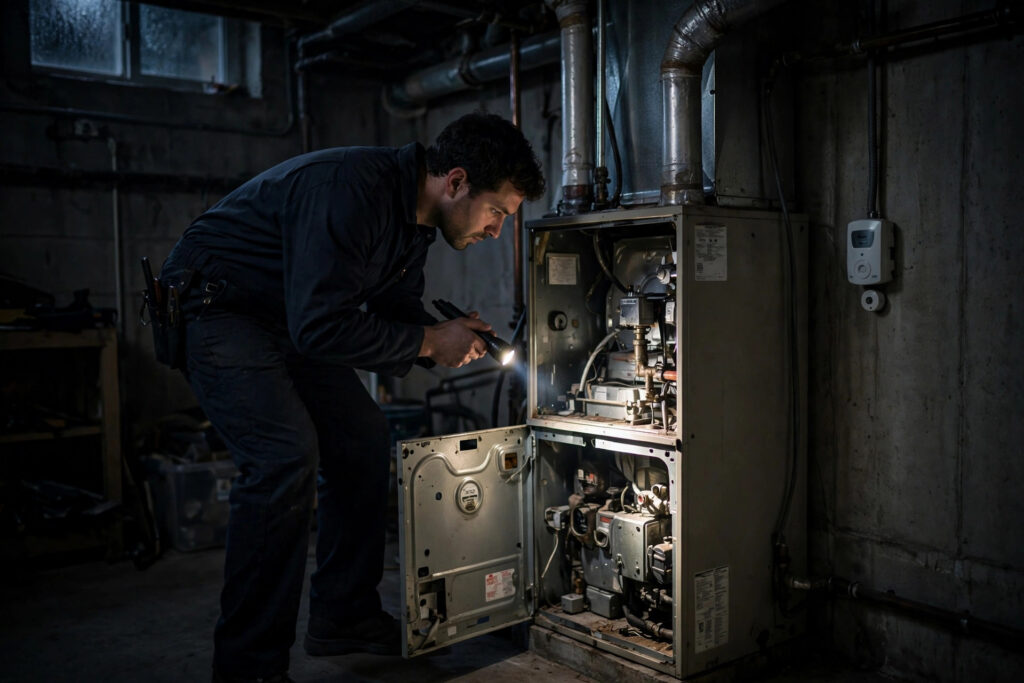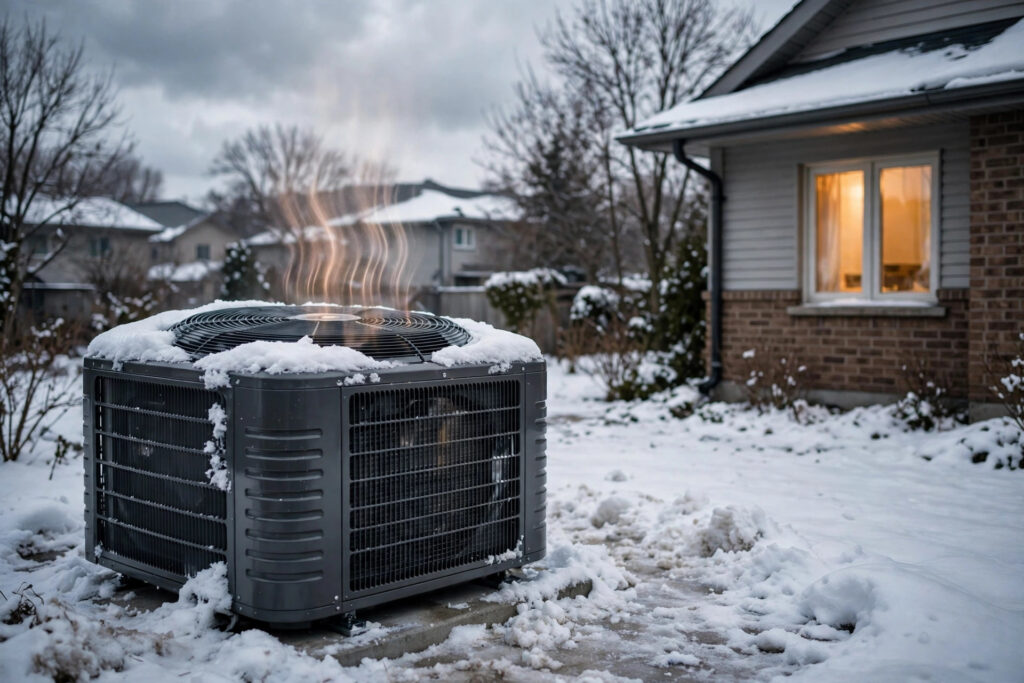
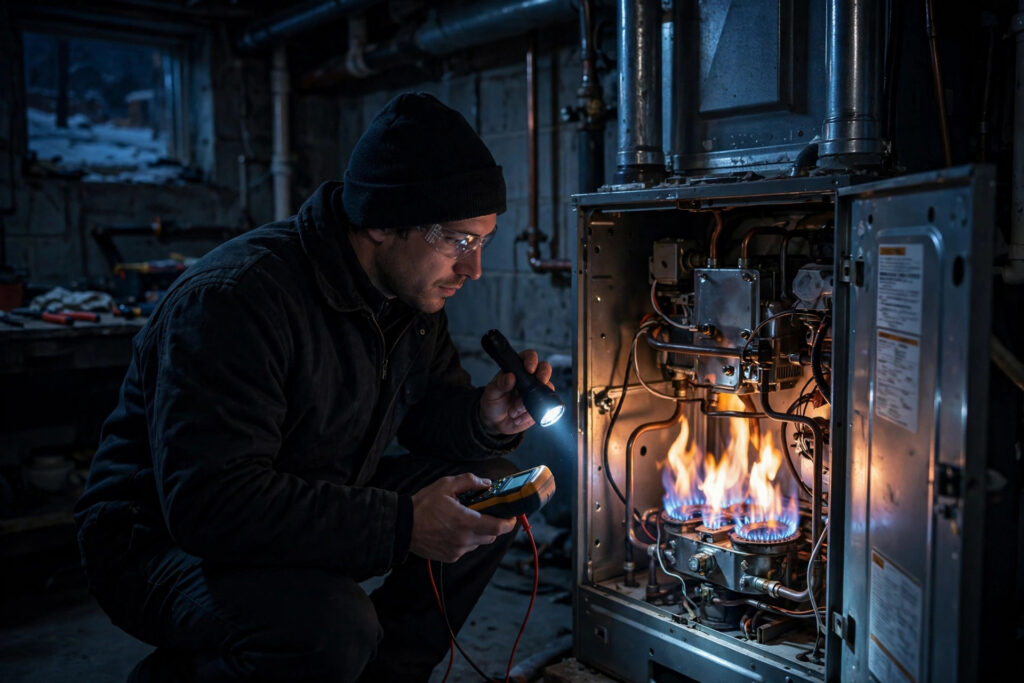
The call came in at 11:40 p.m. on a January night, with the thermometer in Scarborough sitting at −22°C. The homeowner’s furnace would fire up, run for two or three minutes, shut off, then try again — over and over. The thermostat read 16°C and falling. That stop-start pattern is furnace short cycling, and in a Toronto winter it is more than an annoyance: every aborted cycle burns gas without warming the house, and the family was layering blankets in the living room while the furnace cycled itself toward a breakdown.
If your furnace keeps turning on and off without ever finishing a heating cycle, this guide explains what is happening, what a technician looks for, and what you can safely check yourself.
What Is Furnace Short Cycling?
A healthy furnace runs a full cycle: it fires, heats your home to the thermostat’s set temperature, then shuts off and rests. Short-cycling breaks that rhythm. The furnace starts, runs for only a few minutes, and shuts down before the house reaches temperature — then starts again. Each aborted cycle wastes energy, wears out components like the ignitor and blower motor, and leaves rooms cold.
The frustrating part is that short-cycling has several possible causes, ranging from a five-minute homeowner fix to a serious safety issue. That is why diagnosis matters more than guessing.
Fixing Furnace Short Cycling in Toronto: What a Technician Checks
Back to that January night. Here is what the technician worked through, in order:
- The thermostat. It sounds too simple, but a thermostat with dying batteries — or one mounted above a heat register — can misread the room temperature and shut the furnace down early. This one checked out fine.
- The air filter. This is where the story turned. The filter was clogged solid; it clearly had not been changed in months. A choked filter starves the furnace of airflow. Without enough air moving across the heat exchanger, the furnace overheats internally, and a safety device called the high-limit switch shuts the burners down to prevent damage. Once things cool off, the furnace tries again. On, off, on, off — short-cycling driven by an inexpensive replacement filter.
- The flame sensor. With the filter replaced, the technician still cleaned the flame sensor — a small metal rod that sits in the burner flame and confirms to the gas valve that it is safe to stay open. When carbon and soot coat the sensor, it cannot “see” the flame. The furnace lights, the sensor fails to prove the flame, and the gas valve shuts off as a safety measure. Then the furnace retries. A soot-covered flame sensor is one of the most common causes of furnace short cycling we see in Toronto homes.
That night, the clogged filter plus a dirty flame sensor was the full answer. The technician cleaned the sensor, installed a fresh filter, and ran the furnace through three complete heating cycles to confirm it held. By 1 a.m., the house was climbing back toward 21°C.
Other Causes of Short-Cycling Worth Knowing
Not every call ends this simply. A licensed technician also rules out:
- An oversized furnace — a unit too powerful for the home heats too fast and shuts off, cycling constantly. Common in older homes where a replacement was sized by guesswork.
- A failing high-limit switch — if the switch itself is faulty, it can trip even at normal temperatures.
- Blocked exhaust or intake vents — snow, ice, or debris blocking the vent pipes on a high-efficiency furnace will shut it down as a safety response. After a heavy GTA snowfall, this is worth a look.
- A cracked heat exchanger — rare, but serious. It can trip safety switches and, more importantly, leak carbon monoxide.
That last one is why short-cycling should never be ignored for long. Ontario’s safety regulator, TSSA, takes enforcement action against unsafe gas work — it fined a contractor $10,000 for unsupervised furnace work in a Marysville home on September 22, 2026. Before anyone touches your furnace, verify they are a TSSA-registered fuels contractor on the regulator’s consumer safety page.
What You Can Safely Check Yourself
- Check and replace your air filter. In winter, look at it monthly. If you cannot see light through it, replace it.
- Make sure supply and return vents are open and unblocked by furniture, rugs, or curtains. Closing too many vents can restrict airflow enough to cause overheating.
- Clear snow and ice from exterior furnace vents after storms, keeping at least a foot of clearance.
- Test your carbon monoxide detectors and replace the batteries twice a year.
What Needs a Licensed Technician
Anything involving the gas valve, burners, flame sensor, heat exchanger, or electrical components belongs to a licensed HVAC professional — Ontario regulations require proper certification for gas work. A trained technician can also spot early warning signs, like a heat exchanger starting to fail, that no homeowner should have to diagnose. If you book residential heating services, ask for a full combustion and safety check as part of the visit.
Preventing the Next Cold-Night Emergency
Short-cycling rarely appears out of nowhere. It builds up over months of restricted airflow and missed maintenance:
- Book a fall furnace tune-up before heating season. A technician cleans the flame sensor, checks the heat exchanger, tests safety switches, and measures performance — all the things that prevent a midnight emergency.
- Change filters on schedule — monthly during heavy winter use for basic filters.
- Pay attention to early signs: longer run times, rooms that never quite warm up, or the furnace starting and stopping more often than it used to.
- For workplaces, the same stop-start cycling wastes energy and wears out equipment in stores and offices — see our commercial & industrial HVAC services for planned maintenance that catches it early.
When Your Furnace Won’t Stay On, Don’t Wait
A furnace that keeps turning on and off on a −20°C night is not just wasting gas — it is one failed safety switch away from quitting entirely. If furnace short cycling keeps coming back after a filter change, the earlier a technician diagnoses it, the smaller the repair.
Contact The Quality HVAC to schedule a furnace diagnosis anywhere in the GTA, and explore our residential heating services to keep your heat running strong all winter.