Table of Contents
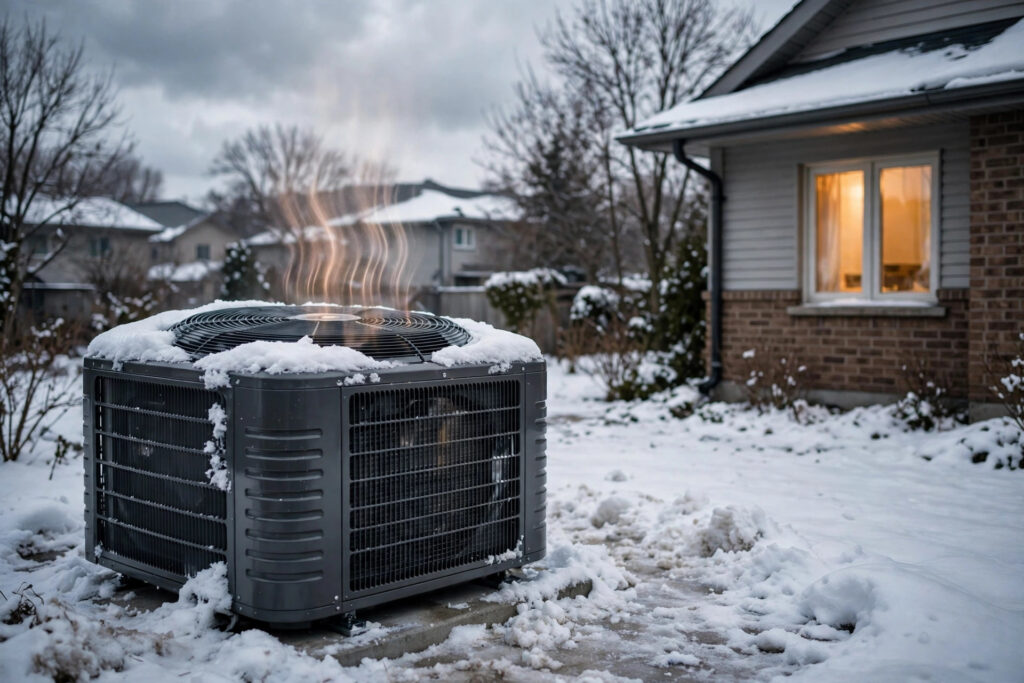
On October 1, 2026, Trane Technologies announced its first residential cold climate heat pump: the Trane 20 TruComfort with WeatherGuard, launched alongside the American Standard AccuComfort Platinum 20 with All Weather. The headline claim is a big one for anyone who heats through a Canadian winter: the systems hold 100% of their rated heating capacity down to 5°F (-15°C) and keep running all the way down to -20°F (-28.9°C). Trane says the designs surpassed the U.S. Department of Energy’s Residential Cold Climate Heat Pump Technology Challenge benchmarks and were validated through nearly 18,000 hours of field testing in homes across Minnesota, Montana, New York, Pennsylvania, Wisconsin and Texas, with outdoor temperatures reaching as low as -21°F.
What a Cold Climate Heat Pump Does Differently
Conventional air-source heat pumps suffer steep capacity degradation as outdoor temperatures drop, often requiring supplemental electric resistance heat or a fossil-fuel backup to meet the heating load. A cold climate heat pump is engineered to close that gap. Variable-speed compressor operation adjusts in increments as fine as 0.1%, advanced airflow algorithms keep supply air temperatures up to 110°F, and the systems are designed to work in dual-fuel setups alongside an existing furnace. Trane’s stated operating range covers heating from -20°F to 66°F and cooling from 55°F to 115°F, so the same unit is built to handle a Toronto July and a Toronto January.
Tested in Real Winter, Not Just a Lab
The 18,000-hour field program is the detail worth paying attention to, because lab ratings do not always survive a real polar vortex. The test homes sat through conditions as cold as -21°F (-29.4°C). The DOE’s Cold Climate Heat Pump Challenge exists specifically to push manufacturers past cold-climate capacity loss and raise low-temperature efficiency; Trane reports its systems surpassed the challenge’s requirements rather than merely meeting them.
Cold Climate Heat Pumps and Toronto Winters
This is the part that matters locally. Toronto’s January nights routinely fall to -15°C and below, the exact zone where conventional heat pumps used to surrender to backup heat. A system that holds full rated capacity at 5°F (-15°C) can carry the vast majority of a Toronto winter on the heat pump alone, reserving a furnace or resistance backup for only the rare deep-freeze nights. That changes the replacement math for homeowners whose furnaces are aging out this fall: a cold climate heat pump paired with an existing furnace in a dual-fuel setup becomes a realistic primary heater, not just a shoulder-season helper.
There is money on the table, too. Ontario’s Home Renovation Savings program pays rebates toward qualifying cold-climate heat pump models: up to $7,500 for homes heated electrically (at $1,250 per ton of capacity), and up to $2,000 for gas-heated homes adding a hybrid setup ($500 per ton). The heat pump must appear on Natural Resources Canada’s qualified products list, and program terms can change, so confirm current eligibility and amounts before signing a contract.
What Toronto Homeowners Should Do Next
- Get ahead of heating season. If your furnace is 15 or more years old, get a heat-loss calculation and written quotes for both a conventional replacement and a cold climate heat pump before peak winter demand arrives.
- Check the rebate paperwork. Ask any pro quoting a cold climate heat pump whether the model is on NRCan’s qualified products list and whether they are registered with the Home Renovation Savings program. Both affect your rebate.
- Consider dual-fuel. A heat pump handling most of the winter with your existing gas furnace as backup is the lowest-risk configuration for GTA homes. If that furnace is already acting up, read our guide to furnace short cycling on the coldest night.
- Leave the technical work to licensed pros. Refrigerant lines and high-voltage electrical connections must be installed and serviced by licensed professionals. Heat pump work is not a DIY project.
Thinking about a cold climate heat pump for your Toronto home? Post your job on The Quality HVAC and we will connect you with a verified local pro who can size the system, confirm rebate eligibility, and handle the installation. Browse our residential services, see how facility managers use the platform on our commercial and industrial page, or contact us with questions.
Sources: Trane Technologies press release via Business Wire (published October 1, 2026); technical summary via Smart Building Magazine (October 2, 2026); Ontario rebate rates from program guides verified against the official Home Renovation Savings site (August 16, 2026).