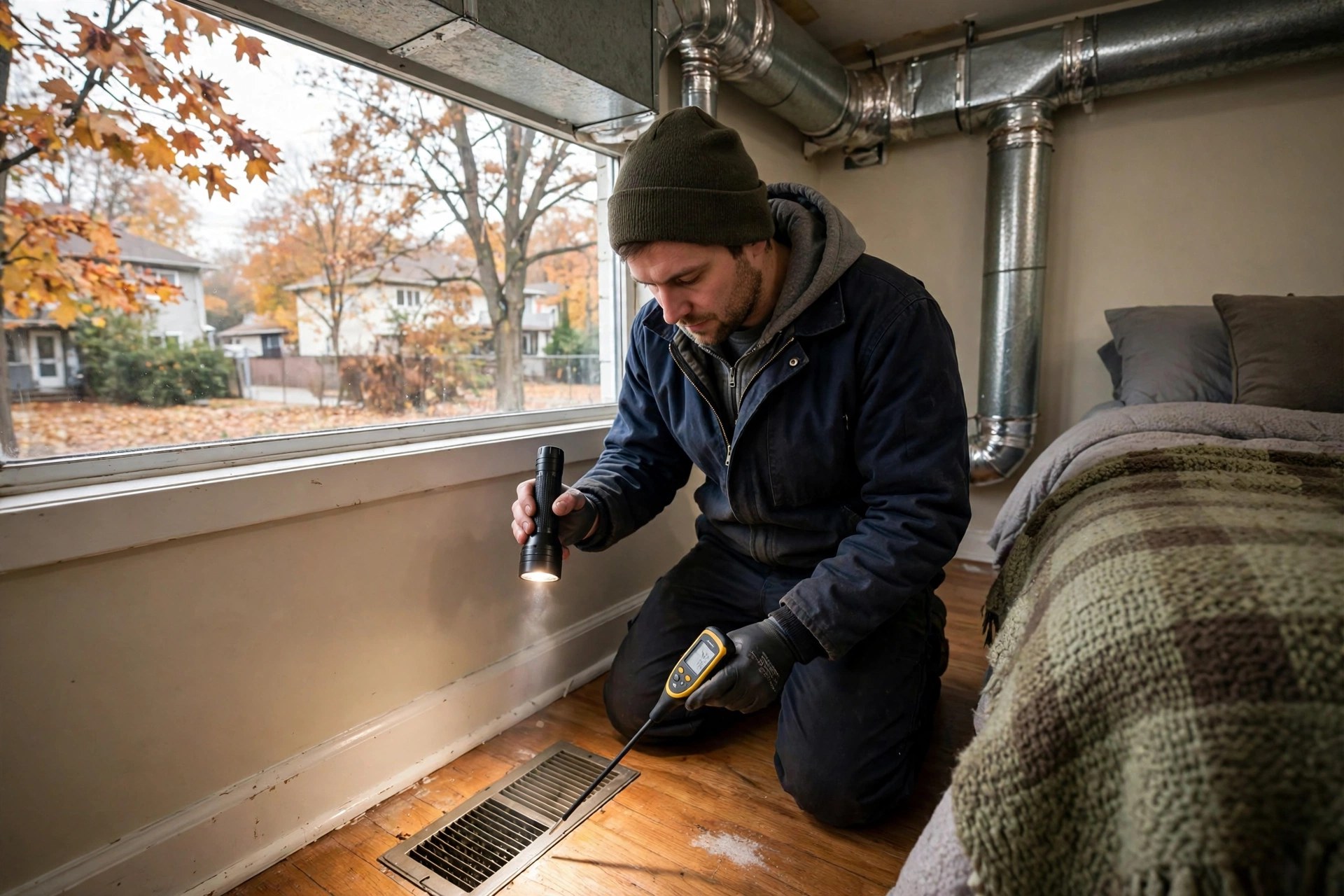
One Room Freezing, One Room Roasting: Uneven Heating in a Toronto Home
Table of Contents
Uneven heating in house, one room freezing while another roasts, is one of the most frustrating winter complaints. The furnace runs, the thermostat looks satisfied, yet some rooms never get comfortable. This guide explains what you are noticing, what it usually means, the safe checks you can do yourself, what you should never touch, and when to stop and call a licensed technician.
What you are noticing
Some rooms in your home are noticeably colder or warmer than others, even though the furnace runs normally. The thermostat, usually in a hallway or main room, reads the set temperature, but a bedroom, bonus room, or basement feels several degrees off.
When you have uneven heating in the house, the pattern tells you a lot. The cold room is often the same one every time: a bedroom over the garage, the farthest room from the furnace, an addition, or an upper floor. Meanwhile the room with the thermostat feels fine, or even too warm.
What it usually means
These are the usual causes of uneven heating in house, ranked from most likely to least likely:
- Blocked or closed registers and returns. The most common cause. Furniture, rugs, or drapes over supply registers and return grilles, or dampers closed inside the ductwork, starve some rooms of warm air while others get plenty.
- Disconnected, crushed, or leaking ducts. A duct that came apart in an unheated basement or attic spills warm air where it does no good. Leaky duct joints bleed heat all along the run, so the farthest rooms get the least.
- Thermostat in the wrong spot. A thermostat in a warm hallway, near a heat source, or in direct sunlight shuts the furnace off before the cold rooms catch up, which is a classic driver of uneven heating in house.
- The system was never balanced. Supply dampers that were never adjusted for the house send too much air to rooms near the furnace and too little to far rooms. New layouts after renovations make this worse.
- Some rooms lose heat faster. Rooms over unheated garages, additions on concrete slabs, corner rooms with more exterior walls, and rooms with large older windows lose heat faster than the furnace can replace it.
- One zone cannot serve the whole layout. A single furnace with a single thermostat can only do so much in a sprawling bungalow or a multi-level home with very different heating needs per floor.
Safe checks you can do yourself
You can track down many causes of uneven heating in house without any tools:
- Walk every register. With the furnace running, feel each supply register and note which rooms have weak airflow or cool air.
- Open every supply and return. Make sure registers and grilles are fully open and not blocked by furniture, rugs, beds, or drapes. Close no more than one or two registers; closing too many strains the furnace.
- Check the filter. If you cannot see light through it, replace it. A clogged filter cuts airflow, and the farthest rooms feel it first.
- Look at the thermostat location. Is it near a heat source, in direct sun, or in the warmest room? Write down what you find so you can describe it to a technician.
- Check accessible ducts. In the basement, look for disconnected runs, crushed flexible duct, and joints with visible gaps or old tape peeling off.
- Note the pattern. Is the cold room over a garage, an addition, or the farthest from the furnace? A consistent pattern points to airflow or heat loss, not the furnace itself.
What not to touch
Whatever is behind the uneven heating in house, some parts of a gas furnace are never homeowner-serviceable. Leave these alone:
- Gas line and gas valve. Ontario gas work requires a TSSA-licensed technician; mistakes with gas can cause leaks, fire, or explosion. You can read how contractor licensing works on the TSSA licensing and registration page.
- Burners. They involve live gas and high temperatures, and adjusting them without training and instruments is dangerous and illegal for unlicensed workers in Ontario.
- Refrigerant lines and coils. Only certified technicians may handle refrigerant; it is regulated and requires recovery equipment.
- Wiring inside the cabinet. High voltage and control wiring inside the furnace cabinet can shock you or destroy the control board with one wrong move.
Stop and call a licensed technician if
Uneven heating in house is a comfort problem, not an emergency, but stop and call a licensed technician if you notice any of the following:
- Some rooms never warm up no matter what you try with registers and returns.
- You hear banging, whistling, or rattling from the ducts when the system runs.
- The furnace runs constantly but the house never reaches the set temperature.
- You suspect a disconnected duct in a wall, ceiling, or other inaccessible space.
- The problem started suddenly. A duct may have come apart or a damper may have failed.
- You smell gas or your carbon monoxide alarm sounds. Leave the home and call 911 or your gas utility emergency line.
Dealing with uneven heating in house right now? Start with the register and return checks above. If the job needs a pro, you can post it on The Quality HVAC marketplace and let verified local pros quote it. Not sure what your system is doing? Browse the symptoms guide for more lookups.
The Quality HVAC is an information and marketplace platform. We do not install, service, or repair HVAC equipment. Content here is educational only and is not a substitute for a licensed technician. In Ontario, gas appliance work must be performed by a TSSA-licensed technician. If you smell gas or your carbon monoxide alarm sounds, leave the home and call 911 or your gas utility emergency line.