The Office That Stayed Cold All October: A VAV Heating Problem
Table of Contents
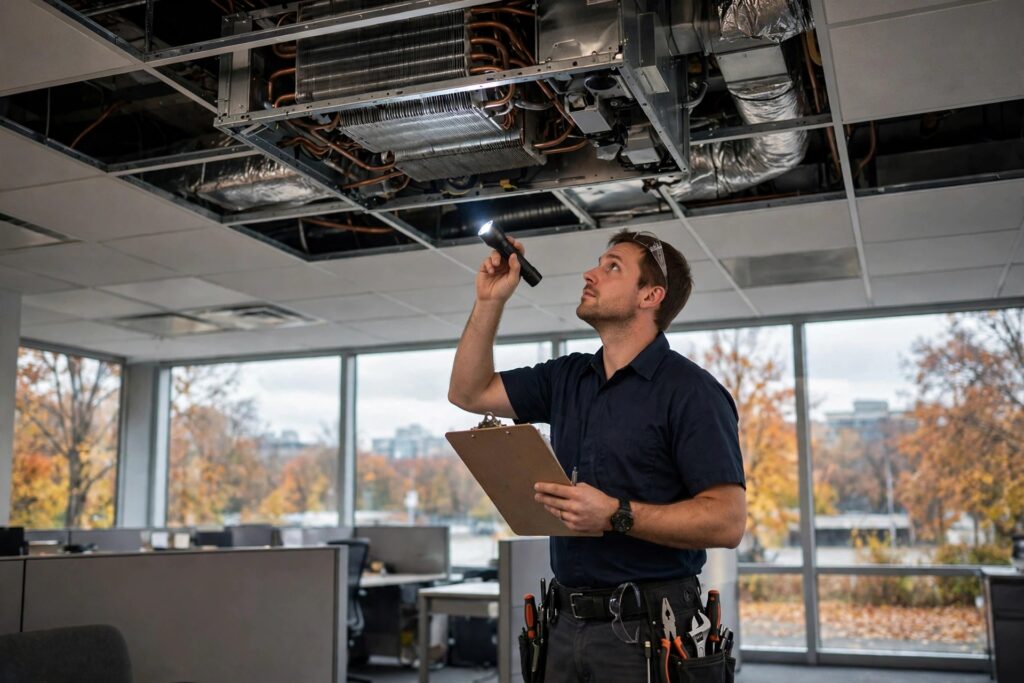
The call came from a property manager in a mid-rise office tower near Yonge and Eglinton in Toronto. It was the third week of October, the building had switched to heating mode, and one floor would not warm up. Interior offices felt fine. The perimeter offices by the windows sat at 18 degrees all day. Staff were working in sweaters while the thermostat insisted it was calling for heat. A vav box heating fault is one of the most common fall problems in Toronto offices, because the system can sound normal while individual zones quietly get no heat at all.
The manager had already raised the set point. That only made the complaints louder, because neighbouring zones overheated. This guide explains why it happens, what a licensed technician checks first, what was fixed in this building, and which checks a building team can do safely before calling.
Why VAV Box Heating Fails in Fall
Fall is when vav box heating problems show up most often. A variable air volume box sits above the ceiling for each zone. It controls how much conditioned air reaches that zone, and many boxes have a reheat coil that warms the air again when a perimeter office needs extra heat on a cold, windy day.
Several different faults can produce the same cold office:
- The damper actuator failed. If the damper inside the box is stuck near closed, almost no air reaches the zone, heated or not.
- The reheat valve never opened. A hot water reheat coil only helps if its control valve opens. A stuck valve leaves the coil cold while the controls report a normal call for heat.
- The building never finished changeover. If the central plant is still in cooling mode, or the heating loop is not yet circulating, every zone suffers, a wider version of the fall switch-over problems behind boiler changeover in Toronto buildings.
- The zone sensor drifted. A thermostat or sensor reading two degrees high will never call for enough heat, even when the equipment itself is healthy.
- The box was never rebalanced. Renovations, moved walls, and new layouts change what a zone needs. A box set for an old open floor can starve a new enclosed office.
In this tower, two causes of poor vav box heating were stacked together on the same floor. One perimeter box had a failed damper actuator, and the box beside it had a reheat valve that had seized over the summer. Neither fault showed up as a building alarm, which is why vav box heating complaints are so often misread as a thermostat problem at first.
What a Technician Checks for VAV Box Heating
Work above ceilings on commercial systems involves electrical controls, hot water piping, and, at the central plant, gas-fired equipment. Gas and electrical work in Ontario is licensed-professional-only work. No building staff member should bypass a control, force a damper, or open a gas appliance. The technician on this job worked in a clear order:
- Zone complaint pattern first. Which offices were cold, which were warm, and did the pattern follow one box or the whole floor? That map pointed to two boxes, not the central plant.
- Controls and set points. The building automation screen was checked for calls for heat, damper commands, and valve commands for the cold zones.
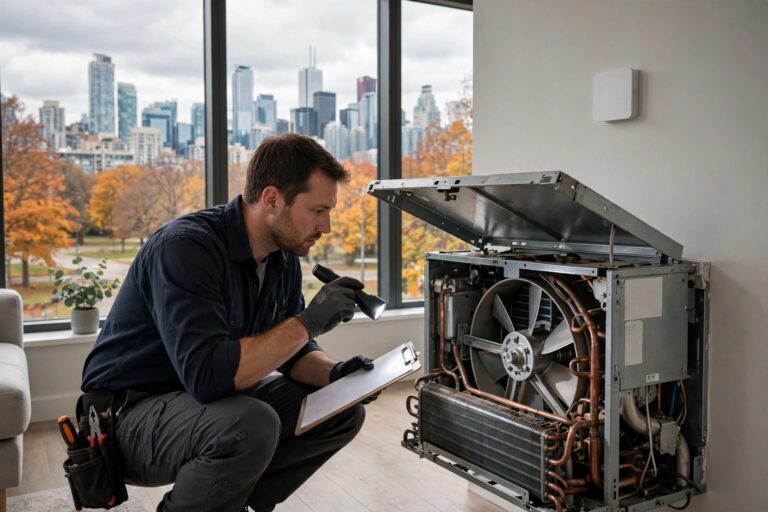
- Damper operation. Each suspect box was commanded open and closed while airflow at the diffusers was measured. One box barely responded.
- Reheat coil check. Supply and return piping at the coil was checked for heat when the valve was commanded open. One coil stayed cold, confirming a stuck valve rather than a plant problem.
- Sensor verification. Zone sensor readings were compared with a calibrated thermometer in the room, the same basic reality check used for fan coil unit heating complaints in Toronto condos.
- Central plant confirmation. The heating loop temperature and circulation were confirmed, so a floor-level fix would not be blamed for a building-level fault.
- Full zone run. After repair, each zone was run through a complete call for heat while discharge air temperature and room temperature recovery were logged.
That order matters. Replacing thermostats at random would have missed both the actuator and the valve, and the floor would have stayed cold.
VAV Box Heating Fixes That Warmed the Office
With both causes confirmed, the fixes were direct, and none of them involved defeating a control or a safety:
- Replaced the failed damper actuator and verified the damper travelled fully from closed to open on command.
- Freed and then replaced the seized reheat valve actuator, so the coil received hot water whenever the zone called for heat.
- Recalibrated the drifting zone sensor and confirmed its reading matched a reference thermometer in the room.
- Rebalanced the two repaired boxes to the airflow the current office layout actually needs, not the layout from the last renovation.
- Measured real heat at the diffusers. Discharge air that had felt cool was now clearly warm on a call for heat, and the perimeter offices recovered to set point.
- Logged a fall start-up check for every box on the floor, covering dampers, valves, sensors, and airflow before winter load arrives.
By the next morning the floor held temperature evenly, and the manager closed three weeks of cold-office tickets. A vav box heating failure had not needed a new air handler. It had needed two small components proven, replaced, and tested under a real call for heat.
Safe Checks a Building Team Can Do First
Managers and building operators can narrow a vav box heating problem without opening ceiling panels or touching controls wiring:
- Map the complaints. Note which rooms are cold, which are warm, and whether the pattern is one office, one side of the floor, or the whole building.
- Check the set point and schedule. Confirm the zone is in occupied mode, the set point is realistic, and a night setback is not still holding the zone down.
- Feel more than one diffuser. If one office has no airflow at all and the next has plenty, note it. That detail helps a technician find a vav box heating fault much faster.
- Look for blocked diffusers. Tall cabinets, stored boxes, and new partitions can block or redirect supply air after a layout change.
- Record times and temperatures. A simple log of room temperature at 9 a.m., noon, and 3 p.m. is more useful than a general report that the floor feels cold.
- Check for recent work. Ceiling work, renovations, and controls upgrades in the past season often explain why one zone changed.
If a whole building has no heat, staff smell gas, or a carbon monoxide alarm sounds, stop troubleshooting there. Leave, and call a licensed pro and your gas utility from outside if gas is suspected.
When VAV Box Heating Needs a Pro Right Away
Some versions of this problem should not wait for a convenient visit:
- A whole floor or building with no heat in cold weather, especially where pipes near exterior walls could freeze.
- Water staining or dripping above a ceiling, which can point to a leaking reheat coil or piping joint.
- Repeated cold calls after a set point change, suggesting vav box heating has a failed actuator, valve, or sensor rather than a setting problem.
- Burning or electrical smells from a ceiling area, or breakers tripping when heating starts.
- Any gas smell or carbon monoxide alarm near the central plant. That is an emergency first and a repair second.
Only a TSSA-registered fuels contractor is legally authorized to do fuels work in Ontario. You can verify registration through TSSA’s fuels contractor lookup before anyone works on gas equipment in your building.
Prevent the Next Cold-Office Fall
Most fall vav box heating calls are preventable with a short seasonal routine:
- Book a fall commercial start-up before the first cold snap, including damper travel, reheat valve operation, sensor checks, and plant changeover.
- Exercise valves and dampers in September. Components that sat still all summer are the ones that seize. A test run finds them while it is still mild.
- Rebalance after renovations. Any moved wall or new office changes the air a zone needs, and vav box heating set for the old layout will not fix itself.
- Trend zone temperatures. Building automation history often shows a zone drifting cold for weeks before anyone complains.
- Keep a zone map current. Knowing which box serves which office turns a vague complaint into a targeted repair.
A September test of every zone is the cheapest insurance in commercial heating. It turns a January emergency into an October appointment.
Book a Pro Before the Complaints Pile Up
If your building is dealing with vav box heating problems today, start with the complaint map and the schedule, then stop at the ceiling line. The causes above it, from actuators to valves to sensors, belong to a licensed technician.
Post your job on The Quality HVAC and we will connect you with a verified local pro in the GTA. Browse more guides on our blog, or see our residential and commercial and industrial services.