CO Alarm Rules Ontario: 6 Essential Checks for Carbon Monoxide Awareness Week (Nov 1–7)
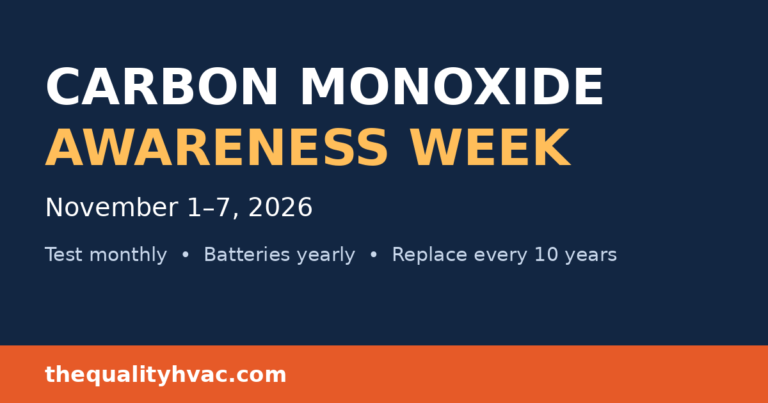
The new CO alarm rules Ontario introduced this year face their first full heating season. Carbon Monoxide Awareness Week runs November 1 to 7, the week set out under the Hawkins Gignac Act.
What happened with CO alarm rules Ontario
The Ontario Fire Code’s carbon monoxide alarm rules were widened on January 1, 2026 through Ontario Regulation 87/25. The reminder is timely: on October 13, Grey Highlands Fire & Emergency Services reported a home where a working CO alarm got the family out safely after firefighters traced high CO levels to the furnace (Municipality of Grey Highlands).
Source: Ontario Fire Code amendment, O. Reg. 87/25.
Key details of the CO alarm rules Ontario story
- Who it applies to: homes with a fuel-burning appliance, a fireplace or an attached garage.
- Where alarms go: next to each sleeping area and on every storey, including storeys without bedrooms.
- New reach: homes and suites that get heated air from a fuel-burning appliance outside the unit, such as a furnace in a shared service room.
- In effect since: January 1, 2026, under O. Reg. 87/25.
- Rentals: the landlord is responsible for installing and maintaining the alarms.
- Awareness Week: November 1 to 7, under the Hawkins Gignac Act.
Why it matters
Carbon monoxide has no colour or smell, so an alarm is often the only warning. Under the CO alarm rules Ontario now uses, a basement or main floor without bedrooms still needs its own alarm, which many older homes don’t have yet. Poor maintenance of fuel-burning appliances is a leading cause of CO problems at home.
For gas technicians, fall service calls are a natural moment to check venting and combustion, and to point out missing or expired alarms to customers. The Grey Highlands case shows how quickly a furnace problem can become dangerous, and how much a working alarm matters.
What to do next
- Walk every level of the house and confirm there’s a CO alarm on each storey and outside the bedrooms.
- Press the test button on every alarm.
- Check the expiry date printed on the back and replace expired alarms.
- Book an annual inspection of your furnace, water heater and other gas appliances with a TSSA-registered contractor.
- Renters: tell your landlord right away if an alarm is missing or not working.
- Techs: review venting and appliance clauses in our B149.1-25 code book guide.
For more background, see the original report from Ontario Fire Code amendment, O. Reg. 87/25 and Government of Ontario: carbon monoxide safety. On our site, try our B149.1-25 code book guide and G3 gas technician glossary.
How to use HVAC news on the job and at home
Industry news can seem far from a single service call, but it usually ends up affecting the equipment you install, the paperwork customers ask about, or what homeowners pay. A short checklist helps turn headlines into action.
- Equipment: which brands, refrigerants and parts will you be servicing next season?
- Codes and standards: has anything changed in the B149.1 code, the Ontario Fire Code or TSSA requirements that affects your work?
- Customers: are there rebates, rate changes or safety rules worth mentioning on a service call?
- Training: is there a new skill, like A2L refrigerant handling, that you should pick up before it becomes required?
For homeowners, the same news helps you ask better questions before you sign a contract or book a repair. Always use a TSSA-registered contractor for gas work, and ask for model numbers, permits and paperwork in writing. We follow Ontario HVAC and gas news every day so G3 students, working technicians and homeowners can keep up without searching dozens of sites. If a story affects your own home or job, check the official source linked above before you act.
FAQ
What do the CO alarm rules Ontario require now?
Homes with a fuel-burning appliance, fireplace or attached garage need a CO alarm next to each sleeping area and on every storey.
When did the new rules start?
January 1, 2026, through Ontario Regulation 87/25.
Who installs alarms in a rental?
The landlord is responsible for installing and maintaining them.