Furnace Error Codes: How to Read the Blinking Light
Table of Contents
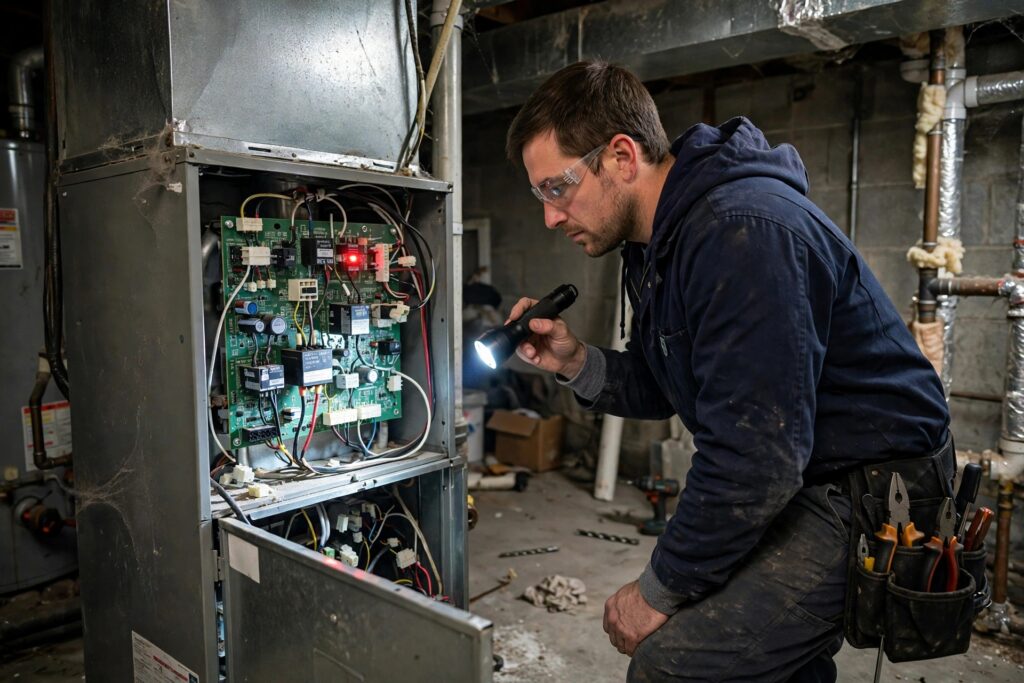
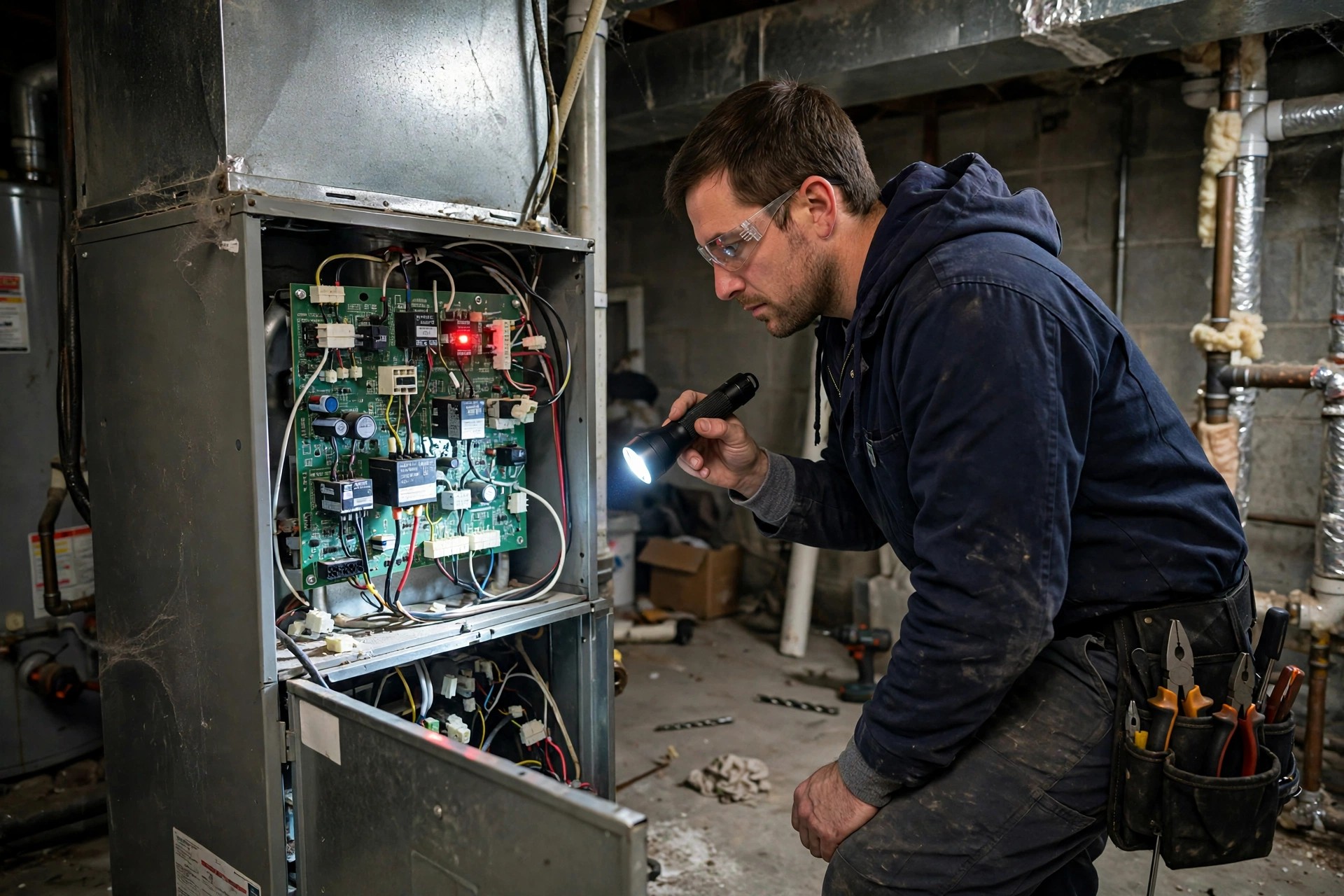
When a modern furnace stops heating, it usually leaves a clue behind: a small light on the control board that blinks in a pattern. Those blinks are furnace error codes, and learning to read them can save you a confusing phone call and help a technician arrive prepared. You do not need tools, and you do not need to open anything, to read the most useful part of the message. This guide explains what furnace error codes are, how to count the blinks safely, what the patterns usually mean in general terms, and when to stop and get a licensed technician involved.
The first thing to understand is that furnace error codes are not the same on every furnace. Each manufacturer, and often each model, uses its own blink patterns, and the same number of flashes can mean different things on two different furnaces. That is why this guide does not give you a universal code chart to memorize. Instead, it shows you how to capture the pattern accurately and where to find your own furnace’s chart, so the information you pass on is actually useful.
What you are noticing
The symptom is usually one of these: the furnace runs briefly and then stops, the furnace tries to start several times and then gives up, or the furnace does nothing at all while a small light blinks behind a little window on the lower furnace door. Sometimes the house is simply cold and the thermostat shows a call for heat that never gets answered. In many cases the blinking light is the only visible sign that the furnace tried, failed, and then locked itself out on purpose to stay safe.
A lockout is not the same as a breakdown in the everyday sense. It is the furnace’s safety control deciding that something in the start sequence did not check out, and refusing to keep trying. That is frustrating on a cold night, but it is a protective behaviour. Your job as a homeowner is not to defeat it. Your job is to read what it is telling you, do only the safe checks, and hand the rest to a licensed technician with a clear description of what you saw. Writing down the furnace error codes pattern is the most useful thing you can do before a technician arrives.
What it usually means
Furnace error codes are a status report, not a diagnosis
Think of furnace error codes as a status report from the furnace’s control board. The board watches the start sequence step by step: thermostat call, inducer fan, pressure check, ignition, flame sensing, and blower. If one step fails, the board stops the sequence and flashes a pattern that points to that step. A code therefore narrows the problem to an area, such as airflow, ignition, or flame sensing. It rarely proves exactly which part failed, and it never proves the part is safe to touch.
How to read furnace error codes through the sight glass
Most modern furnaces have a small sight glass, a little round or rectangular window, on the lower blower door. The diagnostic light sits behind it so you can watch the blinks without opening the furnace at all. That is the safest way to read furnace error codes. Stand where you can see the window clearly, in a dim room if needed, and count the flashes in one group: flash, flash, flash, pause, then the group repeats.
Note three things: the colour of the light (usually red, sometimes green or amber), the number of flashes in each group, and whether the light is steady, slow, or fast. A steady light usually means normal operation or standby, while a repeating group of flashes is the code itself. Write the pattern down exactly, for example “red, 3 flashes, pause, repeats”, before you touch anything else.
Where your own furnace error codes chart lives
Your furnace’s own chart is the only chart that matters for your model. It is often printed on a label inside the blower door or in the owner’s manual, and it lists what each flash pattern means for that specific control board. If the label is not visible without removing a door, do not remove the door to find it.
Note the furnace make and model from the rating plate on the outside of the unit instead, and look the manual up by that model number, or give the make, model, and blink pattern to the technician. Guessing from another brand’s chart is worse than having no chart at all, because it can send the repair in the wrong direction.
Ranked most likely first, the general areas behind furnace error codes are usually: a blocked or restricted vent or intake, a dirty filter choking airflow, a condensate drain problem on a high-efficiency furnace, an ignition or flame-sensing failure, or a control or sensor fault that only a technician can test. A single brief lockout after a power flicker or a snow-blocked vent can be a one-off event. A code that returns every time the furnace tries to start is a different story, and it points to a fault that will not clear itself.
Safe checks you can do yourself
Before you call anyone, work through these safe checks in order. None of them requires opening the furnace cabinet or touching gas, electrical, or combustion parts, and none of them changes the furnace error codes pattern itself:
- Record the furnace error codes pattern first. Count the flashes through the sight glass, note the colour, and write the pattern down before you reset anything. Resetting erases the clue, and a technician needs it.
- Check the thermostat. Confirm it is set to Heat, that the set temperature is above the room temperature, and that it has power or fresh batteries if it uses them. A blank or confused thermostat can look like a furnace fault, so rule it out first.
- Check the filter. A clogged filter restricts airflow and can trigger shutdowns. Replace it if it looks dirty, and note the size for next time.
- Check the power and the door. Make sure the furnace power switch near the unit is on, the breaker has not tripped, and the blower door is fully seated. Many furnaces will not run if the door safety switch is not engaged.
- Check the outdoor vents. From outside, look at the intake and exhaust pipes for a high-efficiency furnace, and at the gas meter. Clear snow and ice gently with a brush, never with a sharp tool, and never pile snow against the meter or vents.
- Reset once, and only once. If the furnace is locked out, you can reset it once by turning the thermostat down and back up, or by switching the furnace power off for a minute and back on. If it locks out again, stop. Repeated resets do not fix a fault, and they can mask a safety problem.
If the furnace restarts and runs normally after one reset, and the code does not return, keep the pattern you wrote down and watch it for a day. If you want to understand the other symptoms a furnace can show, browse the symptoms library and the heating tools on this site, including the guides on a furnace humming but not starting, a blank thermostat, and furnace short cycling.
What not to touch
Furnace error codes can make a problem look simple, but the parts behind the code are not homeowner parts. Do not touch the gas line or gas valve, the burners, the igniter, the flame sensor, the pressure switch or its hoses, the control board, or any wiring inside the furnace cabinet. Do not bypass a safety switch, jumper a control, or keep resetting a furnace that keeps locking out.
Do not open a sealed combustion compartment or try to clean burners yourself. In Ontario, gas appliance work must be performed by a TSSA-licensed technician, and electrical work inside the cabinet belongs to a qualified technician too. Reading the blinking light through the sight glass is safe. Opening the cabinet to chase the code is not.
If you are unsure whether a technician you are considering is licensed for gas work, you can look them up through the TSSA fuels contractor lookup. That lookup is a public safety resource, not a promise about any individual business, so always confirm the licence in person as well.
Stop and call a licensed technician if
Stop your own checks and get a licensed technician involved if you notice any of these red flags:
- You smell gas, or a carbon monoxide alarm sounds. Leave the home, do not operate switches or phones inside, and call 911 or your gas utility emergency line from outside.
- The furnace locks out again after a single reset, or the same furnace error codes pattern returns every time it tries to start.
- You see soot around the furnace, smell burning that does not clear, or notice scorch marks or melted wiring.
- People in the home develop headaches, dizziness, or nausea that ease when they leave the house.
- The blinking light is accompanied by water pooling under the furnace, a strong electrical burning smell, or a breaker that trips repeatedly.
- Any gas appliance was recently installed, moved, or repaired by someone who was not licensed for gas work.
When you call, give the technician the three things you recorded: the furnace make and model, the exact blink pattern with its colour, and what you already checked, including the filter, thermostat, power, and outdoor vents. That short report turns a vague “my furnace stopped” call into a focused visit, and it often shortens the diagnosis considerably.
A blinking light is not a verdict, and it is not something to fear. Furnace error codes are a starting point for diagnosis, not the diagnosis itself. It is your furnace telling you, in its own shorthand, where its start sequence stopped. Read it through the sight glass, write it down, do only the safe checks, and leave every gas and electrical part to a licensed technician. If the job needs a pro, hire a TSSA-licensed technician and ask to see their licence before any gas work starts.
The Quality HVAC is an information and marketplace platform. We do not install, service, or repair HVAC equipment. Content here is educational only and is not a substitute for a licensed technician. In Ontario, gas appliance work must be performed by a TSSA-licensed technician. If you smell gas or your carbon monoxide alarm sounds, leave the home and call 911 or your gas utility emergency line.
Looking for equipment rather than a service? Browse the equipment marketplace for furnaces, parts, and related items listed by sellers.



2 Comments