Furnace Humming But Not Starting: What It Means
Table of Contents
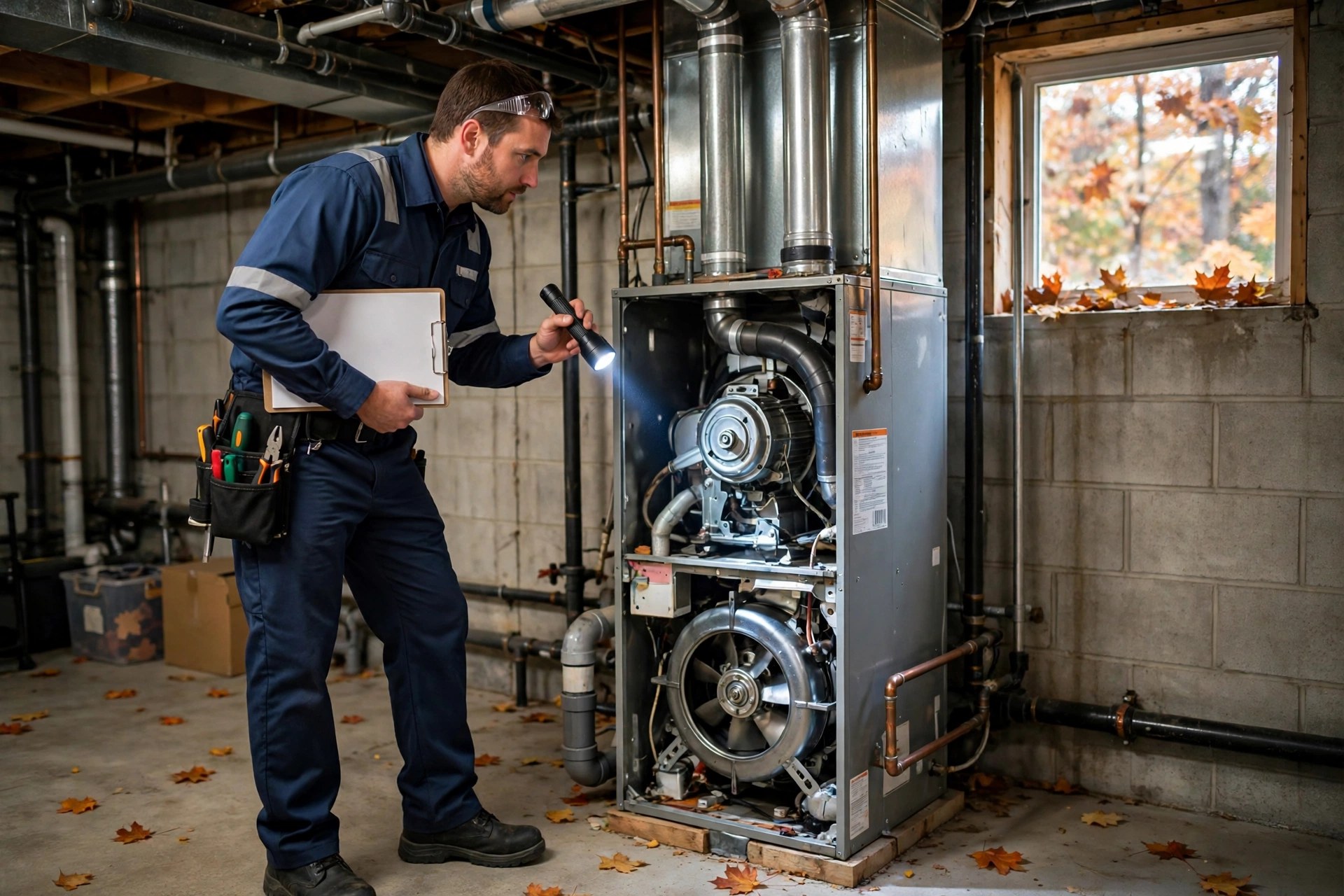
A furnace humming but not starting is easy to recognise and hard to ignore. The thermostat calls for heat, you hear a steady hum from the furnace room, and then nothing: no burner roar, no warm air from the vents, and the house keeps getting colder. That hum is information. It usually means power is reaching a motor that is trying, and failing, to turn.
This guide explains furnace humming but not starting in plain language: what you are hearing, the causes a technician finds most often, the safe checks you can do yourself, and the parts you should never touch. If the safe checks do not solve it, the problem is inside the cabinet, and in Ontario that is licensed work.
What you are noticing
The pattern is consistent from home to home. You turn the heat up, or the house cools below the thermostat setting, and the furnace answers with a low electrical hum or buzz instead of a normal start-up. A normal start has a sequence: a small inducer fan spins up, the igniter glows, the burners light with a soft whoosh, and then the main blower pushes warm air through the ducts.
With this symptom, that sequence stalls. Common versions include:
- A hum that lasts a few seconds, stops, then tries again a minute later
- A constant hum with no air moving at any vent in the house
- A hum followed by a click, then silence, with no heat at all
- A louder buzzing that gets warm or smells faintly electrical near the furnace
Note how long the hum lasts, whether any air moves, and whether it repeats. Those three details help a technician narrow down furnace humming but not starting much faster.
Furnace humming but not starting: where the hum comes from
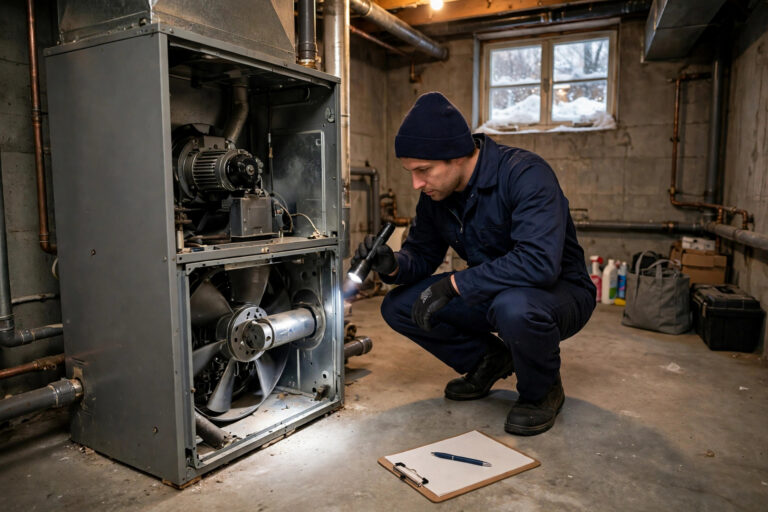
Most hums come from an electric motor under load: the blower motor that moves house air, or the smaller inducer motor that clears combustion gases before ignition. A motor hums when it has power but cannot spin freely. That is why this symptom is different from a completely dead furnace, which points more toward power, thermostat, or control problems covered in the wider symptoms guide.
What it usually means
These are the usual causes of furnace humming but not starting, ranked most likely first:
- Failed blower run capacitor. The capacitor gives the blower motor the extra push it needs to start spinning. When it weakens or fails, the motor hums, tries, and stalls. This is one of the most common findings, and the part lives inside the cabinet.
- Seized or failing blower motor. Worn bearings or a motor at the end of its life can lock up. The hum is the motor straining against a shaft that will not turn. Left humming, a seized motor can overheat.
- Blocked blower wheel or badly clogged filter. Debris in the blower wheel, or a filter so loaded that airflow collapses, makes the motor work far harder than it should. Airflow problems also sit behind related symptoms like furnace short cycling.
- Stuck inducer motor. If the small inducer cannot spin, the furnace will not move on to ignition at all. The control board stops the sequence for safety, because combustion gases must be vented before the burners light.
- Electrical or control problem. A failing transformer can buzz on its own, and a damaged control board or loose connection can send power to the wrong place, or not enough of it. These faults need testing instruments to confirm.
Only a technician with the cabinet open and a meter in hand can tell these apart with certainty. They sound similar from the furnace room door, which is why guessing at parts rarely fixes the problem.
Safe checks you can do yourself
You can rule out the simple causes of furnace humming but not starting without opening the furnace:
- Check the thermostat. Set it to heat, set the fan to auto, and raise the temperature a few degrees above the current room temperature. Replace weak batteries if your thermostat uses them.
- Check the filter. Slide the filter out at its rack or slot. If you cannot see light through it, replace it. Note the size printed on the frame, and see the free guides on the tools page for filter sizing help.
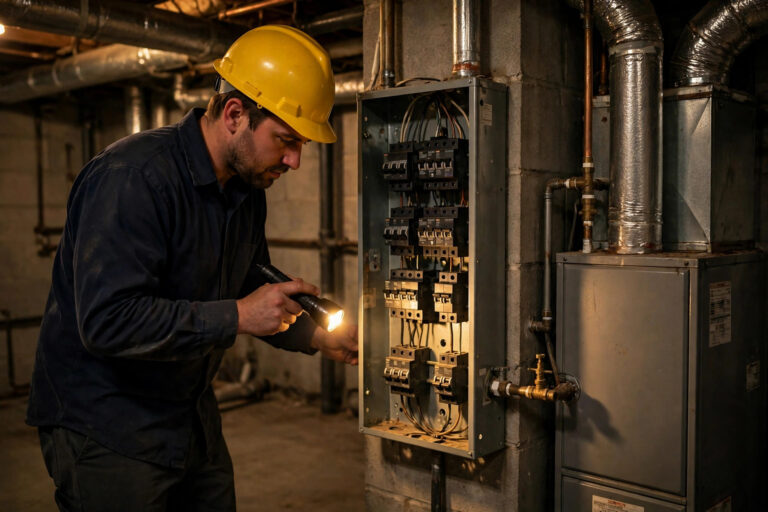
- Confirm power, once. Make sure the furnace wall switch near the unit is on and the breaker in your electrical panel has not tripped. If the breaker trips again right away, stop and do not keep resetting it.
- Open the vents. Make sure supply registers and return grilles are open and not blocked by furniture, rugs, or storage.
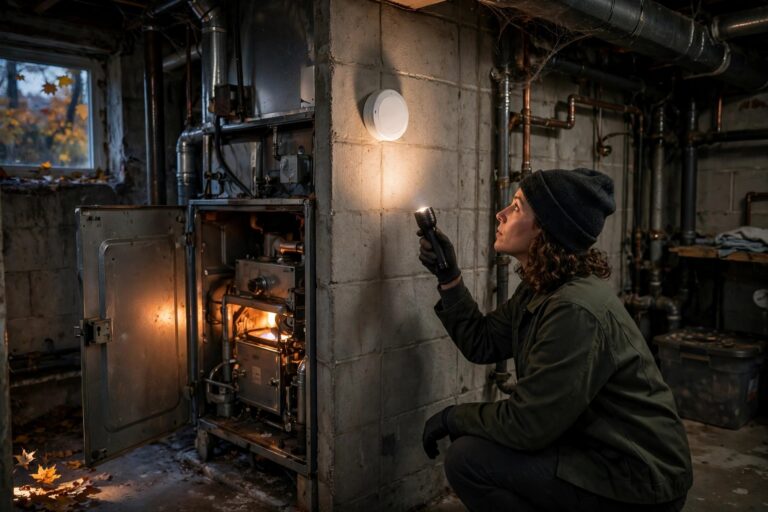
- Listen, do not open. Stand at the furnace, listen to where the hum seems loudest, and look through the blower door sight glass for a flashing error code if your model has one. Write the pattern down, without opening the cabinet.
- Turn it off if the hum will not stop. If the hum runs on for minutes with no start, switch the furnace off at the thermostat or the wall switch. A stalled motor left humming can overheat and cause more damage.
If a fresh filter and the thermostat and power checks bring the furnace back to a normal start, watch it through a full heating cycle. If the hum returns on the next call for heat, the underlying part is still failing.
Furnace humming but not starting: what to tell a technician
Before you post the job, write down the furnace make and model from the rating plate if it is visible without opening sealed panels, the age if you know it, when the hum started, whether any air moves, and any error code pattern you saw. That short note saves diagnostic time on the visit.
What not to touch
Some parts of a gas furnace are never homeowner work, and this symptom points directly at several of them:
- Gas line and gas valve. Do not touch gas piping or the valve. In Ontario, gas appliance work must be performed by a TSSA-licensed technician.
- Burners and ignition parts. Burners, igniters, and flame sensors involve live gas and the furnace safety chain. Leave them alone.
- The capacitor and wiring inside the cabinet. A capacitor can hold an electrical charge even with the power off, and cabinet wiring can shock you or damage the control board. This is exactly where this fault usually lives, which is why it is professional work.
- Refrigerant lines. If your system includes a heat pump or air conditioner, do not touch refrigerant piping or valves. That work is licensed-only as well.
You can verify a fuels contractor before any work starts through TSSA, Ontario’s public safety regulator, which keeps the registry of authorised heating fuel contractors.
Stop and call a licensed technician if
Stop troubleshooting and get a licensed technician in if any of these apply:
- You smell burning, hot electrical insulation, or melting plastic near the furnace
- The breaker trips repeatedly, or you see scorch marks, sparks, or buzzing at the electrical panel
- The hum continues for minutes without a start, or the furnace locks out and needs repeated resets
- An error code is flashing, or the furnace tries and fails on every call for heat
- You smell gas, or your carbon monoxide alarm sounds. Leave the home and call 911 or your gas utility emergency line from outside
- There is no heat at all in freezing weather, when pipes can freeze and burst
A humming furnace that will not start rarely fixes itself. A capacitor or motor that is failing today usually stops completely on a colder night, so dealing with it early is the cheaper and warmer option.
If the job needs a pro, you can post it on The Quality HVAC marketplace and let local pros quote it. Post the job on the marketplace job-posting page, include the notes you made from the safe checks above, and compare the quotes that come back.
The Quality HVAC is an information and marketplace platform. We do not install, service, or repair HVAC equipment. Content here is educational only and is not a substitute for a licensed technician. In Ontario, gas appliance work must be performed by a TSSA-licensed technician. If you smell gas or your carbon monoxide alarm sounds, leave the home and call 911 or your gas utility emergency line.



3 Comments