Furnace Grinding Noise: What It Means and What to Do First
Furnace Grinding Noise: What It Means and What to Do First
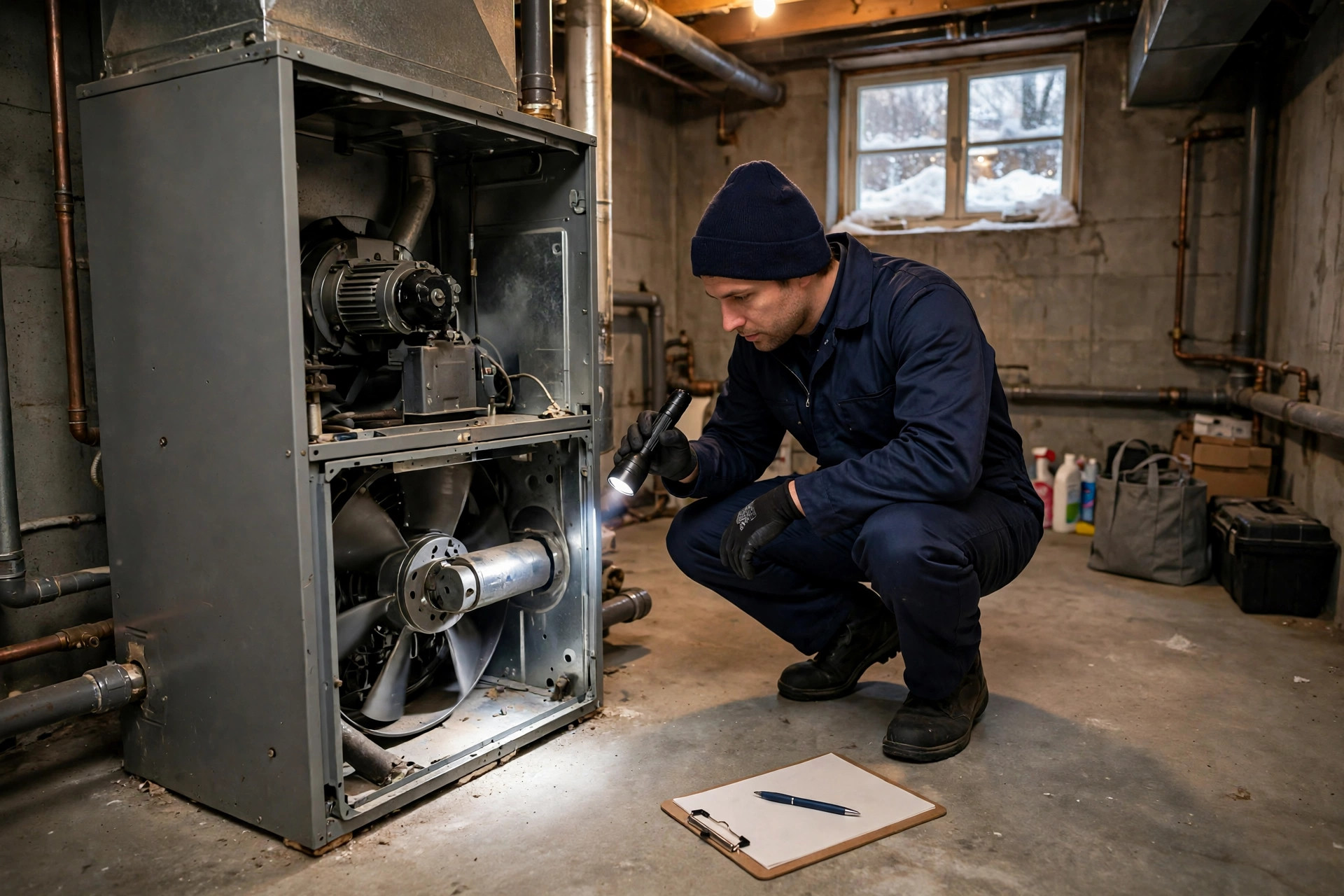
A furnace grinding noise is hard to mistake for anything else. It sounds like metal rubbing on metal, a harsh scraping or growling that starts when the blower kicks in and keeps going as long as the furnace runs. A furnace grinding noise is different from the single bang of delayed ignition or the low hum of a stuck motor: grinding means two metal parts are touching that should never touch, and every minute they keep touching, they wear each other down. That is why a grinding sound deserves attention the same day you first hear it, even if the house is still warm.
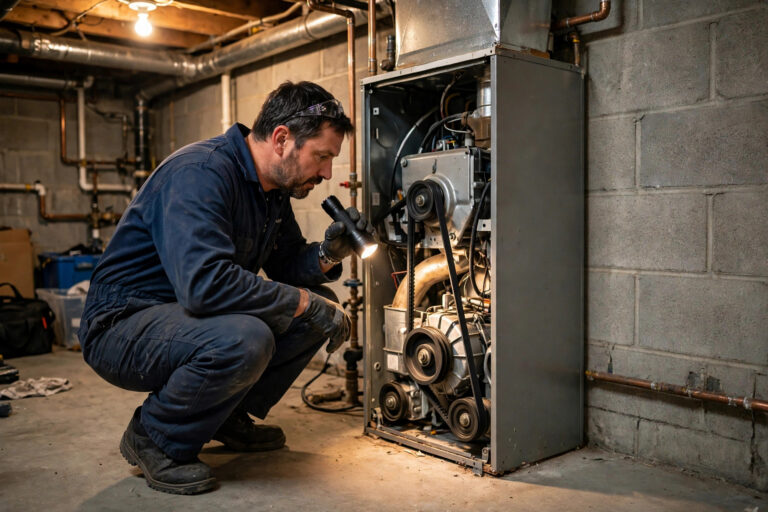
A furnace has two motors that can grind. The blower motor pushes warm air through the ducts, and the inducer motor, on a high-efficiency furnace, pulls exhaust gases out through the vent. Both motors spin on bearings, and bearings wear out. A furnace grinding noise usually points at one of those two motors, or at the fan wheel attached to them, and the fix is almost always a part replacement rather than an adjustment.
The good news is that a grinding motor usually gives you warning before it fails completely. The bad news is that the warning period is short, and a motor that grinds today can seize tomorrow, leaving you with no heat on the coldest night of the week.
Table of Contents
What you are noticing
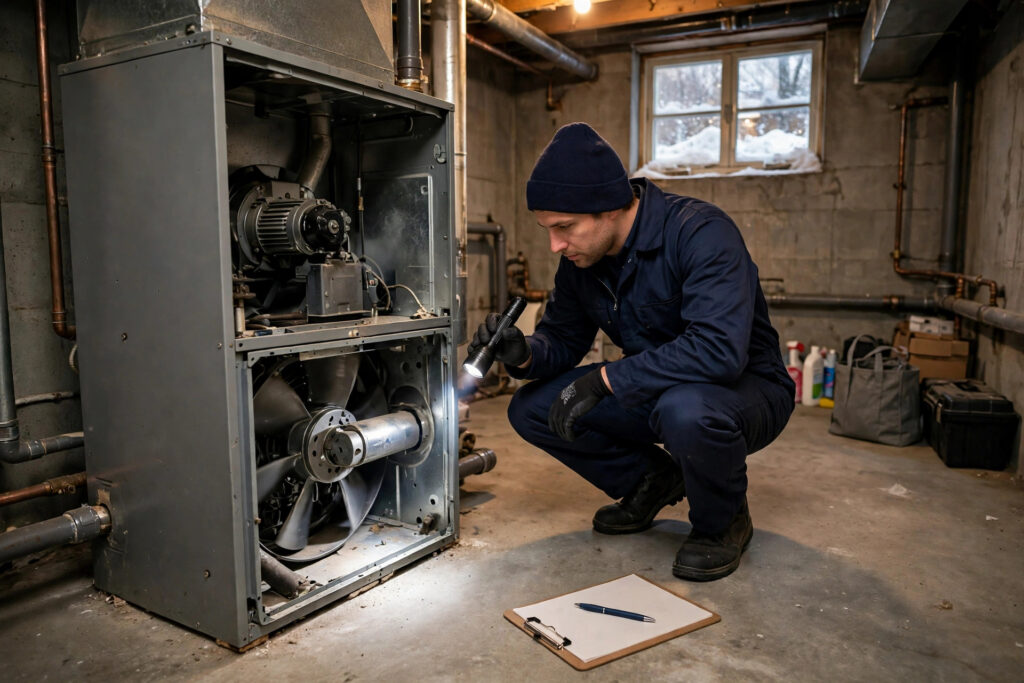
The sound is the clue. A furnace grinding noise is a steady metallic scrape or growl, louder than the normal whoosh of air through the vents, and it comes from the furnace itself rather than from a vent. It may start the moment the blower comes on and stop the moment it shuts off, or it may start only after the furnace has been running for a few minutes, once the motor warms up. Some homeowners hear it only at startup, when the inducer motor spins up first. Others hear a furnace grinding noise that fades in and out as the blower speeds up and slows down.
Timing and location help a technician find the cause faster, so note them before you call. Does the furnace grinding noise start before the warm air arrives, or only once the blower is running? Does it get louder over days, or has it stayed the same? Is the sound coming from the lower part of the furnace, where the blower sits, or from the upper part, where the inducer motor sits on a high-efficiency unit?
Does the furnace still heat the house normally, or has the airflow from the vents become weak at the same time the noise appeared? A furnace grinding noise with weak airflow points toward the blower, while a furnace grinding noise at startup with normal airflow points toward the inducer. Write down what you hear and when, because the pattern is the first thing a licensed technician will ask about.
What it usually means
A furnace grinding noise means metal is rubbing on metal somewhere in the air-moving parts of the furnace. Furnace motors and fan wheels are built to spin freely with a small gap between moving and fixed parts, and grinding is what you hear when that gap closes. The cause is usually one of a short list, and it is worth working through that list from the most common cause first, because the most common cause is also the one most likely to end in a dead motor if it is ignored.
Furnace grinding noise: most likely causes
- Worn blower motor bearings. This is the most common cause of a furnace grinding noise by a wide margin. The blower motor runs for thousands of hours every winter, and its bearings wear out with age, dust, and heat. Once a bearing wears, the motor shaft wobbles slightly and the metal parts inside the motor grind against each other. The sound often starts quietly and gets louder over a week or two, and it may come and go at first. A furnace grinding noise from worn blower bearings will not fix itself, and the motor will eventually seize or burn out. Replacing a blower motor is licensed-technician work.
- The blower wheel rubbing the housing. The blower wheel is a large fan that spins inside a metal housing with only a small clearance. If the wheel bends, if its set screw works loose, or if the motor mount shifts, the wheel starts scraping the housing with every turn. A furnace grinding noise from a rubbing blower wheel is often rhythmic, a scrape on every rotation, and it may change pitch as the blower speeds up. Debris pulled into the wheel can cause the same scraping sound, which is why the wheel and the housing are checked together.
- Failing inducer motor bearings. On a high-efficiency condensing furnace, a small inducer motor runs before the burners light, pulling exhaust gases out through the vent. Its bearings wear out the same way blower bearings do, and a furnace grinding noise that appears at startup, before the warm air starts, often comes from this motor. A failing inducer can also cause the furnace to lock out, because the furnace will not light the burners if the inducer is not proving airflow. The furnace error codes guide explains how a lockout shows up on the blinking light.
- A loose or worn blower belt. Older furnaces use a belt to connect the blower motor to the fan, and a belt that is cracked, stretched, or slipping can produce a grinding or squealing sound as it drags across the pulleys. A furnace grinding noise on a furnace that is fifteen or twenty years old deserves a belt check, because a belt is a cheap part and a snapped belt stops the blower completely. Most modern furnaces are direct-drive and have no belt, so this cause applies mainly to older units.
- Debris caught in the blower wheel. A small object pulled in through the return air, a piece of insulation, or a filter that has collapsed into the blower can jam against the spinning wheel and grind with every turn. A furnace grinding noise that started suddenly, after a renovation, a filter change, or work near the furnace, may be debris rather than a worn part. The object itself is often harmless, but running the furnace with something jammed in the wheel can bend the wheel and damage the motor.
- A loose motor mount or a cracked blower wheel. The blower motor is held in place by mounts that can loosen over years of vibration, and the blower wheel itself can crack, especially on older plastic or thin-metal wheels. A loose mount lets the whole motor shift until the wheel scrapes the housing, and a cracked wheel wobbles and grinds as it spins. A furnace grinding noise that comes with a new vibration, where the furnace cabinet seems to shake, points toward a mount or wheel problem rather than a bearing.
- A loose access panel vibrating against the cabinet. Not every furnace grinding noise comes from a failing part. A blower door or access panel that is not fully seated can vibrate against the cabinet and produce a harsh buzzing or grinding sound that mimics a bad bearing. This is the one cause a homeowner can check safely from outside the furnace, and it is worth ruling out before calling a technician, because a panel that clicks back into place costs nothing to fix.
A furnace grinding noise is not an emergency by itself, but it is a warning that a moving part is wearing out. Left alone, a grinding motor can seize, overheat, or throw the furnace into a lockout, and a blower that stops while the burners keep firing can overheat the furnace. The safe homeowner checks below can rule out the simple causes in a few minutes. If none of them explains the sound, the next step is a licensed technician, not more run time.
Safe checks you can do yourself
These checks are visual and simple. They do not involve opening the furnace cabinet, touching a gas valve, adjusting a burner, or working with wiring. If a check would require a tool, a ladder, or opening a panel, it stops being a homeowner check.
Furnace grinding noise: safe checks before you call
- Note exactly when the sound starts and stops. Does the furnace grinding noise begin before the burners light, when the inducer starts, or only once the blower is running? Does it stop the moment the blower stops? The timing tells a technician which motor to check first, and it is the single most useful detail you can give.
- Turn the thermostat fan from auto to on, then back. Setting the fan to on runs the blower without heat. If the furnace grinding noise appears with the fan on and no heat running, the blower is the source. If the noise appears only when the furnace is heating, the inducer or the burner area is more likely. The thermostat blank guide covers thermostat problems that can confuse this test.
- Check the filter. A filter choked with dust makes the blower work harder and can make a worn bearing grind louder. Hold the filter up to a light and replace it if you cannot see light through it. The furnace filter size guide explains how to find the right replacement, and the MERV rating guide explains why a filter that is too restrictive can strain the blower.
- Check that the blower door and access panels are fully seated. From outside the furnace, press gently on the blower door and any access panel to make sure each one is latched and flush with the cabinet. A loose panel can vibrate and mimic a furnace grinding noise, and reseating it may end the sound entirely. Do not remove any panel to look inside.
- Record the sound on your phone. A short recording of the furnace grinding noise, taken close to the furnace, helps a technician judge whether it is a bearing, a rubbing wheel, or a vibrating panel before they arrive. Record for ten seconds at startup and ten seconds while the furnace is running.
- Check the airflow at the vents. Weak airflow from the vents at the same time as a furnace grinding noise points toward the blower, while normal airflow with a grinding sound at startup points toward the inducer. The furnace running constantly guide covers what weak airflow usually means, and the furnace blowing cold air guide covers a blower that runs without heat.
- Find the furnace age and model from the rating plate. The rating plate is on the inside of the blower door or on the furnace cabinet, and it lists the model and the date of manufacture. The furnace rating plate guide explains where to find it. A furnace grinding noise on a furnace older than fifteen years is more likely to be worn bearings, and that age is useful information for a technician.
Do not keep running the furnace to see if the sound goes away on its own. A furnace grinding noise that fades for a day often comes back louder, and a bearing that quiets down is usually a bearing that has worn past the noisy stage and is close to seizing. If the sound is getting louder, turn the thermostat down and call a licensed technician rather than waiting for the motor to fail.
What not to touch
Do not touch the gas line or the gas valve, do not adjust gas pressure, do not open the burner compartment, and do not clean, adjust, or replace burners yourself. Do not remove a furnace panel to reach the blower motor, the blower wheel, the inducer motor, or the control board, and do not disconnect a safety control to keep the furnace running.
Do not try to oil a motor bearing yourself: most modern furnace motors have sealed bearings that cannot be oiled, and oil in the wrong place can damage the motor and the control board. Do not work on ductwork inside the furnace cabinet, do not change wiring, and do not try to replace a blower motor or an inducer motor yourself. In Ontario, gas appliance work must be performed by a TSSA-licensed technician, and burner, wiring, and refrigerant work inside the cabinet belong to a licensed technician as well. If you are checking a technician’s credentials, the TSSA fuels contractor lookup is a public resource for gas work.
Do not run the furnace with panels removed to listen more closely, and do not ignore a carbon monoxide alarm to keep the heat on. A furnace grinding noise that comes with a burning smell or a lockout is a stop-and-call situation, and a furnace that has been red-tagged must stay off until a licensed technician clears it, as explained in the furnace red tag guide. A furnace that grinds and also smells of gas or exhaust is a leave-the-home situation, covered in the carbon monoxide detector guide, not a reason to keep the furnace running while you investigate.
Stop and call a licensed technician if
- You smell gas, your carbon monoxide alarm sounds, or anyone in the home has headaches, dizziness, or nausea that ease outdoors: leave the home and call 911 or your gas utility emergency line.
- The furnace grinding noise is getting louder day by day, or it started suddenly and is already very loud.
- You smell burning, hot metal, or electrical burning at the same time as the grinding sound.
- The furnace locks out, shows an error light, or shuts down after grinding for a few minutes.
- The blower runs but pushes little or no air, or the blower stops while the burners keep firing.
- The furnace cabinet vibrates or shakes, which can mean a loose mount or a cracked blower wheel.
- The furnace grinding noise returns after a power cycle, or it continues even after a new filter and reseated panels.
- You suspect a blower motor, inducer motor, or blower wheel problem, or you are unsure whether the furnace is safe to keep running.
A furnace grinding noise is one of the clearest warnings a furnace gives, and it is worth acting on the day you hear it. The difference between a banging furnace and a grinding furnace is the difference between a burner problem and a motor problem, and both are covered in the furnace banging noise guide and the furnace humming guide if the sound you hear is closer to a bang or a hum than a grind.
A grinding motor will not heal, and a seized blower on a cold night is a far more expensive problem than a motor replaced on your schedule. Check the filter, reseat the panels, note when the sound starts, and then get a licensed technician to check the blower and the inducer before the motor fails. If the job needs a pro, hire a TSSA-licensed technician and ask to see their licence before any gas work starts.
The Quality HVAC is an information and marketplace platform. We do not install, service, or repair HVAC equipment. Content here is educational only and is not a substitute for a licensed technician. In Ontario, gas appliance work must be performed by a TSSA-licensed technician. If you smell gas or your carbon monoxide alarm sounds, leave the home and call 911 or your gas utility emergency line.
Looking for equipment rather than a service? Browse the equipment marketplace for furnace-related items listed by sellers, explore the heating tools collection for more plain-language guides, or return to the symptoms library for other furnace warning signs.



2 Comments