Furnace Running Constantly: What It Means and What to Do First
Furnace Running Constantly: What It Means and What to Do First
A furnace running constantly is easy to notice and hard to ignore. The blower hums hour after hour, the gas bill climbs, and yet the house never quite reaches the temperature on the thermostat. It is the opposite of a furnace that will not start: this one starts, runs, and simply never seems to finish the job. A furnace running constantly on the coldest days of the year can be normal for short stretches, but when it runs non-stop in ordinary winter weather, or when the temperature keeps falling even while it runs, something is wrong and worth understanding before the next bill arrives.
Table of Contents

Most furnaces are sized to run most of the time on the coldest day of the year and to cycle on and off in milder weather. That is why the first question is always about the weather and the setpoint. A furnace running constantly during a minus 20 cold snap, with the thermostat set a few degrees above the usual, may simply be working as designed. A furnace running constantly on a mild minus 5 evening, with the house stuck two or three degrees below the setpoint, is telling a different story. The difference between those two situations is the difference between a furnace doing its job and a furnace struggling against a problem it cannot fix on its own.
What you are noticing
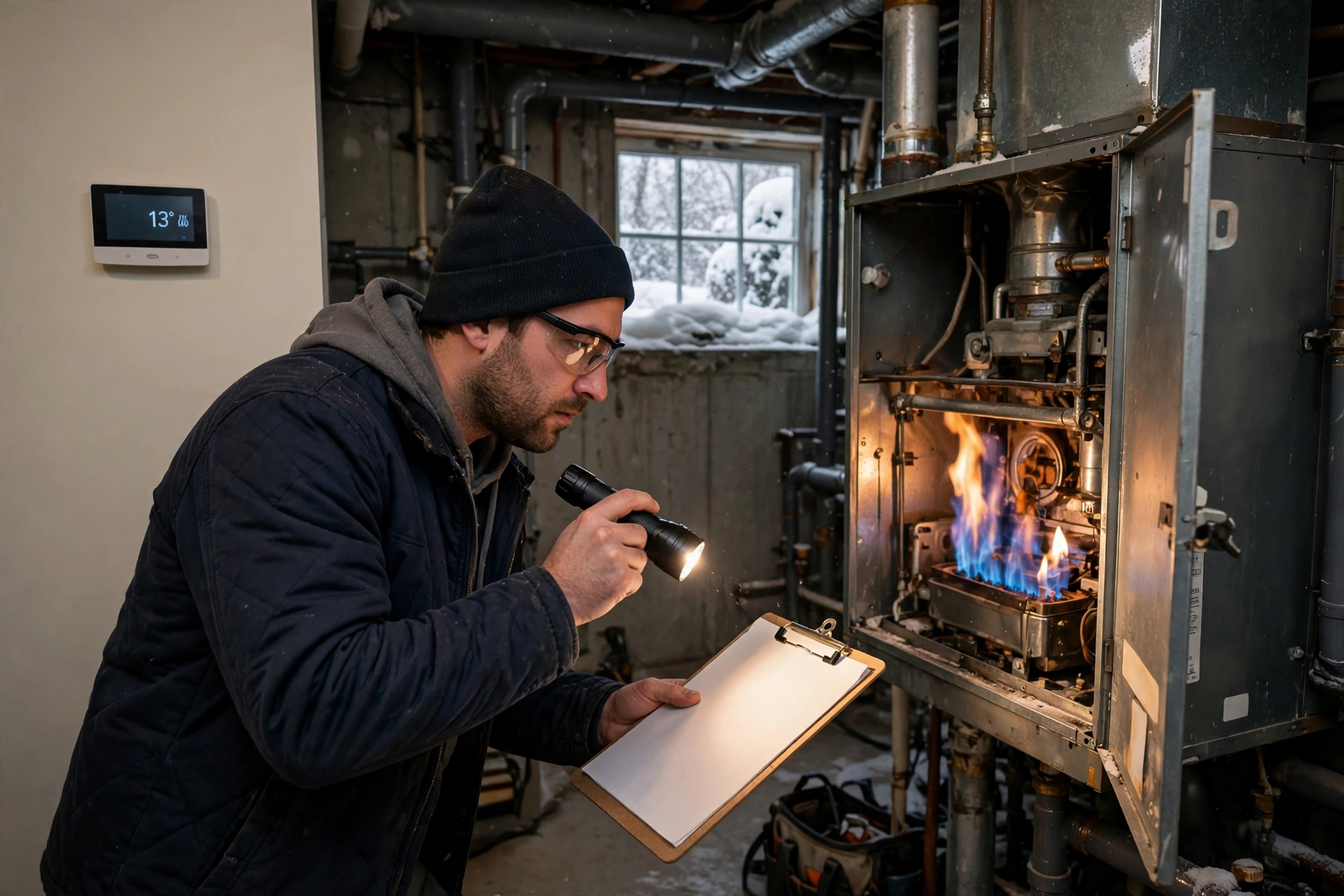
The pattern usually starts with a house that feels cool even though the furnace never stops. You hear the blower running when you wake up, when you come home, and late at night. The thermostat shows a room temperature below the setting, sometimes by one degree, sometimes by four or five. Vents blow air that feels lukewarm rather than warm, and some rooms feel colder than others. You may notice the furnace running constantly through the night, with no quiet period the way it used to have between heating cycles.
Timing and details help separate a normal cold snap from a real problem. Did the furnace running constantly start suddenly, or has it crept up over weeks? Did it start after a filter change, a thermostat change, or a renovation that closed off vents? Is the air from the vents warm, cool, or barely moving? Does the furnace run constantly but the house slowly warms up, or does the temperature fall even while the furnace runs? Write down the thermostat setting, the room temperature, and the outdoor temperature at the same time. Those three numbers are the first thing a licensed technician will want to know.
What it usually means
A furnace heats a home by moving warm air faster than the house loses heat to the cold outside. When a furnace running constantly cannot keep up, either the furnace is not producing enough heat, the heat is not reaching the rooms, or the house is losing heat faster than the furnace can replace it. The cause is usually one of a short list, and it is worth working through that list from the most common cause first, because the cheapest fixes sit at the top of it.
Furnace running constantly: most likely causes
- A clogged furnace filter. This is the most common cause by a wide margin. A filter choked with dust restricts airflow, so the furnace produces heat but cannot push enough warm air through the house. The furnace runs longer and longer to reach the setpoint, and in a cold house it may never get there. A furnace running constantly with weak airflow from the vents is very often a filter problem. The furnace filter size guide explains how to find the right replacement.
- A thermostat set higher than the furnace can reach. If the thermostat is set to 24 or 25 degrees on a cold night, the furnace may simply not be sized to hold that temperature. A furnace running constantly at a very high setpoint is often a furnace doing exactly what it was asked to do, with no fault at all. Lowering the setpoint by two degrees and watching whether the furnace starts cycling normally is a useful test.
- Blocked or closed supply vents and registers. Furniture moved in front of a register, a rug over a floor vent, or several registers closed in unused rooms all reduce the warm air reaching the house. The furnace keeps running because the thermostat, usually in a hallway, never feels the warmth. A furnace running constantly after furniture was rearranged deserves a walk through every room to check the vents.
- Leaky ductwork or a disconnected duct. Warm air escaping into an unheated basement, attic, or crawl space never reaches the living rooms. A disconnected duct can dump most of a furnace’s heat into a space nobody lives in, while the rooms above stay cold. This cause is common in older homes and after renovations, and it is invisible from inside the living space.
- A furnace that is undersized for the house. If a home was extended, insulated badly, or had its furnace replaced with a smaller unit, the furnace may simply be too small for the heat loss on a cold day. A furnace running constantly every winter, from the first cold week to the last, with everything else checked and clean, points toward sizing. That is a technician and load-calculation question, not a homeowner fix.
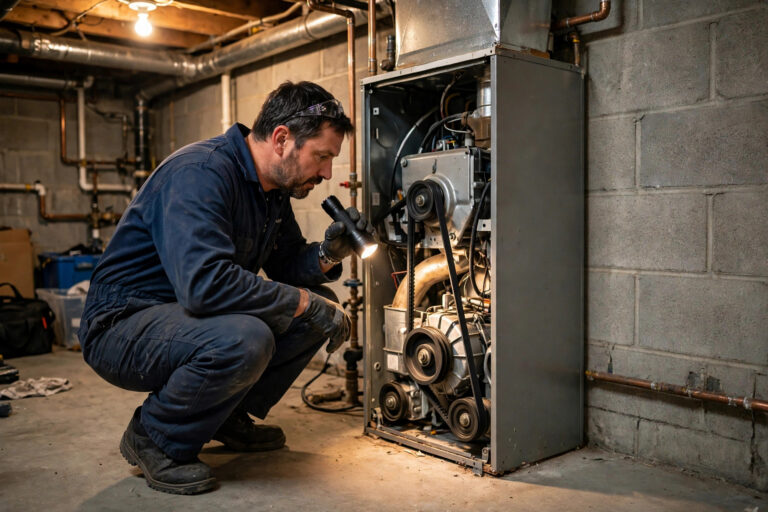
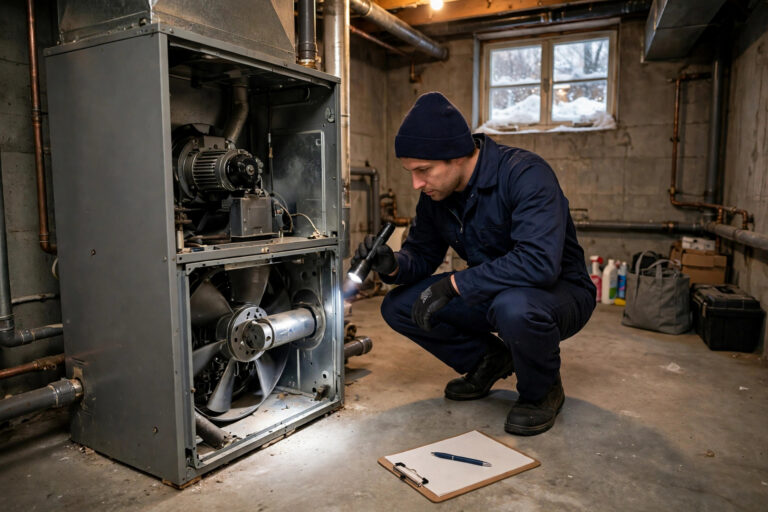
- A failing blower motor or a dirty blower wheel. If the blower runs slowly or the wheel is coated in dust, airflow drops even with a clean filter. The air from the vents feels weak and only mildly warm, and the furnace runs longer to compensate. A furnace running constantly with weak airflow and a clean filter may have a blower problem, and blower work belongs to a licensed technician.
- A gas or burner problem reducing heat output. A burner that is not firing on all burners, a gas valve problem, or a heat exchanger issue can all reduce the heat a furnace produces while the blower keeps running. The furnace runs constantly because it is producing less heat than the house needs, even though it sounds like it is working. Any suspicion of a burner or gas problem is a stop-and-call situation, covered below.
A furnace running constantly is not an emergency by itself, but it is a warning that the heating system is working harder than it should. Left alone, it wastes gas, wears the blower and burner parts, and can hide a problem that gets more expensive with time. The safe homeowner checks below can rule out the simple causes in an afternoon. If none of them explains the pattern, the next step is a licensed technician, not more run time.
Safe checks you can do yourself
These checks are visual and simple. They do not involve opening the furnace cabinet, touching a gas valve, adjusting a burner, or working with wiring. If a check would require a tool, a ladder, or opening a panel, it stops being a homeowner check.
Furnace running constantly: safe checks before you call
- Check the filter first, and replace it if it is dirty. Hold the filter up to a light. If you cannot see light through it, replace it with the correct size. After a new filter is in, give the furnace an hour and watch whether it starts cycling on and off again. The MERV rating guide explains why a filter that is too restrictive can cause the same problem as a dirty one.
- Check the thermostat setting and mode. Make sure the thermostat is set to heat, not to fan only, and that the fan is set to auto rather than on. A fan set to on runs the blower all day even when the furnace is not heating, which can look like a furnace running constantly. The thermostat blank guide covers thermostat problems that can mimic heating failures.
- Walk the house and open every supply vent. Check that no register is closed, blocked by furniture, or covered by a rug. Make sure return air grilles are not blocked either, because a furnace starved of return air cannot move heat around the house.
- Feel the air at several vents. Air that is warm but weak points to airflow, while air that is cool and weak points to a heat problem. Note which rooms are warm and which are cold; a pattern, such as only the far rooms being cold, is useful information for a technician and points toward ductwork.
- Look at the outdoor temperature and the setpoint together. On a very cold night, a furnace running constantly for a few hours can be normal. If it runs constantly on a mild evening, or if the house temperature is falling while it runs, that is not normal, and the furnace should be checked.
- Check the gas bill trend, not just one month. A furnace running constantly shows up as a gas bill that jumps well beyond what the weather explains. The high gas bill guide explains how to compare usage against cold weather and spot a real increase.
- Note any error light, without opening the cabinet. If your furnace has a sight glass or a visible error light, note the blinking pattern through the window. The furnace error codes guide explains how that blinking light is read, and the pattern is useful information for a technician.
Do not keep resetting the furnace, raising the thermostat higher, or running space heaters in cold rooms as a long-term answer. A furnace running constantly is a symptom, and covering it up with a higher setpoint or a portable heater does not fix the cause. If the simple checks above do not restore normal cycling, the furnace needs a professional look.
What not to touch
Do not touch the gas line or the gas valve, do not adjust gas pressure, do not open the burner compartment, and do not clean, adjust, or replace burners yourself. Do not remove a furnace panel to reach the blower motor, the control board, or a limit switch, and do not disconnect a safety control to keep the furnace running. Do not work on ductwork inside the furnace cabinet, do not change wiring, and do not try to resize or replace a furnace yourself.
In Ontario, gas appliance work must be performed by a TSSA-licensed technician, and burner, wiring, and refrigerant work inside the cabinet belong to a licensed technician as well. If you are checking a technician’s credentials, the TSSA fuels contractor lookup is a public resource for gas work.
Do not run the furnace with panels removed, and do not ignore a carbon monoxide alarm to keep the heat on. A furnace running constantly that has been red-tagged must stay off until a licensed technician clears it, as explained in the furnace red tag guide. A furnace that runs non-stop and also smells of gas or exhaust is a leave-the-home situation, covered in the carbon monoxide detector guide, not a reason to keep the furnace running while you investigate.
Stop and call a licensed technician if
- You smell gas, your carbon monoxide alarm sounds, or anyone in the home has headaches, dizziness, or nausea that ease outdoors: leave the home and call 911 or your gas utility emergency line.
- The furnace running constantly never reaches the setpoint, even after a new filter and open vents.
- The house temperature falls while the furnace runs, or the air from the vents is cool rather than warm.
- The furnace runs non-stop every day of the heating season, which can mean it is undersized for the house.
- You hear new grinding, screeching, or rattling from the blower, or the blower stops while the burner keeps firing.
- The furnace shows an error light, locks out, or short-cycles after running constantly. Short cycling is a different warning sign, covered in the furnace short cycling guide.
- Some rooms stay cold while others are warm, which can mean a disconnected or leaky duct that needs a professional inspection.
- You suspect a burner, gas valve, or heat exchanger problem, or you are unsure whether the furnace is safe to keep running.
A furnace running constantly is usually a simple airflow or setpoint problem with a simple fix, but it sits on the efficiency and safety side of the furnace, and that is why it deserves a careful check rather than another month of non-stop run time. Change the filter, open the vents, check the thermostat, and then get a licensed technician to check the blower, the ductwork, and the burner if the furnace still will not cycle normally. That check is quick when the pattern is clear, and it restores normal heating without guessing at gas or furnace parts. If the job needs a pro, hire a TSSA-licensed technician and ask to see their licence before any gas work starts.
The Quality HVAC is an information and marketplace platform. We do not install, service, or repair HVAC equipment. Content here is educational only and is not a substitute for a licensed technician. In Ontario, gas appliance work must be performed by a TSSA-licensed technician. If you smell gas or your carbon monoxide alarm sounds, leave the home and call 911 or your gas utility emergency line.
Looking for equipment rather than a service? Browse the equipment marketplace for furnace-related items listed by sellers, explore the heating tools collection for more plain-language guides, or return to the symptoms library for other furnace warning signs.



One Comment