Furnace Tripping the Breaker in a Toronto Home: What It Means and What to Do First
Table of Contents
A furnace tripping breaker is one of the more alarming furnace symptoms a homeowner can face in the middle of heating season. The heat stops, the house starts cooling, and the only clue is a breaker in the electrical panel that has flipped itself off. A breaker is a safety device, not a nuisance. It trips because something in the circuit is drawing too much current, or because a short circuit is letting current flow where it should not. Resetting it again and again will not fix the cause, and it can turn a small electrical fault into a fire risk.
This guide explains what a furnace tripping breaker usually means, the safe checks you can do yourself, what never to touch, and the warning signs that mean stop and call a licensed technician.
What you are noticing
A furnace tripping breaker can show up in a few different ways, and the pattern matters more than the single event. In some homes the breaker trips the moment the furnace tries to start, with a click from the panel and silence from the furnace. In others the furnace runs normally for ten or twenty minutes and then the breaker trips, often on the coldest nights when the furnace runs longest. Sometimes the breaker trips once, resets fine, and does not trip again for days, which usually means a fault is developing rather than a fault that has already failed outright.
Before you do anything else, note exactly what happened. Write down whether the furnace tripping breaker event happened at startup or after the furnace had been running, whether the thermostat and furnace switch still look normal, and whether anything else in the house lost power at the same time. A technician or electrician will ask for that timing, and it points straight at the cause: a trip at startup suggests a motor or capacitor problem, while a trip after a long run suggests overheating or an overworked blower motor.
What it usually means
Most causes of a furnace tripping breaker are ranked below, most likely first. The top two account for the large majority of cases in Toronto homes.
Furnace tripping breaker from a clogged filter and an overworked blower motor
The most common cause is also the cheapest to fix: a dirty furnace filter. When a filter is clogged with dust, the blower motor has to work much harder to push air through it, and a motor working harder draws more electrical current. Push it far enough and the current passes what the breaker allows, so the breaker trips to protect the wiring.
This is most likely if the breaker trips after the furnace has been running for a while, or if the filter has not been changed since last winter. A filter that bows inward or looks grey and matted is overdue. If you are unsure of the size, see our guide on how to find your furnace filter size. A clean filter also protects the furnace from overheating, which can cause the separate problem of furnace short cycling.
Furnace tripping breaker from a failing blower motor
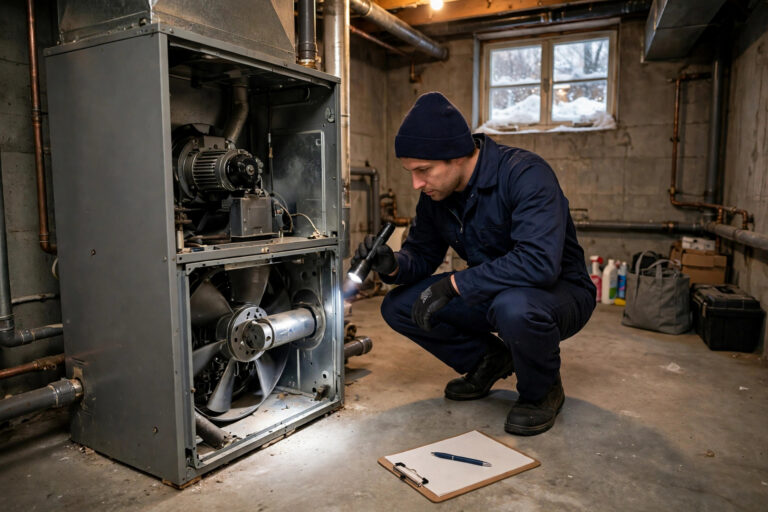
The second most common cause is a blower motor that is wearing out. Bearings wear, dust builds up unevenly on the blower wheel, and the motor gradually needs more current to do the same job. A failing motor often gives warning first: a furnace grinding noise, a hum that does not turn into a start, or a blower that sounds louder than it used to. Our guide to a furnace humming but not starting describes that startup struggle in detail.
A blower motor that trips the breaker has usually been struggling for weeks, so think back to whether the furnace sounded different before the first trip. Blower motors live inside the cabinet and involve mains wiring, so diagnosis and replacement belong to a licensed technician.
A failing capacitor
Furnace blower motors use a capacitor to give the motor the extra push it needs to start. When a capacitor weakens with age or heat, the motor cannot start cleanly and draws a surge of current instead, which can trip the breaker the instant the furnace tries to start. The clue is timing: the breaker trips at startup, often with a hum or a buzz from the furnace and no blower movement. Capacitors store an electrical charge even after the power is off, and they can give a serious shock, so testing or replacing one is strictly a licensed-technician job, never a homeowner job.
A short circuit or damaged wiring
A short circuit happens when a live wire touches something it should not, such as the metal furnace cabinet, another wire, or a grounded surface. Insulation wears through where wires rub against sharp metal edges, and mice can chew through wiring in a basement. A short usually trips the breaker instantly, the moment the furnace calls for heat, and it may come with a burning smell, a buzzing sound, or visible scorch marks. Never inspect furnace wiring yourself. If the breaker trips immediately every time you reset it, leave it off and call a licensed technician.
An overloaded circuit or a worn-out breaker
A furnace should be on its own dedicated circuit, but in older Toronto homes that is not always the case. If the furnace shares a circuit with other appliances, the combined load can trip the breaker even when the furnace itself is healthy.
A breaker can also simply wear out: after years of tripping and resetting, a breaker may start tripping below its rated current. Only a licensed electrician can tell whether the breaker or the circuit is the problem, and only an electrician may change a breaker or rewire a circuit. Never replace a breaker with a higher-amp one, and never tape or hold a breaker in the on position. Both defeat the safety device that is protecting your home from a fire.
A failing control board, inducer motor or gas valve
Less common, but worth knowing about: a control board with a shorted component, an inducer motor that is seizing, or a gas valve drawing too much current can all trip the breaker. These faults tend to appear as a trip at startup or shortly after the burners fire, and they may come with an error code on the furnace control board. If the furnace shows a blinking error light, see our guide to furnace error codes. Every one of these parts sits inside the cabinet and connects to gas or mains power, so they are licensed-technician work with no homeowner exception.
Safe checks you can do yourself
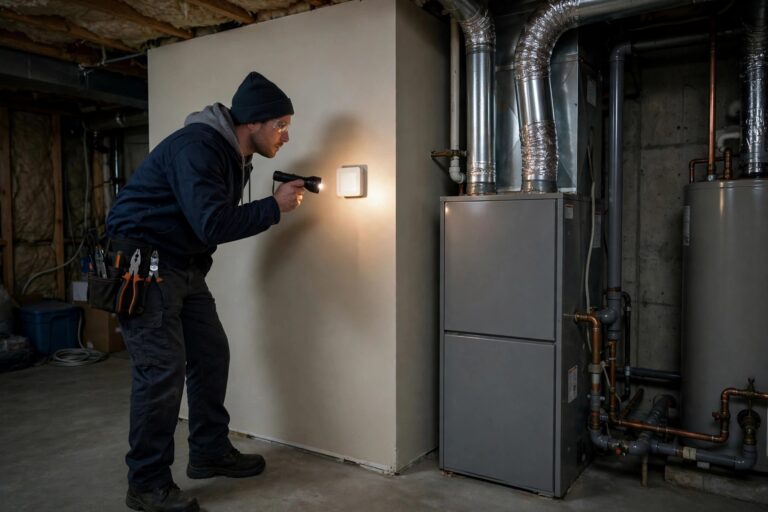
Before you investigate a furnace tripping breaker problem, turn the furnace off at the thermostat and at the furnace switch, and let it cool if it has been running. These checks need no tools beyond a screwdriver and a flashlight, and they never require opening the furnace cabinet or the electrical panel cover.
- Check and replace the filter. Pull the filter out and hold it up to the light. If you cannot see light through it, replace it with the correct size. This single check fixes more furnace tripping breaker cases than any other, and it costs a few dollars. See our guide on how to find your furnace filter size if the size is not printed on the old filter.
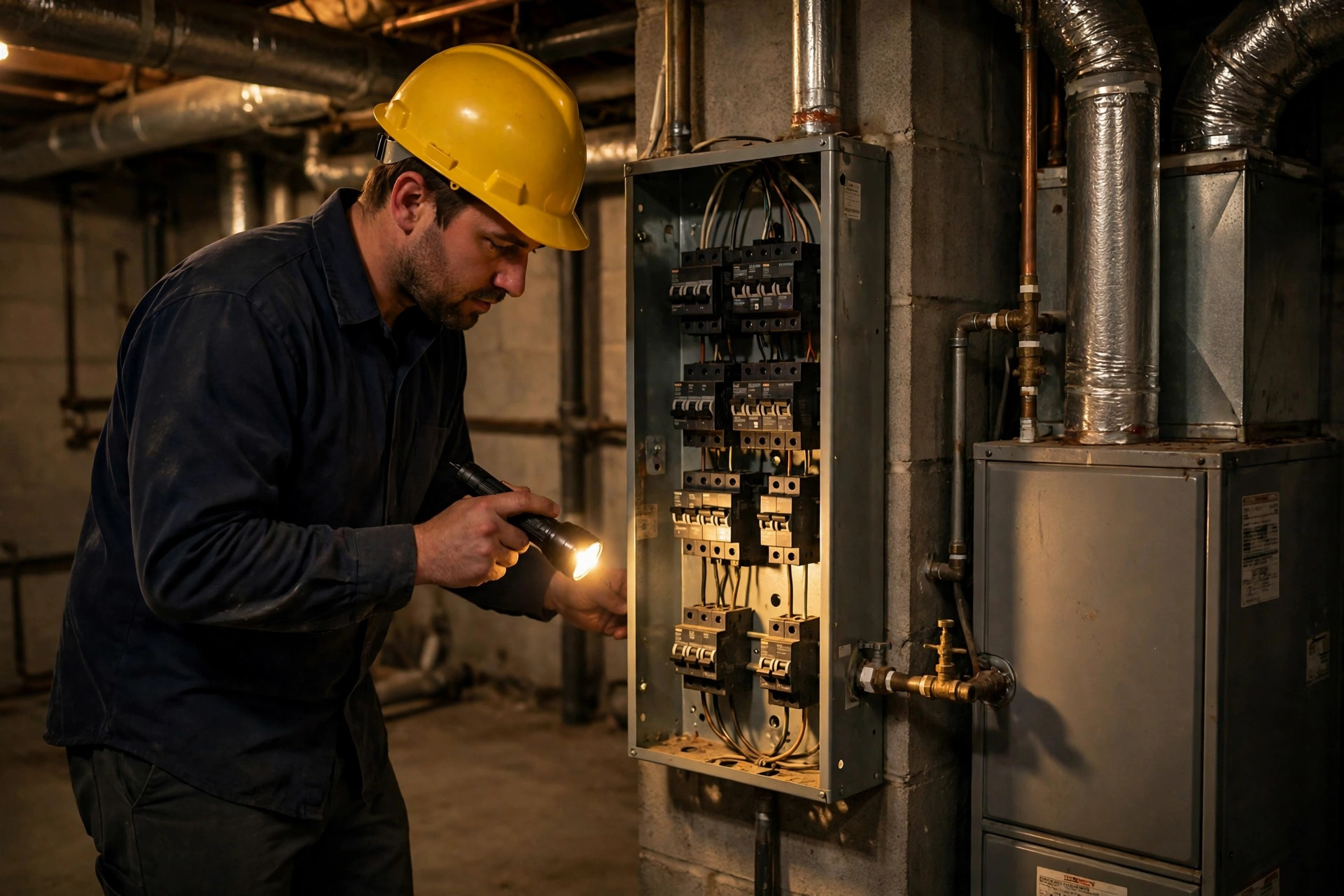
- Reset the breaker once, and only once. At the electrical panel, find the tripped breaker, push it fully to the off position, then firmly to on. If it trips again immediately, or within a minute, stop. Do not keep resetting it. A breaker that will not stay on is telling you the fault is still there.
- Note when it trips. Write down whether the trip happened at startup, while the burners were lit, or after the furnace had run for a while, and whether the furnace made any unusual sound first. That note saves a technician time and saves you a second visit.
- Check what else lost power. If lights or outlets in other rooms went out at the same time, the furnace may share a circuit with other loads, or the problem may be in the panel rather than the furnace. Either way, that is a job for a licensed electrician, not a furnace technician. You can find a licensed electrical contractor through the Electrical Safety Authority at esasafe.com.
- Smell and listen before you reset. A burning smell, a buzzing sound from the panel or the furnace, or a hot breaker are all stop signals. If any of them are present, leave the breaker off and call a licensed technician. Our guide to a furnace burning smell explains which smells are normal at the start of the season and which are not.
- Check the thermostat and the error light. A furnace that trips the breaker and then shuts down may also be locking out for another reason. If the thermostat is blank, see our guide to a thermostat blank or unresponsive, and if the furnace shows a blinking error light, see our guide to furnace error codes.
- Make sure the furnace switch is on. The furnace switch, usually a red switch plate near the furnace or at the top of the basement stairs, is sometimes switched off by mistake. It is a power switch, not a breaker, and if it is off the furnace simply will not run. Do not confuse a switched-off furnace with a tripped breaker.
What not to touch
Some parts of a furnace and its electrical supply are never a homeowner job, no matter how simple the fix looks. In Ontario, gas appliance work must be performed by a TSSA-licensed technician, and electrical panel work must be performed by a licensed electrician. Opening the wrong cover can turn a small furnace tripping breaker problem into a dangerous one.
- The gas line and gas valve. Never loosen, tighten, or adjust any gas fitting, valve, or connection. If you smell gas, leave the home and call 911 or your gas utility emergency line.
- The burners. Burner parts, brackets, and orifices are set at the factory. Cleaning or adjusting them without training can cause incomplete combustion and carbon monoxide.
- Wiring inside the cabinet. Furnace wiring carries mains voltage and controls gas valves. Never pull, cut, or re-route wires, and never bypass a safety switch to keep a furnace running.
- The control board and capacitor. A capacitor can hold a dangerous charge even with the power off. Control boards and capacitors are licensed-technician parts.
- The blower motor and blower wheel. Removing or adjusting blower parts means opening the cabinet and working around a spinning wheel and live wiring. Leave it to a licensed technician.
- The inside of the electrical panel. Flipping a breaker off and on is fine. Never remove the panel cover, never replace a breaker yourself, and never fit a higher-amp breaker to stop the tripping. That removes the protection that keeps an overloaded wire from starting a fire.
- Refrigerant lines. Furnaces paired with air conditioning share cabinet space with refrigerant lines. Refrigerant work is licensed-technician work.
If a furnace tripping breaker problem is coming from inside the cabinet or inside the panel, and none of the safe checks above found it, the cause is inside the cabinet or the panel too, and that is where a homeowner should stop.
Stop and call a licensed technician if
- The breaker trips again right after a single reset, or it trips the moment the furnace tries to start.
- You smell burning, see smoke or scorch marks, hear buzzing from the panel or furnace, or the breaker feels hot to the touch. Leave the breaker off and call a licensed technician or a licensed electrician.
- You see sparking or hear arcing anywhere near the furnace or the panel.
- You smell gas at any time. Leave the home and call 911 or your gas utility emergency line. Our guide to a furnace that smells like gas explains the first steps.
- Your carbon monoxide alarm sounds. Leave the home and call 911. See what to do first when your carbon monoxide detector goes off.
- The furnace trips the breaker only on startup, with a loud hum and no blower movement, which points to a failing motor or capacitor.
- The furnace is more than 15 years old and the breaker problem is new, since worn blower motors, capacitors, and control boards become more likely with age.
- You have changed the filter, confirmed the circuit is dedicated, and the furnace tripping breaker problem keeps coming back.
If the safe checks above did not find the source of the furnace tripping breaker, a technician can measure the motor current, test the capacitor, and check the control board and wiring safely, and can tell you whether the fix is a filter, a part, or an electrician. For gas work, you can confirm a technician’s registration through TSSA’s fuels contractor lookup, and for electrical work, through the Electrical Safety Authority at esasafe.com. For a broader look at what each furnace symptom means, browse the full list on our symptoms page, try one of the free calculators on our tools page, or look for parts and equipment on our marketplace.
Most of the time, a furnace tripping breaker turns out to be a clogged filter or a tired blower motor, and the filter check costs a few dollars and five minutes. The check that matters is the one before the reset: look at the filter, smell for burning, and note when the trip happened. A furnace tripping breaker that stops after a filter change is a maintenance win. A breaker that will not stay on, or a trip that comes with burning, buzzing, or a hot panel, is a safety job, and it should not wait for the weekend.
If the job needs a pro, hire a TSSA-licensed technician and ask to see their licence before any gas work starts.
The Quality HVAC is an information and marketplace platform. We do not install, service, or repair HVAC equipment. Content here is educational only and is not a substitute for a licensed technician. In Ontario, gas appliance work must be performed by a TSSA-licensed technician. If you smell gas or your carbon monoxide alarm sounds, leave the home and call 911 or your gas utility emergency line.