Heat Pump Icing Up in Winter: Normal Defrost vs a Real Problem
Heat Pump Icing Up in Winter: Normal Defrost vs a Real Problem
Table of Contents
Heat pump icing up in winter is one of those sights that looks alarming and is often completely normal. A heat pump pulls heat out of cold outdoor air, and in damp winter weather its outdoor coil can frost over as it works. The system is built to deal with that: every so often it runs a defrost cycle, melts the frost off, and goes back to heating your home. The trick is knowing the difference between that normal cycle and ice that signals a real fault.
This guide explains what normal defrost looks like, what usually causes a heat pump to ice up beyond normal, the safe checks you can do yourself, and the warning signs that mean it is time to stop and call a licensed technician. A heat pump is an electrical appliance with refrigerant inside, so the boundary matters: looking, listening, and clearing snow around the unit are homeowner jobs, while anything inside the cabinet is not.
What you are noticing
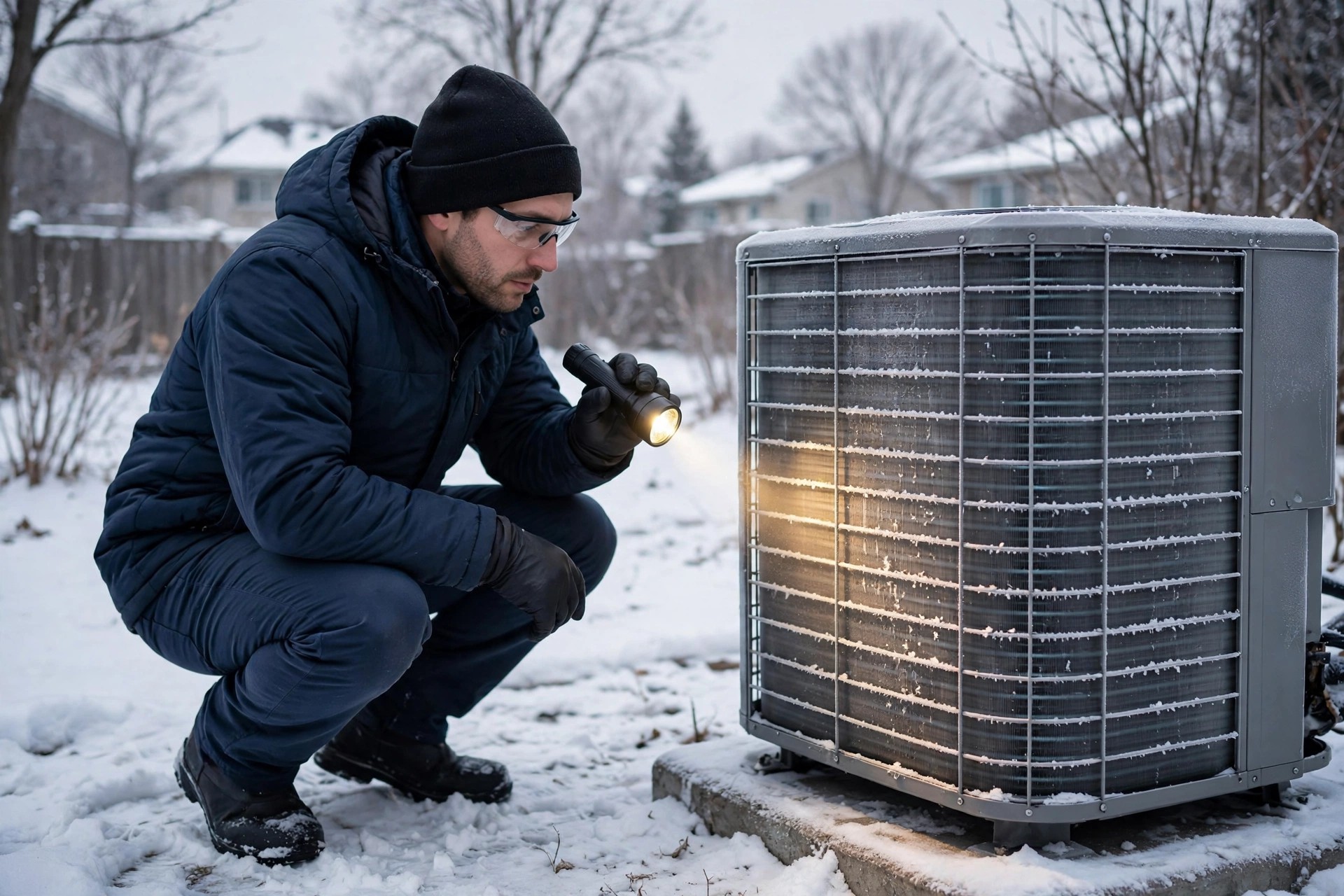
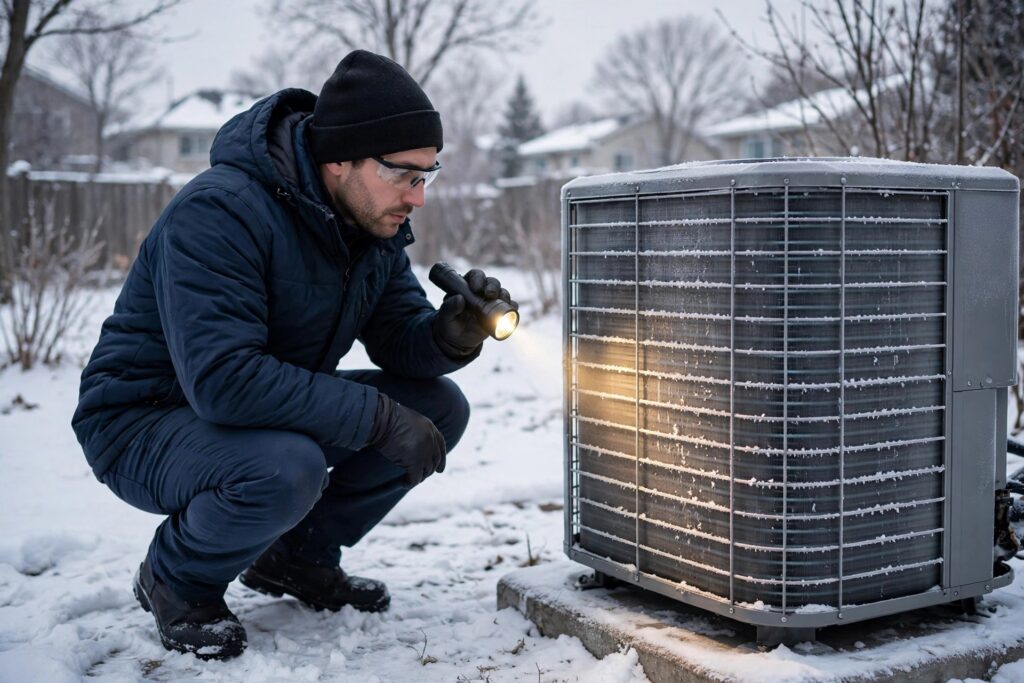
The usual picture is a thin, even layer of white frost on the outdoor unit’s coil, sometimes with a little ice around the base. During a defrost cycle the outdoor fan stops, you may hear a whooshing or sighing sound as the system briefly reverses, and you may see steam rising from the unit and water dripping underneath it. That steam is not smoke. It is the melted frost coming off a hot coil, and it is one of the clearest signs that defrost is doing its job. A normal cycle lasts roughly five to fifteen minutes, after which the fan restarts and the house keeps heating.
The worrying picture of heat pump icing up looks different. The coil is buried under thick, solid ice rather than a light frost, or ice has built up on the fan blades and the top grille so the fan can barely turn. The unit may sit iced up for hours without ever clearing, or it may keep dropping into defrost again and again without making progress. Indoors, the house may feel cooler than the thermostat setting, the system may run almost constantly, or the backup or auxiliary heat may be on far more than usual. If you see any of that pattern, the unit is telling you something is wrong.
What it usually means
Heat pump icing up: what normal defrost looks like
Normal frosting happens most in damp weather just below freezing, when there is plenty of moisture in the air for the cold coil to collect. The defrost control watches the coil temperature and, when frost has built up enough, briefly reverses the system so the outdoor coil warms up and sheds the ice. Light, even frost that clears on a regular cycle is the system working as designed, and it needs no action beyond keeping the area around the unit clear.
Heat pump icing up that will not clear
Ranked most likely first, the causes behind heat pump icing up that will not clear are usually: restricted airflow around the outdoor unit, such as snow drifts, leaves, or garden debris piled against it; a dirty indoor air filter or blocked indoor vents forcing the system to work harder than it should; a faulty defrost sensor, timer, or control board that never starts a cycle or ends one too early; low refrigerant from a leak, which makes the coil run colder than normal and frost more heavily; a failing reversing valve or fan motor; or a blocked condensate drain that lets meltwater pool and refreeze around the base.
Cold weather alone rarely causes heavy icing on a healthy system, so thick ice that survives several defrost cycles usually points to one of these faults rather than the weather.
One detail worth watching is where the ice sits. Even frost across the whole coil points toward a defrost or airflow problem. Ice concentrated in one patch, or ice that keeps returning in exactly the same spot, more often points toward a refrigerant or coil problem. Either way, the pattern is useful information for the technician, so note where the ice is and whether the unit ever clears it before you call.
Safe checks you can do yourself
- Clear the area around the unit. Keep at least two feet of clear space on all sides. Brush snow away from the unit gently, clear leaves and debris from around the base, and make sure snow from a roof or driveway is not being piled against it. Do not chip at ice on the coil itself.
- Check the indoor air filter. A clogged filter restricts airflow through the whole system and can make icing worse. Replace a dirty filter and make sure indoor supply vents and return grilles are open and unblocked by furniture or rugs.
- Watch one full defrost cycle. On a frosty morning, watch the outdoor unit for 20 to 30 minutes from a window. Note whether the fan stops, steam appears, and the frost visibly melts, and whether the fan restarts afterward. A unit that never enters defrost, or one that defrosts constantly without clearing, is useful evidence for a technician.
- Check the thermostat and power. Confirm the thermostat is set to heat at a temperature above the room temperature, and that it has not been switched to emergency or auxiliary heat by accident. Check that the outdoor unit’s breaker has not tripped, but do not open the unit’s electrical panel.
- Check the drainage. Meltwater from defrost should drain away from the unit, not pool underneath it. If water is pooling and refreezing around the base, clear the ground around the unit so water can run off, and keep the area free of snow buildup.
- Check the other symptoms. If the house is still comfortable, the air from the vents is warm, and the ice clears on a regular cycle, the system is probably coping. If the house is cooling down, the auxiliary heat is running constantly, or your electricity use has jumped, those are signs to get help sooner. Related guides in the symptoms library cover a thermostat that is blank or unresponsive and furnace error codes, and the heating tools can help you check the basics.
What not to touch
Do not touch the refrigerant lines, the compressor, the reversing valve, the defrost control board, or any wiring inside the outdoor cabinet. Do not remove the top grille or the fan guard to chip ice off the fan, and do not pour boiling water over the coil: it can crack components, refreeze quickly, and leave you with a worse ice problem.
Do not cover the unit with a tarp or box for the winter, since a heat pump needs airflow year round, and do not run the system in emergency heat for days on end as a workaround without getting the underlying fault checked. Refrigerant work and electrical work inside the cabinet belong to a licensed technician, and in Ontario gas appliance work must be performed by a TSSA-licensed technician. If you are checking a technician’s credentials, the TSSA fuels contractor lookup is a public resource for gas work.
Stop and call a licensed technician if
- Thick ice covers the coil or fan and does not clear after several defrost cycles, or the unit never enters defrost at all.
- The outdoor fan is jammed by ice, making grinding or scraping noises, or the unit has stopped producing heat indoors.
- The system runs almost constantly, the auxiliary or emergency heat stays on for hours, or your electricity bill has jumped sharply without a change in weather.
- You see damaged refrigerant lines, oil staining around the unit, or ice that keeps returning in exactly the same patch of coil.
- The breaker for the outdoor unit keeps tripping, or you smell burning or see scorch marks near the unit.
- The unit is buried by a snow drift or roof snow, or meltwater is pooling and refreezing around the base faster than you can keep it clear.
When you call, describe what you watched: how thick the ice is, where it sits, whether defrost cycles happen at all, and whether the house is still holding temperature. That short report helps the technician narrow the fault to airflow, defrost controls, or refrigerant before they arrive, and it often shortens the visit considerably.
Light frost that melts on a regular cycle is your heat pump doing winter the way it was designed to. Heat pump icing up that never clears is not. Keep the unit clear, keep the filter clean, watch one defrost cycle, and leave everything inside the cabinet alone. If the job needs a pro, hire a TSSA-licensed technician and ask to see their licence before any gas work starts.
The Quality HVAC is an information and marketplace platform. We do not install, service, or repair HVAC equipment. Content here is educational only and is not a substitute for a licensed technician. In Ontario, gas appliance work must be performed by a TSSA-licensed technician. If you smell gas or your carbon monoxide alarm sounds, leave the home and call 911 or your gas utility emergency line.
Looking for equipment rather than a service? Browse the equipment marketplace for heat pumps, parts, and related items listed by sellers.