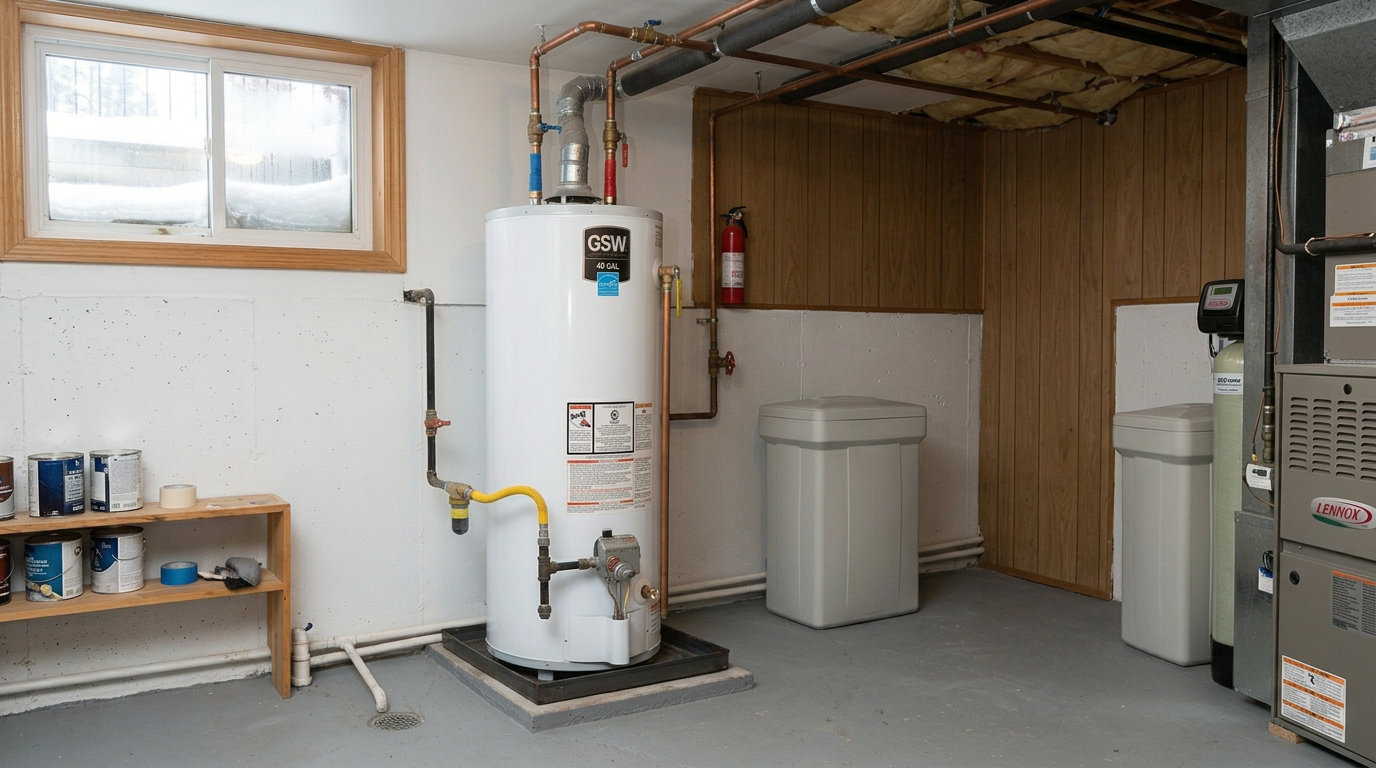
Water Heater Rumbling Noise in a Toronto Home: What It Means and What to Do First
Table of Contents
A water heater rumbling noise is a low, kettle-like rumble that usually starts a few minutes after someone runs hot water, and it is one of the most common sounds a Toronto water heater makes as it gets older. It can sound like a kettle coming to a boil, a distant drum, or popcorn popping inside the tank, and it often fades once the water reaches temperature.
A water heater rumbling noise is rarely an emergency on its own, but it is a warning that something inside the tank is changing, and the longer it goes on, the more it costs in energy and wear. This guide explains what a water heater rumbling noise usually means, the safe checks you can do yourself, what never to touch, and the warning signs that mean stop and call a licensed technician.
What you are noticing
A water heater rumbling noise can show up in a few different ways, and the timing tells you more than the volume. In most homes the rumble starts a few minutes into a heating cycle, while the burner or heating element is working, and it stops when the water reaches temperature. Sometimes the sound is a steady low rumble; other times it is a series of pops and crackles, like water boiling in a kettle with a thick layer of scale at the bottom.
The noise may come with a second clue: hot water that runs out faster than it used to, water that is not as hot as the thermostat setting, or a faint rusty tint when you first open a hot tap. Before you do anything else, note exactly when the rumble happens, whether it happens on a gas or an electric tank, and whether it is getting louder month by month. Write it down, since a technician will ask for exactly that timing.
What it usually means
Most causes of a water heater rumbling noise are ranked below, most likely first. The top cause accounts for the large majority of cases in Toronto homes.
Water heater rumbling noise from sediment buildup
The most common cause is sediment: minerals from the water supply settle on the bottom of the tank and harden into a layer of scale. When the burner or element heats the tank, water trapped under that layer boils into steam bubbles that pop and rumble as they escape, which is the sound you hear. Toronto water is moderately hard, so sediment builds up steadily in most tanks, faster in homes with high hot water use.
A sediment layer also insulates the bottom of the tank, so the burner or element runs longer to heat the same water, which raises energy use and overheats the tank bottom. Over years, that overheating can weaken the tank and shorten its life.
A water heater thermostat set too high
A thermostat set well above 60°C makes the trapped water under a sediment layer boil more violently, so a water heater rumbling noise often gets louder after someone turns the temperature up. The recommended setting for most homes is 49°C (120°F), which is hot enough for showers and dishes and much gentler on the tank. A thermostat that has failed and is overheating the water can also cause rumbling, and that is a technician fix.
A loose heating element on an electric tank
On an electric water heater, a heating element that has worked loose can vibrate as it heats, adding a buzz or rattle to the rumble. The clue is a sound that changes when the element cycles on and off. Elements carry mains voltage, so tightening or replacing one belongs to a licensed technician.
Water heater rumbling noise from pressure or expansion
When water heats it expands, and if the home has a closed plumbing system with a pressure reducing valve and no working expansion tank, the pressure can rise enough to make the tank groan or knock as it heats. The clue is a rumble that comes with a pressure relief valve that drips or a water pressure reading above 80 psi. Pressure and expansion problems are technician work.
A failing dip tube or a worn anode rod
The dip tube carries cold water to the bottom of the tank, and the anode rod protects the steel tank from corrosion. A cracked dip tube can send cold water to the top of the tank, causing uneven heating and strange sounds, while a depleted anode rod lets corrosion start, which can show up as rusty water and a rumbling tank near the end of its life. Both are internal parts that a technician checks during a service visit.
Safe checks you can do yourself
These checks need no tools beyond a flashlight, and they never require opening the tank or touching gas or electrical parts. Work through them in order the next time you hear a water heater rumbling noise.
- Note when the rumble happens. A rumble that starts a few minutes after hot water is used and stops when the tank reaches temperature points to sediment. A rumble that never stops, or one that comes with a leak, points to a bigger problem.
- Check the temperature setting. Look at the thermostat dial on a gas tank or the thermostat behind the access panel on an electric tank, without removing any covers that are screwed shut. If it is set above 60°C, turn it down toward 49°C (120°F) and listen over the next few heating cycles. Never open an access panel that is screwed or sealed shut.
- Confirm the sound is coming from the tank. Stand near the tank, then near the nearest pipes, and compare. A rumble loudest at the tank points to sediment, while a rumble loudest in the pipes points to water pressure or a loose pipe.
- Check for water at the base. Look for a puddle, dampness, or rust stains around the bottom of the tank and at the pipe connections. A dry base is reassuring; any active leak means calling a technician the same day.
- Check the hot water. Run a hot tap for a few seconds into a white cup. Clear water is normal. Rusty or discoloured water, or hot water that runs out much faster than it used to, points to sediment and wear inside the tank.
- Check the tank age. Find the rating plate on the side of the tank and read the serial number, which usually encodes the year it was made. A tank older than ten years with a loud rumble is often nearing replacement, and a technician can advise whether a flush or a new tank is the better spend.
- Listen for a second sound. A rumble with a hiss points to a leak or a relief valve discharging. A rumble with a buzz on an electric tank points to an element problem. Note both sounds together, because the combination narrows the cause a lot.
What not to touch
A water heater rumbling noise never justifies opening the cabinet or touching gas parts. Some parts of a water heater are never a homeowner job, no matter how simple the fix looks. In Ontario, gas appliance work must be performed by a TSSA-licensed technician, and opening the wrong cover can turn a small rumble into a dangerous one.
- The gas line and gas valve. Never loosen, tighten, or adjust any gas fitting, valve, or connection on a gas water heater. If you smell gas, leave the home and call 911 or your gas utility emergency line.
- The burner assembly. Burner parts are set at the factory. Cleaning or adjusting them without training can cause incomplete combustion and carbon monoxide.
- The temperature and pressure relief valve. Never cap, plug, or block this safety valve, and never force it open yourself. If it is dripping or discharging, call a licensed technician.
- Wiring and heating elements. Electric water heaters carry mains voltage. Never remove an access panel that is screwed shut, and never touch wiring or elements.
- The drain valve. Opening the drain valve on a tank full of sediment can leave the valve stuck open or clogged, which can flood the area. Flushing a heavily scaled tank is technician work.
- The vent or flue. On a gas water heater, the vent carries exhaust gases outside. Never disconnect or block it, and never store anything against it.
Stop and call a licensed technician if
Stop and call a licensed technician if a water heater rumbling noise comes with any of these signs.
- Water is leaking from the base of the tank, a fitting, or the relief valve.
- The hot water is rusty or discoloured, or it runs out much faster than it used to.
- The rumbling is getting louder every few weeks, or it has turned into banging.
- The temperature and pressure relief valve is dripping or discharging water.
- You smell gas at any time. Leave the home and call 911 or your gas utility emergency line.
- The breaker trips repeatedly on an electric tank, or the tank feels hot to the touch.
- The tank is more than ten years old and the rumble is new or worsening, since a technician can tell you whether a flush will help or a replacement is due.
- The safe checks above did not explain the sound, or you are unsure about any step.
If the safe checks above did not find the cause, a technician can test the thermostat and elements, check the anode rod and dip tube, measure the water pressure, and flush the tank safely if the sediment will come out.
For gas work, you can confirm a technician’s registration through TSSA’s fuels contractor lookup. For a broader look at what each symptom means, browse the full list on our symptoms page, try one of the free calculators on our tools page, or look for parts and equipment on our marketplace.
Most of the time, a water heater rumbling noise turns out to be sediment, and catching it early is the difference between a tank that keeps working for years and one that fails early.
The check that matters is the one before the call: note when the rumble happens, check the temperature setting, and look for water at the base. A rumble that comes with a leak, rusty water, or a smell of gas is a repair job, and it should not wait for the weekend.
If the job needs a pro, hire a TSSA-licensed technician and ask to see their licence before any gas work starts.
The Quality HVAC is an information and marketplace platform. We do not install, service, or repair HVAC equipment. Content here is educational only and is not a substitute for a licensed technician. In Ontario, gas appliance work must be performed by a TSSA-licensed technician. If you smell gas or your carbon monoxide alarm sounds, leave the home and call 911 or your gas utility emergency line.