Furnace Clicking Noise: What It Means and What to Do First
Furnace Clicking Noise: What It Means and What to Do First
A furnace clicking noise is one of the most common sounds a homeowner hears in winter, and it is also one of the most confusing. A single click when the heat turns on is normal. A steady click, click, click that never stops, or a furnace clicking noise that comes with no heat at all, is a different story. This guide explains what a furnace clicking noise usually means, the safe checks you can do yourself, what never to touch, and the signs that mean stop and call a licensed technician.
Clicking is the sound of something moving, opening, closing, or trying to start. Inside a gas furnace there are several parts that click on purpose: the gas valve opening, the igniter firing, and the relays on the control board switching power to the blower and the inducer motor. A furnace clicking noise is normal when it happens once or twice as the furnace starts up, and again when it shuts down. A furnace clicking noise becomes a problem when it repeats without the burners lighting, when it keeps going while the furnace runs, or when it shows up together with no heat, a gas smell, or an error light.
Table of Contents
What you are noticing
The first thing to notice is when the furnace clicking noise happens. A furnace clicking noise that appears as one or two clicks right when the thermostat calls for heat, followed by the whoosh of the burners lighting, is usually just the gas valve and the igniter doing their job. Clicking that repeats over and over, every few seconds, with the burners never lighting, points toward an ignition problem: the furnace is trying to light and failing, then trying again.
Next, notice where the sound is coming from. Clicking that seems to come from the ductwork upstairs, rather than from the furnace itself, is often the sheet metal of the ducts expanding as warm air fills them and contracting as they cool. Clicking that comes from inside the furnace cabinet, near the bottom where the burners and the gas valve sit, points toward the ignition system or the gas valve. A furnace clicking noise from the blower compartment points toward the blower motor, its relay, or something caught in the blower wheel.
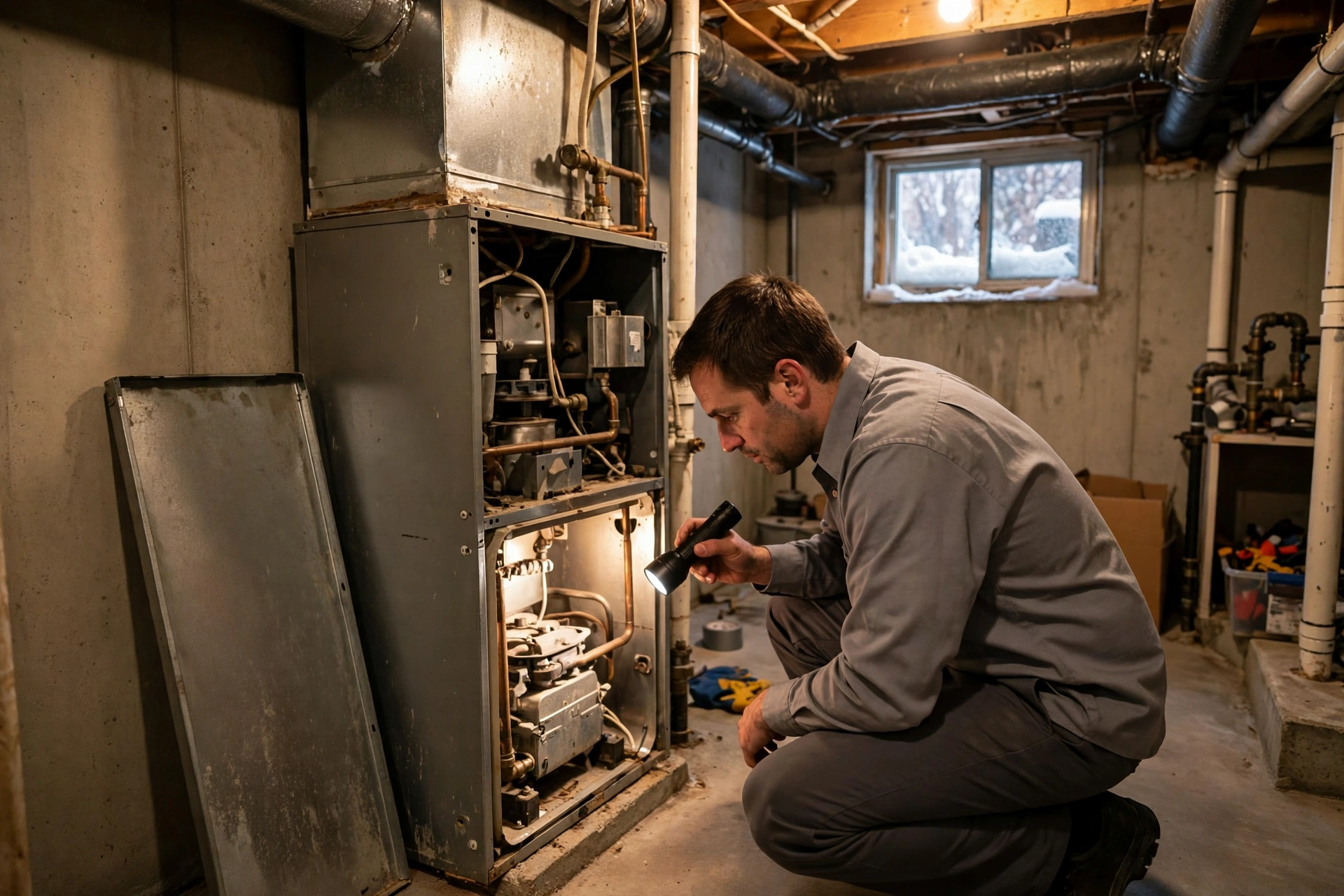
Also notice what else is happening at the same time. Is warm air coming from the registers, or is the air cold or still? Does the furnace clicking noise stop after a minute, or does it go on until you turn the thermostat down? Does the furnace try to start several times and then give up, with a blinking error light behind the little sight glass on the door? A furnace clicking noise with no heat, clicking that ends in a lockout, and clicking that comes with a bang or a gas smell are three very different situations, and the details you notice now are the details a licensed technician will ask about first.
What it usually means
A furnace clicking noise means a part is moving or trying to move, and the meaning depends on which part is making the sound. A furnace has a short startup sequence: the thermostat calls for heat, the inducer motor starts, the igniter heats up or sparks, the gas valve opens, the burners light, and the blower starts pushing warm air through the house. A click at each step of that sequence is normal. Clicking that repeats at one step, over and over, means that step is not completing, and the furnace is stuck trying. The causes below are ranked from the most likely first, because the most common cause of a furnace clicking noise is also the least worrying one.
Furnace clicking noise: most likely causes
- Metal expanding and contracting as it heats and cools. This is the most common cause of a furnace clicking noise, and it is harmless. The furnace cabinet, the heat exchanger, and especially the sheet-metal ductwork all expand slightly when they warm up and shrink when they cool down. That movement makes a clicking or ticking sound, usually a few clicks after the furnace starts and a few more after it shuts off. A furnace clicking noise from ductwork is often loudest in the first cold weeks of the season, when the ducts go from cold to hot for the first time, and it tends to fade as the metal settles. If the heat is working fine and the clicking happens only at startup and shutdown, this is the likely cause.
- A dirty flame sensor causing repeated ignition attempts. After the burners light, a small metal rod called the flame sensor sits in the flame and tells the control board that the flame is there. If the sensor is coated with soot or corrosion, it cannot sense the flame, so the board shuts the gas off and tries again. That cycle makes clicking that repeats every few seconds: click, burners light, burners go out, click again. Most modern furnaces try three times and then lock out, and a blinking error light appears behind the sight glass. Cleaning or replacing a flame sensor is licensed-technician work, because it sits inside the burner compartment. The furnace error codes guide explains how to read the blinking light.
- A weak or failing igniter. The igniter is the part that lights the gas at the burners, either a hot-surface igniter that glows orange or a spark igniter that clicks. A spark igniter that is worn out can click again and again without producing a strong enough spark to light the gas, so clicking that repeats at startup with no flame is often a failing igniter. A hot-surface igniter does not click, so if the furnace clicking noise is rhythmic and the burners never light, the igniter is one of the first things a technician will check. Igniter replacement means opening the burner compartment, so it is not a homeowner repair.
- A gas valve opening and closing repeatedly. The gas valve opens to let gas to the burners and should stay open until the heating cycle ends. A valve that is failing, or a control board that keeps sending it mixed signals, can make the valve click open and shut in a rapid cycle. Clicking that comes from the gas valve area, near the gas line where it enters the furnace, and that repeats while the burners flicker on and off, can have a faulty valve or a failing board behind it. Gas valve work is licensed-technician work in Ontario, and a valve that does not close properly is a safety issue, not just a noise.
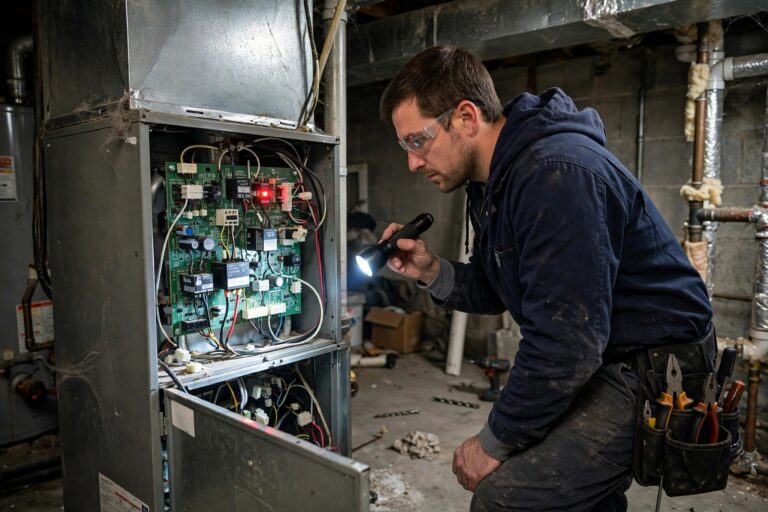
- A control board relay chattering. The control board is the furnace’s brain, and it uses small electrical switches called relays to turn the blower, the inducer motor, and the gas valve on and off. A relay that is wearing out can chatter, opening and closing many times a second, which sounds like a fast furnace clicking noise or a buzz from inside the cabinet. Clicking that sounds electrical, that comes with the blower starting and stopping, or that appears alongside an error code, can point to the board. Control board diagnosis and replacement involve live wiring inside the cabinet and are licensed-technician work.
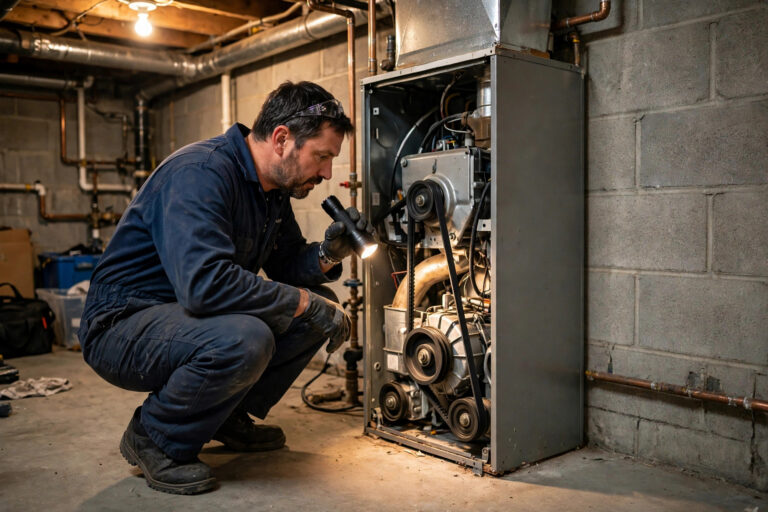
- A blower motor or inducer motor problem. The inducer motor starts first in the heating sequence, and the blower motor starts once the heat exchanger is warm. A failing capacitor, a worn bearing, or a loose blower wheel can make clicking that is steady and rhythmic while the motor runs. Clicking that changes speed with the blower, or that stops when the blower stops, points toward the motor or the wheel. The furnace humming guide covers a related motor problem, and the furnace grinding noise guide covers what a worn blower bearing sounds like when it gets worse.
- Delayed ignition letting gas build up before the burners light. When the gas valve opens and the burners are slow to light, gas can build up inside the furnace for a few seconds before it ignites, and the ignition then arrives with a bang or a whoomp. A furnace clicking noise that comes with a bang on startup, or a furnace clicking noise that you can also smell gas with, is a delayed ignition problem, and it deserves a licensed technician the same day. The furnace banging noise guide explains delayed ignition in detail. Never keep restarting a furnace that bangs when it lights.
A furnace clicking noise is not a problem to rank and then forget about. Even the mildest cause on this list, expanding ductwork, is worth confirming, because the same sound can also be the first sign of an ignition problem that will leave you without heat on the coldest night of the year. The safe checks below can help you work out which kind of furnace clicking noise you are hearing. They cannot open the furnace or fix the cause, and they should never be used as a reason to keep running a furnace that will not light.
Safe checks you can do yourself
These checks are visual and simple. They do not involve opening the furnace cabinet, touching a gas line, working with wiring, or removing a panel. If a check would require a tool, a ladder, or opening the furnace door, it stops being a homeowner check. If you smell gas at any point, skip this section entirely, leave the house, and call 911 or the Enbridge Gas emergency line at 1-866-763-5427 from outside.
Furnace clicking noise: safe checks before you call
- Note exactly when the clicking happens. Does the furnace clicking noise happen once at startup and then stop, or does it repeat for a minute or more? Does it happen at shutdown too, or only when the furnace is trying to light? A furnace clicking noise that appears only at startup and shutdown, with heat working normally, points toward expanding metal. A furnace clicking noise that repeats while the burners should be lit points toward an ignition problem.
- Work out where the sound is coming from. Stand near the furnace, then walk to the rooms above and listen at the registers. A furnace clicking noise that is loudest at a duct or a register, and that you can feel as a faint tick in the ductwork, is often the ducts expanding. A furnace clicking noise that is loudest at the furnace cabinet itself, especially near the bottom where the burners sit, points toward the ignition system or the gas valve.
- Check whether heat is actually coming out. Hold your hand near a register while the furnace is running. Warm air means the furnace is lighting and heating, and a furnace clicking noise with warm air is less urgent than a furnace clicking noise with cold air or no air at all. A furnace clicking noise with no heat, or with the furnace trying to start over and over, is a call-a-technician-today situation.
- Check the thermostat. Make sure the thermostat is set to heat, the set temperature is above the room temperature, and the fan is set to auto rather than on. If the thermostat uses batteries, weak batteries can make the thermostat click or send a weak signal that makes the furnace cycle oddly. A furnace clicking noise that starts right after a thermostat change, or that stops when you turn the thermostat down, is useful information for a technician. The furnace short cycling guide explains what rapid on-and-off cycling usually means.
- Look at the error light through the sight glass only. Most furnaces have a small window in the access door. Look through it for a blinking light, count the blinks, and note the pattern before you call. Do not open the furnace door. A furnace clicking noise that comes with a blinking error light usually means the furnace has locked out after failed ignition attempts, and the furnace error codes guide explains what the pattern means.
- Check the air filter. A filter clogged with dust can make the furnace overheat and shut itself off, and the repeated starting and stopping can sound like clicking as the furnace cycles. Slide the filter out, hold it up to the light, and replace it if you cannot see light through it. A furnace clicking noise that appears with a dirty filter and goes away with a clean one is a common and easy fix.
- Check that the registers are open. Walk through the house and make sure the supply registers are open and not blocked by furniture, rugs, or closed dampers. Blocked registers can make the furnace overheat and cycle, and the ductwork can click loudly as pressure builds and releases. A furnace clicking noise that is worst in one room, where a register has been closed for months, is often a duct pressure problem.
- Listen for a bang or a smell with the clicking. A furnace clicking noise that comes with a bang when the burners finally light, or with a rotten-egg gas smell, is a stop-and-call situation. Leave the house if the gas smell is strong, and call from outside. The furnace smells like gas guide explains what to do first when you smell gas, and the furnace banging noise guide covers delayed ignition.
- Note how many times the furnace tries to start. Most modern furnaces try to ignite three times and then lock out for safety. If you hear the furnace clicking noise and the burners trying to light three times, and then everything goes quiet with a blinking error light, that is the lockout. Write down the error pattern and the number of attempts before you call, because a technician will ask.
Do not keep resetting the furnace to see if the clicking goes away on its own. Turning the furnace off and on again can clear a lockout once, but if the furnace clicking noise comes back on the next heating cycle, the cause is still there. Repeatedly resetting a furnace that will not light can let unburned gas build up, and it can mask a problem that a technician needs to see while it is happening. If the checks above leave you unsure, or if the clicking comes with no heat, turn the thermostat down without touching the furnace itself and call a licensed technician.
What not to touch
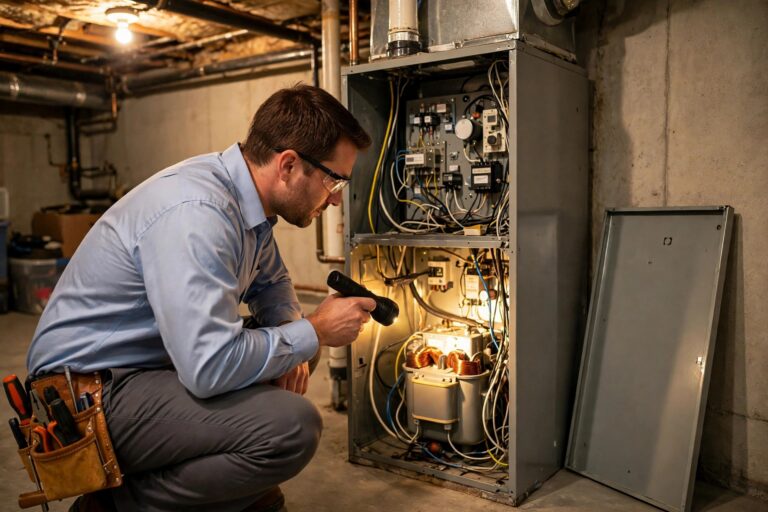
Do not touch the gas line or the gas valve, do not adjust gas pressure, and do not try to tighten, loosen, or seal a gas connection yourself. Do not open the burner compartment, do not clean, adjust, or replace the burners, the igniter, or the flame sensor, and do not try to relight a pilot light while a furnace clicking noise is happening. Do not remove a furnace panel to reach the gas valve, the heat exchanger, the blower motor, or the control board, and do not disconnect a safety control or bypass anything to keep the furnace running. I
In Ontario, gas appliance work must be performed by a TSSA-licensed technician, and gas work done by someone unregistered is not just unsafe, it is illegal, as the Hamilton unregistered gas work case shows. If you are checking a technician’s credentials, the TSSA fuels contractor lookup is a public resource for gas work.
Do not work on the vent pipe or its joints, do not change wiring, and do not try to replace a control board, a relay, a gas valve, or any part inside the cabinet yourself. Do not clean the flame sensor with sandpaper or steel wool, do not bend or adjust it, and do not poke at the igniter to see if it is hot. Do not run the furnace with panels removed to watch where the clicking comes from, and do not ignore a carbon monoxide alarm to keep the heat on.
A furnace clicking noise that comes with a burning smell as well is a stop-and-call situation, and the furnace burning smell guide explains which burning smells are normal at the start of the season and which ones are not. Gas and a furnace are a combination that rewards caution, not curiosity, and the safest repair you can make is the phone call you make to a licensed technician.
Stop and call a licensed technician if
- The furnace clicking noise repeats for a minute or more and the burners never light, or the furnace tries to start three times and then locks out.
- The furnace clicking noise comes with a bang or a whoomp when the burners finally light.
- You smell gas, even faintly, while the furnace clicking noise is happening: leave the house and call 911 or the Enbridge Gas emergency line at 1-866-763-5427 from outside.
- Your carbon monoxide alarm sounds, or anyone in the home has headaches, dizziness, nausea, or confusion that ease outdoors.
- The furnace clicking noise comes with a blinking error light, a lockout, or a red tag on the furnace.
- The furnace clicking noise is getting louder, faster, or more frequent, or the furnace is cycling on and off rapidly.
- You hear a hissing sound near the gas line, the meter, or the furnace along with the clicking.
- The furnace clicking noise comes with a burning smell, scorch marks, or soot around the furnace.
- The clicking is coming from the gas valve or the control board area and the burners flicker on and off.
- The furnace clicking noise comes back after a technician has already looked at it, or it returns every heating cycle.
- You are unsure whether the clicking is normal expansion or an ignition problem: when in doubt, call.
If the job needs a pro, hire a TSSA-licensed technician and ask to see their licence before any gas work starts. A furnace clicking noise is usually the furnace telling you, in the only language it has, that one step of its startup is not finishing. A few clicks from expanding ducts are normal winter music, but a furnace clicking noise that repeats without heat is a warning worth acting on the same day. Catching an ignition problem early is a small repair. Leaving it until the furnace locks out on the coldest night of the year is not.
For more plain-language help with furnace problems, see the symptoms library, the tools and guides, and the equipment marketplace on The Quality HVAC.
The Quality HVAC is an information and marketplace platform. We do not install, service, or repair HVAC equipment. Content here is educational only and is not a substitute for a licensed technician. In Ontario, gas appliance work must be performed by a TSSA-licensed technician. If you smell gas or your carbon monoxide alarm sounds, leave the home and call 911 or your gas utility emergency line.


One Comment