
Furnace Buzzing Noise in a Toronto Home
Table of Contents
A furnace buzzing noise is a low, steady electrical hum that usually comes from inside the furnace cabinet, and it is easy to mistake for the normal sound of a furnace running. A healthy furnace makes a soft whoosh of moving air and a quiet click when it starts, but a buzz is different: it sounds like a fluorescent light, a distant bee, or a phone on vibrate, and it often stays at the same pitch for as long as the furnace runs. A buzz almost always points to an electrical part, a transformer, a relay, a capacitor, or a motor, rather than to the burners or the ductwork.
This guide explains what a furnace buzzing noise usually means, the safe checks you can do yourself, what never to touch, and the warning signs that mean stop and call a licensed technician.
What you are noticing
A furnace buzzing noise can show up in a few different ways, and the timing tells you more than the volume. In some homes the buzz starts the moment the furnace kicks on and stops the moment it shuts off, which points to a part that only works while the furnace is heating. In others the buzz is there all the time, even when the furnace is idle, which points to a part that stays powered whenever the furnace switch is on. Sometimes the buzz is faint enough that you only hear it standing next to the furnace, and sometimes it is loud enough to hear from the next room.
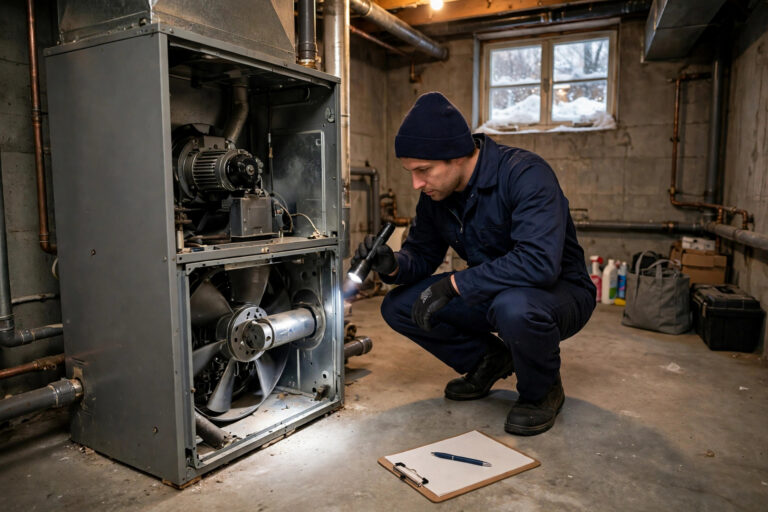
Before you do anything else, note exactly when the buzz happens and where it sounds loudest. Stand near the furnace, then near the thermostat, then near the electrical panel, and compare. A furnace buzzing noise that is loudest at the furnace points to a furnace part, while a buzz that is loudest at the panel points to a breaker or panel problem instead. Also note whether the buzz comes with a second sound, a click, a hum, or a burning smell, because that combination narrows the cause a lot. Write it down, since a technician will ask for exactly that timing.
What it usually means
Most causes of a furnace buzzing noise are ranked below, most likely first. The top two account for the large majority of cases in Toronto homes, and both involve small electrical parts that wear out with age and use.
Furnace buzzing noise from a failing transformer
The most common cause is the transformer, the small part that steps the furnace power down to the low voltage the thermostat and controls use. A transformer hums quietly even when it is healthy, but a failing one buzzes loudly, often the moment the thermostat calls for heat. The clue is behaviour: a furnace with a failing transformer may also show a blank or flickering thermostat, or it may start and stop at odd times. Our guide to a thermostat blank or unresponsive describes that side of the problem. Transformers live inside the cabinet and connect to mains wiring, so testing and replacement belong to a licensed technician.
Furnace buzzing noise from a buzzing relay or contactor
The second most common cause is a relay or contactor that is chattering, switching on and off many times a second instead of closing cleanly once. The sound is a fast buzz mixed with a click, and it often happens at startup when the thermostat calls for heat. Chatter usually means worn contacts, or low voltage reaching the relay because the transformer is weak, which is why this cause and the transformer problem often appear together. Our guide to a furnace clicking noise describes relay sounds in more detail. Relays and contactors sit on the control board inside the cabinet, around live wiring, so diagnosis and replacement belong to a licensed technician.
A worn run capacitor
A run capacitor helps the blower motor start and keep running smoothly, and a failing one can make the motor buzz instead of spinning up cleanly. The clue is a buzz that comes with a slow or struggling blower: the furnace starts, the buzz sounds, and the airflow from the vents feels weak, or the blower takes a long time to get up to speed. Sometimes the buzz comes with a hum, which our guide to a furnace humming but not starting describes in detail. A capacitor can hold a dangerous charge even with the power off, so it is always licensed-technician work.
Loose wiring or a loose electrical connection
Furnaces vibrate every time they run, and years of vibration can loosen a wire connection inside the cabinet or at the furnace switch. A loose connection can buzz or crackle as electricity arcs across a tiny gap, and the arcing creates heat, which is the dangerous part. The clue is a buzz that comes with a faint burning smell or a scorch mark near a connection, or a buzz that changes when the furnace cabinet is touched, which you should never do while it is running. Our guide to a furnace burning smell explains which smells are normal at the start of the season and which are not. Loose wiring is never a homeowner fix.
A failing blower motor
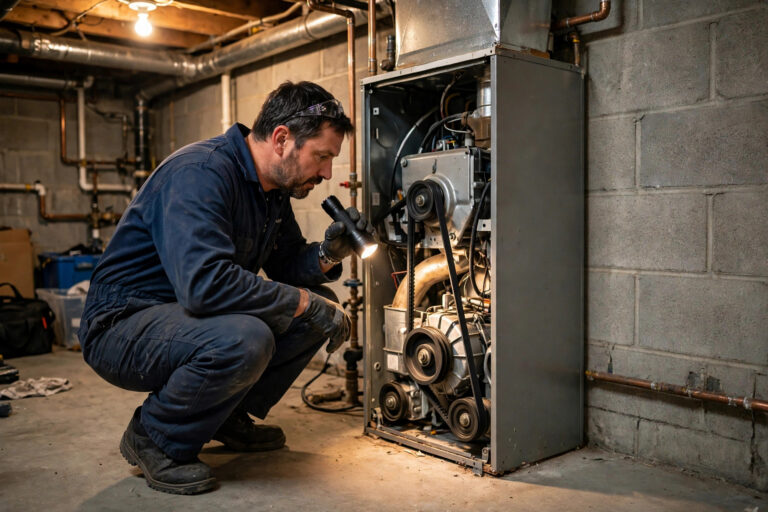
A blower motor that is wearing out can buzz for weeks before it fails outright. As the motor loses power, it strains to spin the blower wheel, and the strain can show up as a buzz, a hum, or both at once. The warning signs often arrive together: the buzz plus weaker airflow from the vents, plus longer heating cycles as the furnace struggles to move enough warm air. Our guide to a furnace grinding noise describes what the next stage of motor wear sounds like. If the buzz comes with a hum and the blower sometimes does not start at all, the motor or its capacitor may be failing, and both parts are licensed-technician work.
A buzzing gas valve
The gas valve opens to let gas reach the burners, and its solenoid can hum or buzz when it is energized, especially as it ages. The timing gives it away: the buzz starts just before the burners light and stops when the furnace shuts down. A faint valve hum can be normal on some furnaces, but a loud or new buzz is worth a technician visit. Never tap, tighten, or adjust a gas valve yourself. If you smell gas at any time, leave the home and call 911 or your gas utility emergency line, and see our guide to a furnace that smells like gas for the first steps.
A worn inducer motor
High-efficiency furnaces have a smaller second motor, the inducer, which pulls exhaust gases out through the vent pipe before the burners light. A worn inducer motor can buzz too, and the timing gives it away: the buzz starts a few seconds before the burners fire, while the furnace is still clearing the vent, and it stops once the burners are lit and the main blower takes over. If the buzz happens before any warm air comes out of the vents, the inducer is the more likely source. Inducer motors sit inside the cabinet and connect to the venting system, so diagnosis and replacement belong to a licensed technician.
Safe checks you can do yourself
Before you investigate a furnace buzzing noise, turn the furnace off at the thermostat and at the furnace switch, and let it cool if it has been running. These checks need no tools beyond a flashlight, and they never require opening the furnace cabinet.
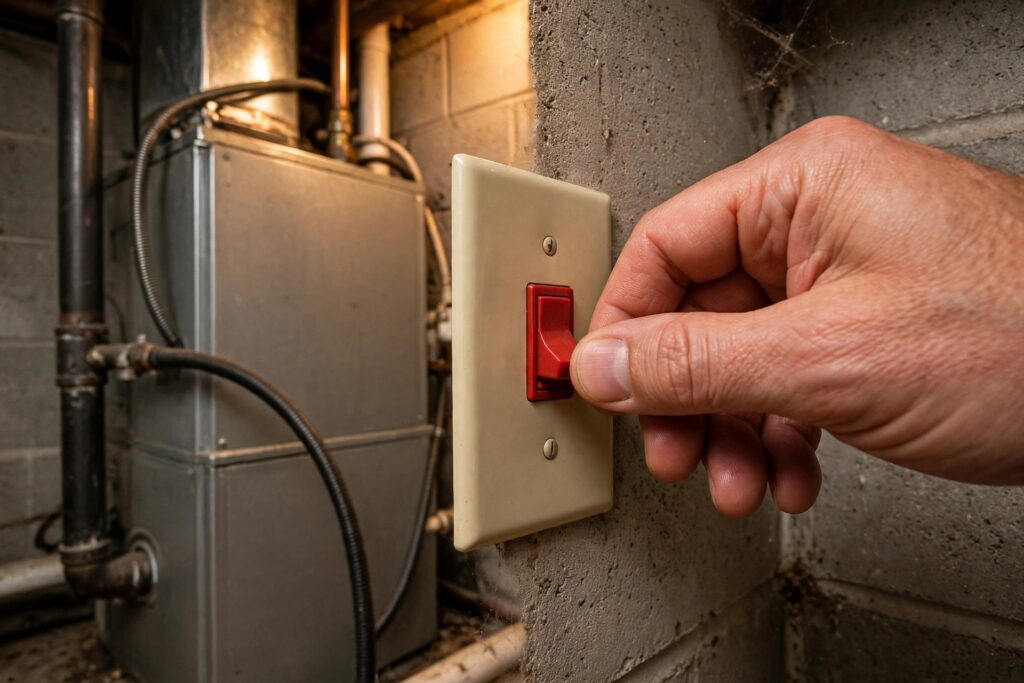
- Turn the furnace off at the switch and listen. If the furnace buzzing noise stops the moment you flip the switch off, the sound is coming from the furnace itself. If the buzz keeps going with the furnace switch off, the sound is coming from somewhere else, such as the electrical panel or another appliance, and a licensed electrician is the right call.
- Find where the buzz is loudest. Stand close to the furnace, then to the thermostat, then to the electrical panel, and compare. A buzz loudest at the furnace points to a transformer, relay, capacitor, or motor. A buzz loudest at the panel points to a breaker problem, and a buzz loudest at the thermostat points to low voltage reaching the thermostat.
- Check the thermostat. A blank, flickering, or dim thermostat display plus a buzz points toward the transformer, which supplies the thermostat power. If the thermostat is blank, see our guide to a thermostat blank or unresponsive before you call, so you can report both symptoms together.
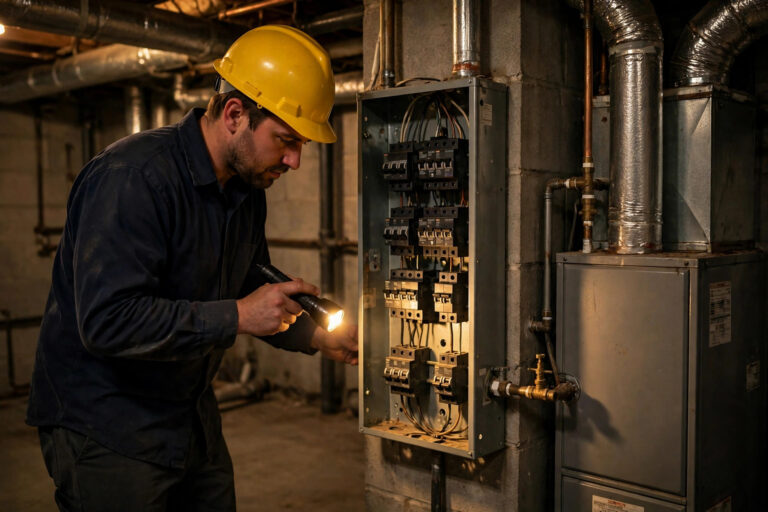
- Check the breaker, once. Look at the furnace breaker in the electrical panel. If it has tripped, you may reset it once, but if it trips again, leave it off and call a licensed technician. A breaker that trips repeatedly is protecting you from a fault, and our guide to a furnace tripping breaker explains what repeated trips usually mean.
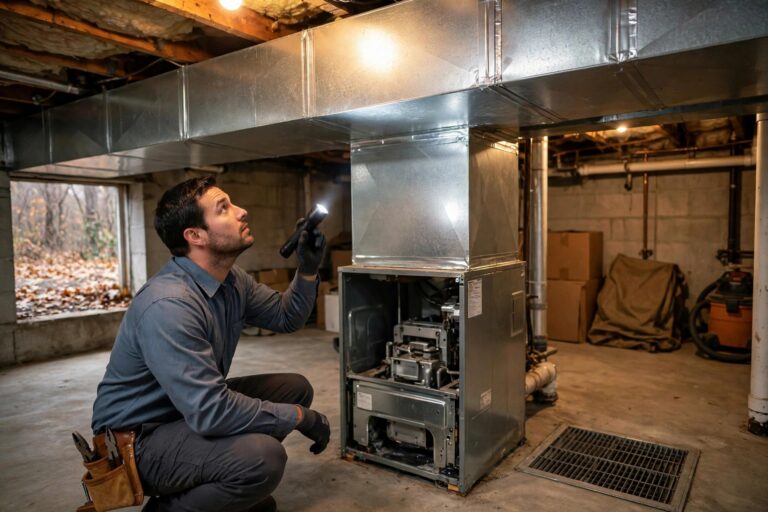
- Check the filter and the vents. A clogged filter makes the blower motor work harder, which can make a tired motor buzz sooner. Pull the filter out and hold it up to the light. If you cannot see light through it, replace it with the correct size, using our guide on how to find your furnace filter size. Open every supply vent and move furniture away from return grilles, then listen again on the next heating cycle.
- Check the error light. A furnace that buzzes and then shuts down may be locking out for another reason. Look through the small sight glass on the cabinet door for a blinking light, and count the flashes. See our guide to furnace error codes to read the pattern before you call, so you can report the code.
- Listen for a second sound. A buzz with a hum points toward a struggling motor or capacitor. A buzz with a click points toward a chattering relay. A furnace buzzing noise with a burning smell points toward a loose connection or a motor that is overheating, and that combination means turning the furnace off at the switch and calling a licensed technician.
- Track whether it is getting worse. A buzz that stays the same for weeks is less urgent than one that gets louder every few days. Note the date you first heard it and whether it has changed, because a worsening buzz is the clearest sign that a part is on its way out. A furnace that runs for hours without reaching the thermostat setting is often a blower problem, and our guide to a furnace running constantly explains what long run times usually mean.
What not to touch
Some parts of a furnace are never a homeowner job, no matter how simple the fix looks. In Ontario, gas appliance work must be performed by a TSSA-licensed technician, and opening the wrong cover can turn a small buzz into a dangerous one.
- The gas line and gas valve. Never loosen, tighten, or adjust any gas fitting, valve, or connection. If you smell gas, leave the home and call 911 or your gas utility emergency line.
- The burners. Burner parts, brackets, and orifices are set at the factory. Cleaning or adjusting them without training can cause incomplete combustion and carbon monoxide.
- Wiring inside the cabinet. Furnace wiring carries mains voltage and controls gas valves. Never pull, cut, or re-route wires, and never bypass a safety switch to keep a furnace running.
- The control board, transformer, and relays. The control board, transformer, and relays are the parts most likely to be buzzing, and they are also the parts that carry live voltage. Testing them needs a meter and training.
- The capacitor. A capacitor can hold a dangerous charge even with the power off. Control boards and capacitors are licensed-technician parts.
- The blower motor and inducer motor. Motors live inside the cabinet, around a spinning wheel and live wiring. Replacing a motor is licensed-technician work.
- Refrigerant lines. Furnaces paired with air conditioning share cabinet space with refrigerant lines. Refrigerant work is licensed-technician work.
If the furnace buzzing noise is coming from inside the cabinet, and none of the safe checks above found it, the cause is inside the cabinet too, and that is where a homeowner should stop.
Stop and call a licensed technician if
- The buzz is getting louder every few days, or it has turned into a crackle or a sizzle.
- You smell burning, see smoke, or notice scorch marks near the furnace or the electrical panel. Turn the furnace off at the switch and call a licensed technician.
- The breaker trips again after you reset it once, or the breaker or panel feels warm.
- The blower stops running, the furnace locks out, or the furnace shows an error light. See our guide to furnace error codes before you call, so you can report the code.
- Airflow from the vents is weak or gone even with a clean filter and open vents.
- You smell gas at any time. Leave the home and call 911 or your gas utility emergency line. Our guide to a furnace that smells like gas explains the first steps.
- Your carbon monoxide alarm sounds. Leave the home and call 911. See what to do first when your carbon monoxide detector goes off.
- The buzz keeps going with the furnace switch off, which points to a panel problem that needs a licensed electrician.
- The furnace is more than 15 years old and the buzz is new, since worn transformers, relays, and motors become more likely with age.
- You have changed the filter, opened the vents, and the furnace buzzing noise keeps coming back.
If the safe checks above did not find the source of the buzz, a technician can open the cabinet safely, test the transformer and capacitor, check the relay and wiring, measure the motor current, and tell you whether the fix is a small electrical part or a motor. For gas work, you can confirm a technician’s registration through TSSA’s fuels contractor lookup. For a broader look at what each furnace symptom means, browse the full list on our symptoms page, try one of the free calculators on our tools page, or look for parts and equipment on our marketplace.
Most of the time, a buzz like this turns out to be a failing transformer or a chattering relay, and catching it early is the difference between a small part and a motor. The check that matters is the one before the call: note when the furnace buzzing noise happens, check where it is loudest, and listen for a second sound. A buzz that stops when you flip the furnace switch off is a furnace problem. A buzz that gets louder every few days, or one that comes with burning, tripping breakers, or weak airflow, is a repair job, and it should not wait for the weekend.
If the job needs a pro, hire a TSSA-licensed technician and ask to see their licence before any gas work starts.
The Quality HVAC is an information and marketplace platform. We do not install, service, or repair HVAC equipment. Content here is educational only and is not a substitute for a licensed technician. In Ontario, gas appliance work must be performed by a TSSA-licensed technician. If you smell gas or your carbon monoxide alarm sounds, leave the home and call 911 or your gas utility emergency line.