
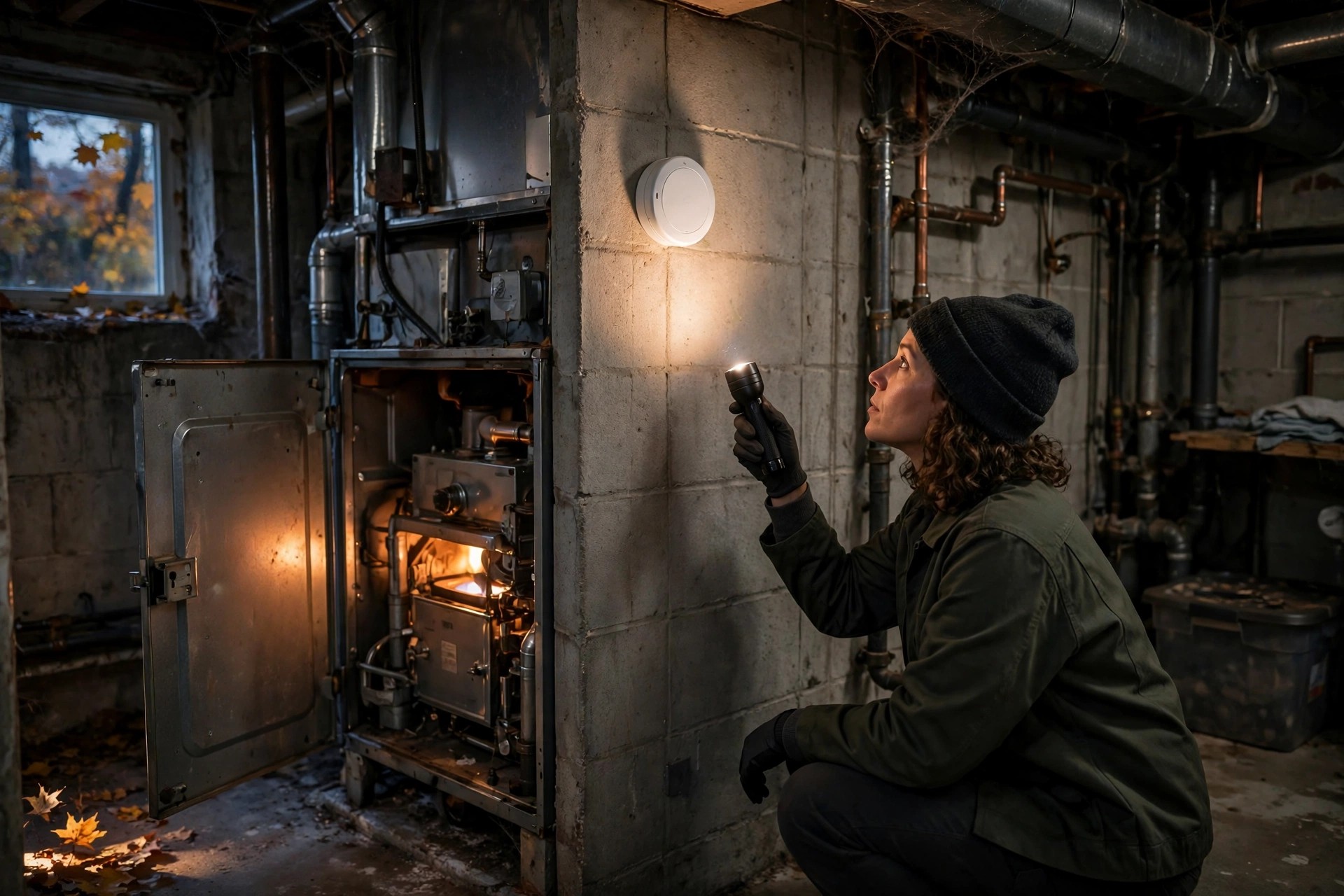
Carbon Monoxide Detector Going Off: What to Do First
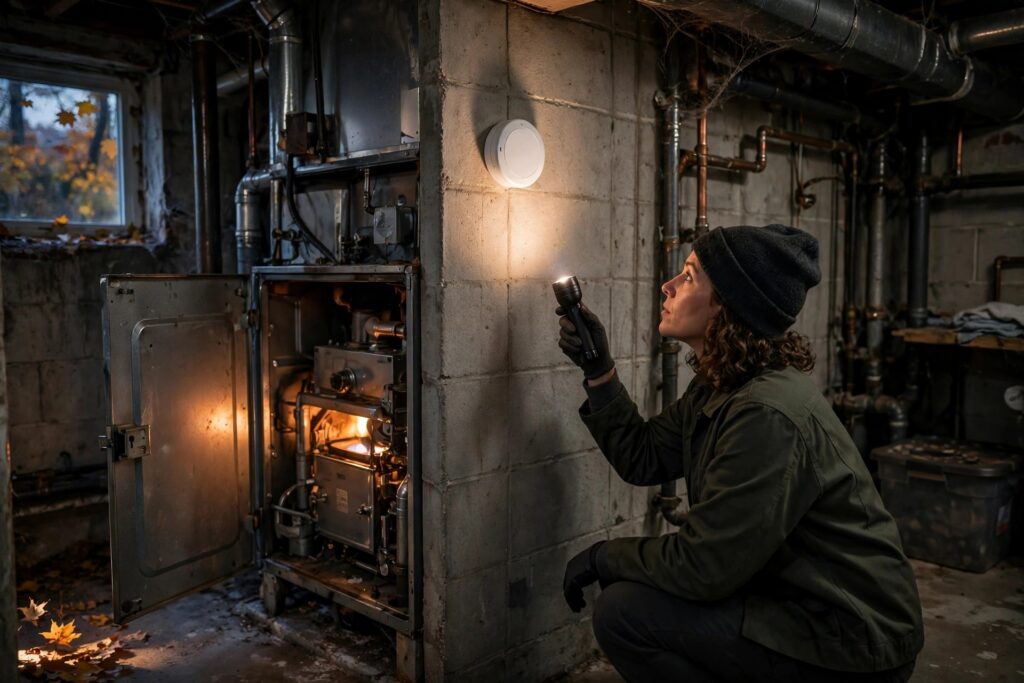
Carbon Monoxide Detector Going Off: What to Do First
Table of Contents
A carbon monoxide detector going off is not a sound to investigate from inside the house. Carbon monoxide is colourless and odourless, so you cannot judge how serious the situation is by looking around or sniffing the air. The detector is there to make the decision for you: when it alarms, you leave, and you call for help from outside. This guide explains the first steps in order, how to tell a real alarm from a low-battery chirp, what usually causes an alarm, and when a licensed technician must check your heating equipment.
The most important rule comes first, before any checklist. Do not go looking for the source of the gas, do not open the furnace, and do not silence the alarm and stay in the house to see if it goes off again. If anyone in the home feels ill, get them out first and call 911. A carbon monoxide detector going off deserves to be treated as real until firefighters or your gas utility tell you otherwise.
What you are noticing
A carbon monoxide alarm is usually a loud, repeating pattern, often four beeps, a pause, then four beeps again. It is different from the single chirp every 30 to 60 seconds that means a low battery, and different again from a chirp that signals the end of the detector’s life. Many detectors also flash a red light while they alarm. If you are not sure which sound you heard, treat a loud repeating alarm as a real alarm and leave. You can sort out a chirp later, from safety, once you know nobody is in danger.
Sometimes there are no other clues at all. The furnace may seem to be running normally, there may be no smell, and nobody may feel ill yet. That does not mean the alarm is wrong. Carbon monoxide can build up without any smell, smoke, or visible sign, and early symptoms such as a dull headache, dizziness, nausea, or tiredness are easy to mistake for flu or a bad night’s sleep. If several people or pets in the home feel unwell at the same time, or symptoms ease once you are outside, that pattern matters, so tell the responders about it.
What it usually means
What a carbon monoxide detector going off usually means
Ranked most likely first, the causes behind a real alarm are usually: a fuel-burning appliance venting poorly or burning incompletely, such as a furnace, boiler, water heater, fireplace, or gas stove; a blocked or damaged vent, flue, or chimney, including snow, ice, leaves, or a bird’s nest; a vehicle, generator, or other engine running in an attached garage or too close to the house; or a cracked heat exchanger or other internal furnace fault that lets combustion gases escape. In Ontario homes, heating season is the highest-risk time, because furnaces and boilers run for months and vents can be blocked by snow.
Less urgent explanations do exist, but they should never be assumed while the alarm is sounding. A detector can chirp for a low battery, reach the end of its working life after seven to ten years, or be confused by steam, dust, or a dying battery in a way that looks like a fault. A detector placed too close to a bathroom, a humidifier, or a cooking appliance can also nuisance-alarm more often. The difference is that those explanations are checked after the home has been cleared, never used as a reason to stay inside during an alarm.
Carbon monoxide detector going off vs a low-battery chirp
Learn the two sounds before you ever need them. A real alarm is loud, urgent, and repeating, usually four beeps and a pause. A low-battery warning is a single short chirp at regular intervals, often once a minute, and it usually stops once the battery is replaced. An end-of-life warning is also a regular chirp, sometimes with a different light pattern, and it means the whole detector must be replaced, not just the battery. If your detector has a display, it may show a number, but do not stay inside to read it during an alarm. Note the sound pattern from outside if you can, and tell the responders what you heard.
If you are still unsure after everyone is out and help has been called, that is the right outcome. It is far better to have firefighters confirm there is no carbon monoxide than to silence an alarm, stay inside, and find out later that the danger was real. Ontario’s carbon monoxide alarm rules exist for exactly this reason, and the province’s safety information at cosafety.ca explains where alarms are required and how they should be maintained.
Safe checks you can do yourself
There is no safe check to do inside the home while a carbon monoxide detector going off is sounding. The safe checks below are for after firefighters or your gas utility have checked the home and told you it is safe to go back in, and for routine checks you can do at any other time:
- Leave first, call second. Get everyone, including pets, out of the home. Do not stop to open windows, gather belongings, or switch appliances off. From outside, call 911 or your gas utility emergency line. Do not go back inside until responders say it is safe.
- Tell responders what you heard and felt. Say whether the alarm was a repeating four-beep pattern or a chirp, which detector sounded, and whether anyone has a headache, dizziness, nausea, or confusion. That information helps them decide how urgently to check the home.
- After clearance, check the detector itself. Look at the manufacture date on the back. Most carbon monoxide detectors last seven to ten years, and an expired detector must be replaced. Replace the battery if it uses one, press the test button, and confirm it sounds. If it chirps again after a fresh battery, replace the detector.
- Check placement and coverage. Ontario homes need a carbon monoxide alarm near each sleeping area, and a detector on every level is good practice. It should not sit right beside a bathroom door, a humidifier, or a cooking appliance, where steam and cooking fumes cause nuisance alarms.
- Check the outdoor vents from outside. Once the home is cleared, look at the furnace and water heater vents, the gas meter, and any chimney outlet for snow, ice, leaves, or debris. Clear snow gently with a brush, never with a sharp tool, and never pile snow against the meter or vents.
- Check the other detectors. Test every smoke and carbon monoxide alarm in the home, replace any expired unit, and write the replacement date on the new detector so the next expiry is easy to spot.
If you want to understand the other warning signs a furnace can give, browse the symptoms library and the heating tools on this site, including the guides on furnace error codes, a cracked heat exchanger, and furnace short cycling.
What not to touch
A carbon monoxide alarm can make the problem look like a detector problem, but the equipment behind it is not homeowner equipment. Do not touch the gas line or gas valve, the burners, the heat exchanger, the venting or flue, the control board, or any wiring inside the furnace cabinet.
Do not remove, disable, or cover a detector that has alarmed, and do not reset it and stay in the house to see if it alarms again. Do not run a generator, a vehicle, or a fuel-burning heater in a garage or near an open window while you wait, and do not light a fireplace or stove to stay warm until the home has been cleared. In Ontario, gas appliance work must be performed by a TSSA-licensed technician, and venting and combustion faults belong to a qualified technician too.
If you are unsure whether a technician you are considering is licensed for gas work, you can look them up through the TSSA fuels contractor lookup. That lookup is a public safety resource, not a promise about any individual business, so always confirm the licence in person as well.
Stop and call a licensed technician if
Stop your own checks and get a licensed technician involved if you notice any of these red flags:
- A carbon monoxide detector going off sounds again after the home has been cleared, or a second detector also alarms.
- Anyone in the home has a headache, dizziness, nausea, confusion, or chest pain, or a pet becomes lethargic or vomits, especially if symptoms ease outside.
- You smell gas, see soot around a furnace or fireplace, or notice a yellow, flickering burner flame instead of a steady blue flame.
- The furnace, boiler, or water heater was recently installed, moved, or repaired by someone who was not licensed for gas work.
- A vent, flue, or chimney looks damaged, disconnected, or blocked, or exhaust seems to be spilling back into the home.
- The detector is expired, damaged, or keeps chirping after a fresh battery, or the home has no carbon monoxide alarm near the sleeping areas at all.
When you call, give the technician the facts responders recorded: which detector alarmed, what pattern it sounded, whether anyone felt ill, and what heating equipment the home uses. That short report turns a vague alarm call into a focused check of the venting, combustion, and heat exchanger, and it often shortens the visit considerably.
A sounding detector is not an inconvenience to silence, and it is not a verdict that someone did something wrong. It is an early warning system doing the one job it was installed to do. Leave first, call from outside, let responders clear the home, and leave every gas and venting part to a licensed technician. If the job needs a pro, hire a TSSA-licensed technician and ask to see their licence before any gas work starts.
The Quality HVAC is an information and marketplace platform. We do not install, service, or repair HVAC equipment. Content here is educational only and is not a substitute for a licensed technician. In Ontario, gas appliance work must be performed by a TSSA-licensed technician. If you smell gas or your carbon monoxide alarm sounds, leave the home and call 911 or your gas utility emergency line.
Looking for equipment rather than a service? Browse the equipment marketplace for furnaces, parts, and related items listed by sellers.



3 Comments