
Furnace Pilot Light Keeps Going Out: What It Means and What to Do First
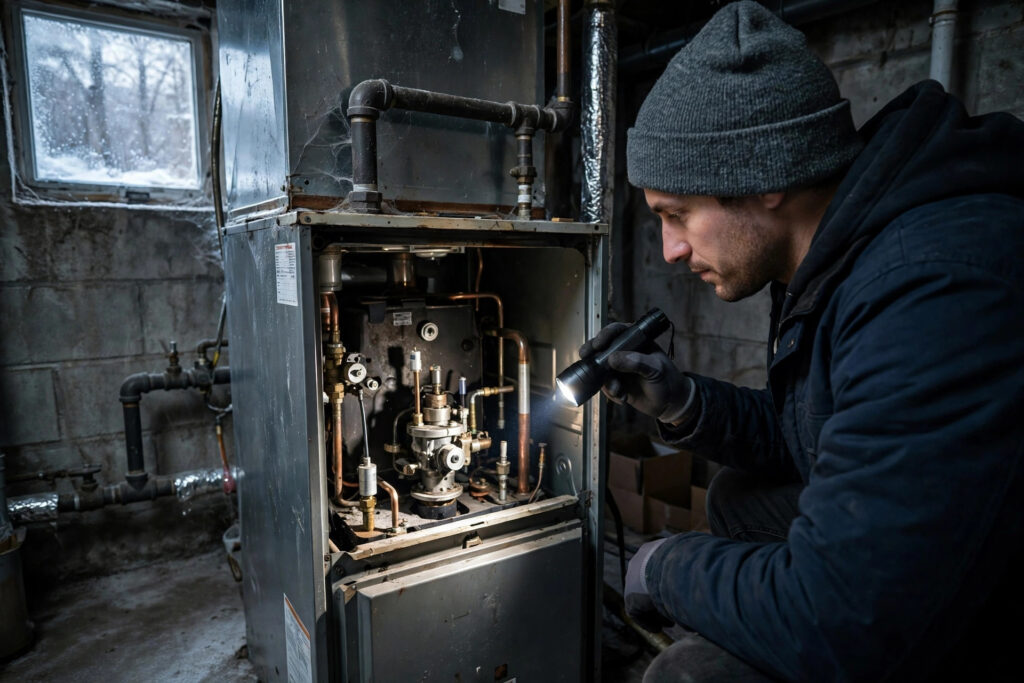
Furnace Pilot Light Keeps Going Out: What It Means and What to Do First
Table of Contents
When a furnace pilot light keeps going out, the house usually tells you in the same way every time: the heat stops, the thermostat calls for heat, and nothing answers. You may notice cold air from the vents, a furnace that tries to start and then gives up, or a pilot flame that is there one evening and gone the next morning. A pilot light that goes out once after a strong gust or a power interruption is one thing. A furnace pilot light keeps going out repeatedly is a different thing, and it is best treated as a fault to be diagnosed, not as a light to keep resetting.
First, a useful check on the kind of furnace you have. Many newer furnaces do not have a standing pilot light at all. They use electronic ignition, a hot surface igniter or an intermittent pilot that lights only when heat is called for. If you cannot find a small, steady pilot flame in your furnace, your furnace may simply not have one, and a no-heat problem on that kind of unit is usually better approached through the furnace error codes guide, which explains how to read the blinking light.
The rest of this guide is for furnaces that do have a standing pilot light, a small flame that is meant to stay lit so the main burner can light when the thermostat calls for heat.
What you are noticing
The pattern is usually unmistakable once you know to look for it. The furnace runs, then stops, and the house cools. The thermostat still shows a temperature below the set point, but no warm air comes out. Sometimes the furnace tries again a short time later and fails in the same way. Sometimes you find the pilot out in the morning, after the furnace worked fine the day before. In a cold snap, that pattern can repeat several times in a day, and each repeat is a clue: something is interrupting the flame, or a safety control is shutting the gas off on purpose.
That is the pattern most people mean when they say their furnace pilot light keeps going out. Pay attention to the timing, because it helps a technician later. Does the pilot go out only on windy days? Does it go out right after the main burner shuts off? Does it go out at the same time another gas appliance is used? Does the furnace also show an error light, or does it simply sit silent? Write down what you saw and when. A pattern like that is far more useful than a general report that the heat stopped working, and it can shorten the diagnosis when a licensed technician arrives.
What it usually means
A pilot flame needs three things to stay lit: a steady supply of gas, a clean path for that gas, and a flame that is strong and steady enough to prove itself to the safety controls. When any one of those is missing, the furnace shuts the gas off rather than letting unburned gas build up. That shutoff is the safety system working as designed, even though it leaves you without heat.
Furnace pilot light keeps going out: most likely causes
- A worn, dirty or misaligned thermocouple. This is the most common cause on a standing-pilot furnace. The thermocouple is a small safety sensor that sits in the pilot flame and tells the gas valve that the flame is present. If it is coated with soot, bent out of the flame, or simply worn out with age, it stops sending that signal, and the gas valve closes. The pilot then goes out, and it will not stay lit no matter how often it is reset.
- A draft blowing the flame out. A strong draft near the furnace, a nearby exterior door left open, a new vent or fan pulling air through the furnace room, or a downdraft in the chimney can all disturb a small pilot flame. Windy days make this pattern worse, and a pilot that only goes out in a storm is a strong hint that air movement is involved.
- A dirty pilot orifice or a weak pilot flame. If the small opening that feeds gas to the pilot is partly blocked by dust or soot, the flame becomes small, yellow and lazy instead of strong and blue. A weak flame is easier to blow out and harder for the thermocouple to sense, so the furnace shuts down more often.
- A faulty gas valve. The gas valve controls gas to both the pilot and the main burner. If it is failing, it may not hold the pilot gas supply open, even when the thermocouple is working. This is less common than a thermocouple problem, but it is a real possibility on an older furnace, and it is a part that only a licensed technician should test or replace.
- A venting or chimney problem. Blocked, damaged or poorly drawing venting can let exhaust gases spill back or create pressure changes around the burner. That can disturb the pilot flame and, more importantly, it can let carbon monoxide build up indoors. A pilot problem that comes with a smell of exhaust, soot around the furnace, or a carbon monoxide alarm is an urgent problem, not a routine one.
- An intermittent gas supply problem. If other gas appliances in the home are also behaving strangely, or if gas work has recently been done on the property, the supply itself may be interrupted or restricted. Do not investigate a gas supply problem yourself. A licensed technician or your gas utility can check it safely.
Age matters here. A thermocouple is a wear part, and on an older furnace it is often the first thing a technician checks when a furnace pilot light keeps going out. A pilot that has worked for years and suddenly starts going out every day is usually telling you that a part has reached the end of its life, or that something in the furnace room has changed, such as a new exhaust fan or a blocked vent. Either way, a repeat outage is a symptom to act on, not a quirk to live with.
Safe checks you can do yourself
These checks are visual and external only. They do not involve opening the burner compartment, touching the gas valve, or adjusting any gas part. If a check below is not possible without removing a panel or touching a gas control, skip it.
Furnace pilot light keeps going out: safe checks before you call
- Check the thermostat first. Make sure it is set to heat, the set temperature is above the room temperature, and the display is working. A blank thermostat is a separate problem, covered in the thermostat blank guide, and it can look exactly like a furnace failure.
- Check the furnace power switch and breaker. A furnace switch turned off by accident, or a tripped breaker, will leave the furnace silent. Reset a tripped breaker once only. If it trips again, leave it off and call a licensed technician, because a breaker that keeps tripping is itself a fault.
- Check the filter. A badly clogged filter can cause overheating and shutdowns, and it is a homeowner maintenance item. If the filter is grey and blocked, replace it with the correct size, using the furnace filter size guide if you are unsure of the size.
- Look for an obvious draft source. Is a basement window open beside the furnace? Has a new dryer vent, range hood or exhaust fan changed the air pressure in the room? Closing an open window near the furnace is a reasonable test, but do not seal off combustion air vents or block a chimney to stop a draft. Furnaces need their designed air supply.
- Look, do not touch, at the pilot area. If your furnace has a sight glass or viewing window, you can look through it to see whether a pilot flame is present, without opening anything. Note whether the flame looks strong and blue or small and yellow, and whether it is present at all. That observation is useful information for a technician.
- Check whether other gas appliances work normally. If the stove or water heater is also affected, note that fact and tell the technician or your gas utility. Do not try to diagnose a gas supply problem yourself.
- Check the carbon monoxide alarm. Make sure the alarm near the furnace and the alarms near bedrooms are working and have not sounded. If any alarm has sounded, leave the home and follow the steps in the carbon monoxide detector guide before doing anything else.
Do not keep resetting a pilot that goes out again and again when a furnace pilot light keeps going out. Each reset without a diagnosis leaves the underlying fault in place, and repeated attempts can mask a venting or gas valve problem that needs a technician. One outage with a clear cause, such as a door blown open in a storm, is different from a furnace pilot light keeps going out pattern, and the repeat pattern is the one that calls for a professional diagnosis.
What not to touch
Do not touch the gas line or the gas valve, do not adjust gas pressure, do not clean burners or the pilot orifice, and do not replace a thermocouple or a gas valve yourself. Do not remove the burner compartment cover to reach the pilot, and do not bend, clean or reposition any part inside the cabinet. Do not block, cover or modify the vent or chimney, and do not disconnect a safety control to keep the furnace running.
In Ontario, gas appliance work must be performed by a TSSA-licensed technician, and refrigerant and high-voltage electrical work inside the cabinet belong to a licensed technician as well. If you are checking a technician’s credentials, the TSSA fuels contractor lookup is a public resource for gas work.
Do not run the furnace with panels removed, and do not use a space heater as a long-term substitute for a furnace that keeps shutting down. A space heater can help for a short period in one room, but it does not fix a gas or venting fault, and it introduces its own fire risk if left running unattended. Keep the furnace area clear, keep storage away from the furnace, and use the manual’s homeowner sections only: filter changes, thermostat settings, and vent checks from outside the cabinet.
Stop and call a licensed technician if
- You smell gas, your carbon monoxide alarm sounds, or anyone in the home has headaches, dizziness, or nausea that ease outdoors: leave the home and call 911 or your gas utility emergency line.
- The furnace pilot light keeps going out more than once, even after an obvious draft source has been removed.
- The pilot flame is yellow, lazy, lifting off the burner, or much smaller than it used to be.
- You see soot around the furnace, rust or water staining on the vent, or a smell of exhaust near the furnace.
- The furnace tries to start, locks out, and shows an error light, or it short-cycles after a pilot outage: the furnace short cycling guide explains why that pattern also needs a technician.
- The gas valve, thermocouple, pilot assembly, venting, or chimney needs cleaning, adjustment, testing, or replacement.
- Other gas appliances are also affected, gas work has recently been done, or you are unsure whether your furnace even has a standing pilot.
A furnace pilot light keeps going out is usually a small part or a draft problem, but it sits on the gas side of the furnace, and that is exactly why it should not be treated as a do-it-yourself fix. Note the pattern, run the safe external checks above, and then get a licensed technician to test the thermocouple, the gas valve, and the venting. That diagnosis is quick when the pattern is clear, and it restores heat without guessing at gas parts. If the job needs a pro, hire a TSSA-licensed technician and ask to see their licence before any gas work starts.
The Quality HVAC is an information and marketplace platform. We do not install, service, or repair HVAC equipment. Content here is educational only and is not a substitute for a licensed technician. In Ontario, gas appliance work must be performed by a TSSA-licensed technician. If you smell gas or your carbon monoxide alarm sounds, leave the home and call 911 or your gas utility emergency line.
Looking for equipment rather than a service? Browse the equipment marketplace for furnace parts and related items listed by sellers, explore the heating tools collection for more plain-language guides, or return to the symptoms library for other furnace warning signs.